Economy
Bank of Canada Holds Key Interest Rate at 2.25% Amid Global Economic Uncertainty

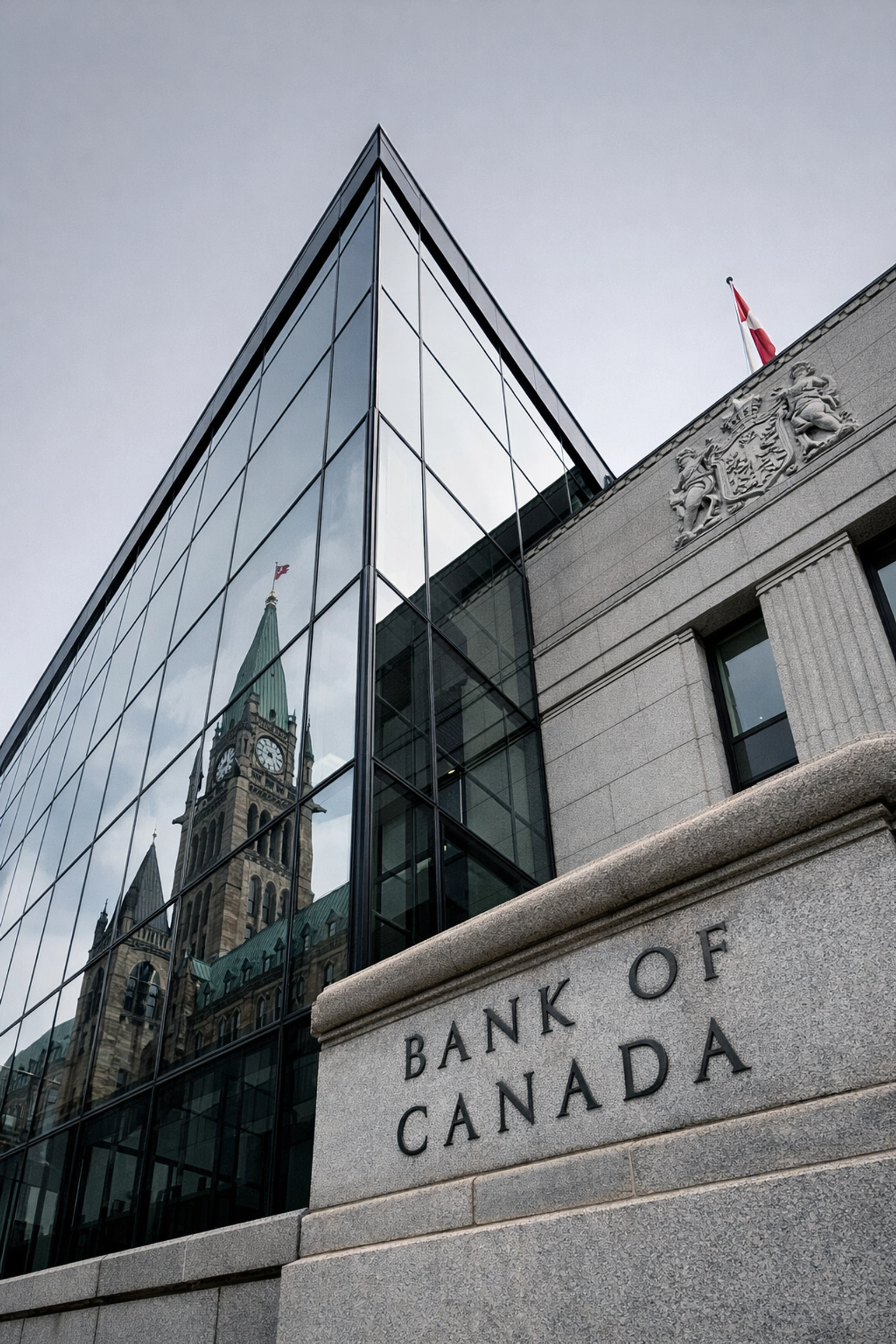
The Bank of Canada maintained its policy interest rate at 2.25% on Wednesday. This marks the second rate announcement of 2026. The rate has remained unchanged since October 2025. It is a decision rooted in caution. A balancing act between a cooling domestic economy and a volatile global landscape.
The central bank faces a difficult binary. On one hand, domestic growth is stalling. On the other, international pressures are driving inflation risks upward. This is not a pivot toward easing. It is a defensive posture.
The Domestic Contraction
Canada’s economic engine is sputtering. In the fourth quarter of 2025, the national GDP contracted by 0.6%. This is not merely a statistical dip. It is a sign of systemic friction. When the economy shrinks, the margin for error for policymakers narrows.
The labor market reflects this cooling. The national unemployment rate has climbed to 6.7%. This follows a particularly difficult period; in February alone, Canada’s labour market stumbled as the economy lost 84,000 jobs. The gain in employment seen late last year has been erased.
We are seeing a divergence between headline data and household reality. While the policy rate remains steady, the underlying economic foundation is shifting. The Bank’s mandate is price stability. But stability is difficult to maintain when the productive capacity of the country is in retreat.


The Inflation Paradox
In February, inflation sat at 1.8%. This is technically below the Bank’s 2% target. Under normal circumstances, such a figure would trigger discussions of rate cuts. These are not normal circumstances.
The Bank expects inflation to rise. The culprit is not domestic demand. It is global energy costs. The conflict in the Middle East has introduced a level of volatility not seen in years. Specifically, the threat to the Strait of Hormuz: a transit point for 20% of the world’s oil supply: poses a direct risk to Canadian gas pumps and grocery aisles.
Not a demand-pull inflation, but a cost-push shock.
The Bank is caught in a vice. If they cut rates to stimulate the flagging GDP, they risk fueling inflation further as energy prices spike. If they hike to combat energy-driven inflation, they further suppress a domestic economy that is already contracting. The 2.25% hold is the default option. It is the path of least resistance in an environment defined by external shocks.
Global Risks and Southern Policy
Ottawa does not operate in a vacuum. The Bank’s statement explicitly noted that U.S. trade policy remains a primary risk factor. Potential tariffs from the south create a cloud of uncertainty over the Canadian outlook.
As noted in our Daily Canada Policy Briefing, trade developments are currently the primary driver of institutional anxiety. Protectionist rhetoric in Washington forces a defensive stance in the Canadian financial system. We are a trading nation. When our primary partner signals volatility, our central bank must remain liquid and prepared.
This is the "slow narrowing" of Canadian autonomy. Our domestic policy is increasingly dictated by geopolitical events beyond the control of the Wellington Street headquarters.


The Impact on the Household
For the average Canadian, this hold offers a temporary reprieve. Those with variable-rate mortgages or lines of credit will not see an immediate increase in their monthly obligations. But "steady" does not mean "affordable."
The cost of living remains a primary concern. High interest rates have done their job in cooling the housing market, but they have also increased the debt-servicing burden for millions. Combined with a softening labor market, the average household is feeling the squeeze.
Consider the current environment:
- Mortgage rates remain at a multi-year high relative to the last decade.
- Unemployment is rising, reducing household leverage.
- Fuel and grocery prices are poised to climb due to international conflict.
This is a period of institutional stagnation. The system is functioning, but it is not thriving. The Bank is providing a ceiling for interest rates, but the floor for the cost of living continues to rise.
A Framework for Stability
Critics often demand immediate action. They want cuts to spur growth or hikes to crush inflation once and for all. Both views are simplistic. They ignore the structural constraints currently facing the Bank of Canada.
The Bank’s role is to be the "credible centre." It must project a sense of gravity and discipline. To move too quickly in either direction would be to signal panic. By holding at 2.25%, the Bank is betting on its ability to wait out the global storm.
However, the "wait and see" approach has its own costs. As productivity continues to lag: a recurring theme in our analysis of red tape and its impact on the economy: the lack of monetary movement puts more pressure on fiscal policy. The federal government must now address the growth gap that the Bank of Canada cannot fix with interest rates alone.
The Path Forward
What comes next? The Bank of Canada will meet again on April 29, 2026. Between now and then, two factors will determine the next move:
- Energy Market Stability: If the Middle East conflict escalates, energy-driven inflation will likely force the Bank’s hand.
- U.S. Economic Data: If the American economy remains resilient while Canada’s contracts, the pressure on the Canadian dollar will increase, making imports more expensive and further driving inflation.
There is a sense of a "fractured country" looking for a "calm alternative," as explored in our framework for Canadianism. The Bank of Canada’s current strategy is an exercise in that calm. It is a rejection of the "mushy" middle in favor of a disciplined, data-dependent hold.
But the data is not encouraging. A 0.6% contraction is a warning shot. 6.7% unemployment is a red flag. The Bank is holding the line, but the line is becoming increasingly difficult to defend.
The So What
The Bank of Canada’s decision to hold the key interest rate at 2.25% is an admission of limited agency. In a world of surging energy prices and shifting trade alliances, the central bank’s primary tool: the interest rate: is a blunt instrument.
The systemic health of the country depends on more than just the cost of borrowing. It depends on productivity, trade stability, and a functional labor market. For now, the Bank has opted for the status quo. But as the domestic economy continues to soften, the status quo may soon become untenable.
The "slow narrowing" of our economic options continues. The question is no longer when the rates will change, but how long the current system can withstand the external pressures without a fundamental shift in our economic strategy.

For further analysis on the intersection of trade, policy, and the Canadian economy, visit The Canadianist.