


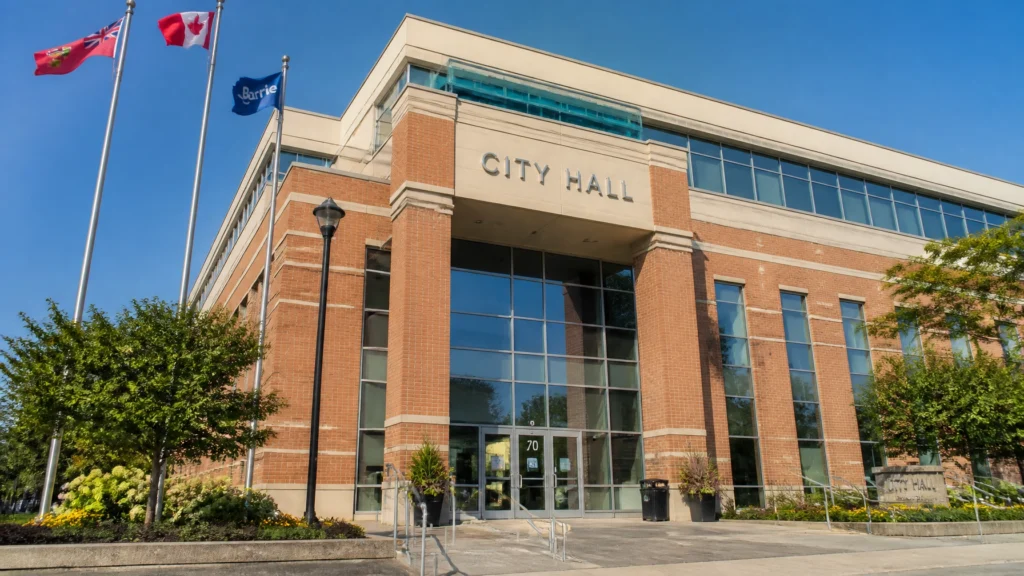
For any municipal politician, landing an AAA credit rating from S&P Global is the ultimate political trophy. It is a gold-standard validation that sounds great on a campaign flyer, plays well in boardrooms, and offers an easy soundbite for local newscasts. When S&P officially upgraded Barrie to AAA, Mayor Alex Nuttall and members of Barrie City Council seized the moment to celebrate what they heralded as a crowning achievement of fiscal prudence and disciplined budgeting.
Coupled with the mayor’s signature talking point: four consecutive years of holding the city's operating budget at a 0% increase: the message is clear: Barrie is supposedly being run like a tight ship, sparing taxpayers from the runaway spending plaguing other Ontario municipalities.
But in politics, as in finance, headlines rarely tell the whole story. When you scratch beneath the shiny surface of credit agency accolades and campaign-style press releases, a more complicated reality emerges for local property owners. For those tracking true municipal accountability across Simcoe County and diving deep into everyday Barrie news, the central question remains: Does a pristine AAA rating reflect a thriving, well-maintained community, or does it signal aggressive belt-tightening that starves essential local services and shifts financial burdens onto residents through the back door?
The Anatomy of the "0% Operating Budget" Myth
To understand Barrie’s fiscal reality, one must first decode the political arithmetic behind the famous "0% increase" narrative. Mayor Nuttall has repeatedly taken credit for holding the line on city operations, presenting a zero-percent operating budget increase as proof of unmatched executive discipline. Over the past few years, the city has retired millions in debt and generated tens of millions in surplus cash flow: metrics that credit rating agencies like S&P love to see.


Yet, property taxpayers looking at their annual notices know better than to take that zero at face value. While the operating portion of the city tax rate has indeed been held flat, the overall municipal budget relies on supplementary mechanisms that keep bills climbing.
Take, for instance, the 2% Infrastructure Investment Funding levy. Earmarked specifically for capital repairs and renewal, this recurring levy is tacked directly onto the city’s share of property taxes. When you factor in the infrastructure levy, police services, public libraries, and the regional demands from the County of Simcoe, the actual residential property tax increase for many households lands closer to 3.95% (or higher, depending on specific assessment shifts).
Calling a budget "0%" while implementing a mandatory 2% infrastructure surcharge is semantic gymnastics. It allows politicians to claim fiscal restraint while quietly collecting more revenue from households already squeezed by inflationary pressures on groceries, housing, and energy.
Fiscal Discipline or Deferred Pain?
Credit rating agencies evaluate municipalities through a narrow, risk-averse lens. S&P Global cares deeply about debt-to-revenue ratios, liquidity reserves, and the certainty of debt repayment. They do not grade cities on whether local parks are adequately maintained, whether affordable housing initiatives are properly funded, or whether transit wait times are driving commuters crazy.
When a city administration boasts about aggressive debt reduction: such as retiring tens of millions of dollars in recent years: it sounds impressive on paper. But municipal debt is not like personal credit card debt; it is often used to finance long-term generational infrastructure like water treatment plants, transit fleets, and community centers that will serve residents for decades.

When capital spending is choked off or delayed in the name of immediate fiscal optics, cities risk running up a massive infrastructure deficit. Deferring road repairs, stalling public transit expansions, or underfunding social supports doesn’t make costs disappear: it merely shifts them into the future, where repairs become exponentially more expensive.
For a deeper look at how regional governance decisions impact our communities, explore our ongoing reporting on The Canadianist. Independent journalism must constantly interrogate whether saving a few dollars in interest payments today results in decaying public infrastructure tomorrow.
What Does an AAA Rating Actually Buy You?
The primary justification offered by Barrie City Council for pursuing top-tier credit status is that it lowers the cost of borrowing when the city needs to finance major capital projects. In theory, a lower interest rate saves taxpayers money over the life of a debenture.
However, residents are left wondering where those savings are actually being felt. If borrowing costs are lower, why are property taxes still creeping upward through secondary levies? Why are community groups and local non-profits continually forced to scrap for municipal grants while administrative surpluses are celebrated as victories?
There is a growing disconnect between the macroeconomic priorities of City Hall and the lived economic reality of everyday taxpayers. While Wall Street and rating agencies applaud Barrie's conservative balance sheet, working families across the city are grappling with skyrocketing housing costs, stagnant local wages, and rising user fees for recreational facilities and municipal services.

When municipal governance becomes overly obsessed with earning a gold star from financial analysts, the human element of public administration is frequently lost in translation. A city is not a multinational corporation; its primary Key Performance Indicator (KPI) should not be shareholder equity or creditworthiness, but rather the quality of life, safety, and well-being of its citizenry.
Holding Barrie City Council to Account
Barrie's achievement of an AAA credit rating is a testament to disciplined financial management: there is no denying that avoiding reckless borrowing is a virtue. But financial discipline must serve the public good, rather than serving as an end in itself.
Mayor Nuttall and Barrie City Council deserve scrutiny for how they package these fiscal milestones. When politicians lean heavily on selective metrics like a "0% operating increase," they obscure the true financial burden resting on the shoulders of local property owners.
True political leadership requires transparency. It means telling taxpayers the honest truth about the cost of maintaining a growing city without leaning on hidden levies or masking infrastructure deficits behind glowing S&P reports. As Barrie continues to grow and face complex regional challenges, residents deserve more than polished PR campaigns and Wall Street stamps of approval. They deserve governance that balances the ledger without shortchanging the community's future.
{“@type”:”Article”,”author”:{“name”:”BARRIE | NEWS DESK”,”@type”:”Organization”},”@context”:”https://schema.org”,”headline”:”Barrie’s AAA Credit Rating Is Impressive — But What Did It Cost You?”,”publisher”:{“url”:”https://thecanadianist.news/”,”name”:”The Canadianist”,”@type”:”Organization”},”description”:”An in-depth critical analysis of Barrie’s S&P AAA credit rating upgrade, Mayor Alex Nuttall’s 0% operating budget narrative, and the true cost of infrastructure levies on local taxpayers.”,”mainEntityOfPage”:{“@type”:”WebPage”}}