


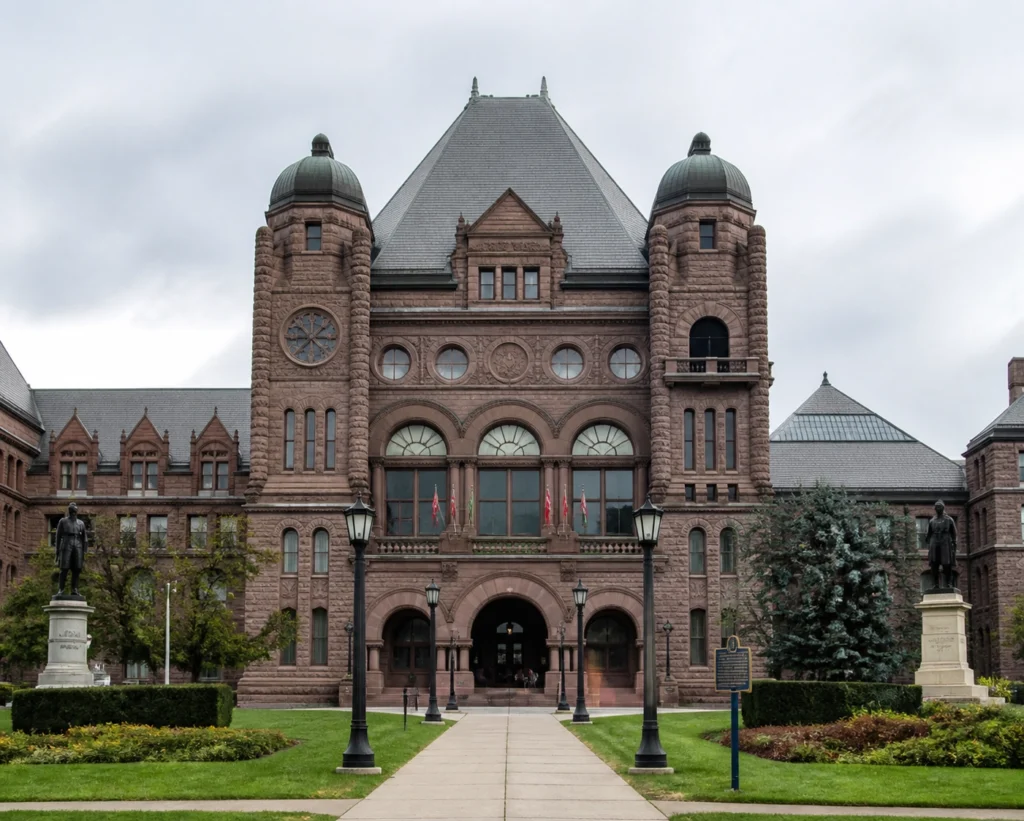
For decades, the conventional script of Canadian governance told us that local government was the closest and most responsive level of democracy to the citizen. City councillors, regional chairs, and township planners were supposed to understand the unique texture of their communities: whether it was managing growth in Simcoe County, protecting green spaces in York Region, or balancing urban density in Barrie.
But over the past few years, that script has been radically rewritten at Queen’s Park.
Through an aggressive suite of legislation, sweeping ministerial zoning orders (MZOs), and the unilateral redrawing of planning powers, the Ontario provincial government has demonstrated a growing appetite for overriding local decision-making. For politically engaged Ontarians, the friction between municipal autonomy and provincial muscle has become impossible to ignore.
Why is Queen's Park so eager to sideline municipal councils? And what does this centralization of power mean for accountability, community identity, and governance across our regions?
The Illusion of Local Autonomy in Ontario's Planning Act
To understand why local governments find themselves routinely bypassed, one must look closely at Ontario’s Planning Act. Beneath the procedural facade of public consultations, municipal official plans, and local zoning bylaws lies a fundamental legal reality: municipal land-use planning is entirely creatures-of-the-province.
Under the statutory framework, all municipal planning decisions must conform to provincial policy statements and provincial plans. When local councils spend months or years crafting official plans: as York Region did when it adopted its comprehensive official plan: they are ultimately submitting those blueprints to the Minister of Municipal Affairs and Housing for approval.


And when Queen's Park steps in to modify those plans, the intervention is often final. For instance, when the province approved York Region’s official plan with sweeping modifications, those changes bypassed the usual avenues of accountability and were shielded from challenges at the Ontario Land Tribunal (OLT). Local democracy, it turns out, is welcome to deliberate: so long as its conclusions match the script written in downtown Toronto.
The Weaponization of Minister’s Zoning Orders (MZOs)
Perhaps the most visible and controversial tool of provincial overreach is the Minister’s Zoning Order, or MZO. Historically used sparingly for urgent provincial infrastructure or complex special projects, MZOs have transformed into a routine instrument of executive fiat.
Under Section 47 of the Planning Act, the Minister can issue zoning orders that completely override municipal zoning bylaws. Crucially, legislative amendments: such as those introduced under Bill 257: removed the requirement for MZOs to even be consistent with broader provincial policy statements, retroactively insulating them from legal roadblocks.
For communities north of Toronto, the impact is profound. When an MZO is dropped onto a municipality, local objections are rendered legally moot. Councillors who were elected on platforms of managed growth or environmental preservation find themselves holding empty advisory roles while developers operating under provincial fast-tracks break ground.
This creates a severe democratic disconnect. Residents who show up to council chambers to voice legitimate concerns about infrastructure strain, traffic congestion, or ecological impact discover that their local elected representatives have been legally sidelined by provincial decree.
Restructuring the Map: York, Simcoe, and Barrie in the Crosshairs
The centralization of power hasn't stopped at zoning. Through sweeping legislative overhauls like Bill 23 (the More Homes Built Faster Act), the province began dismantling upper-tier planning responsibilities across the Greater Golden Horseshoe, targeting regions like York and Peel, as well as the County of Simcoe.


By stripping upper-tier municipalities of their planning approval powers and shifting authority either downward or directly into the hands of the Minister, the province has accelerated a top-down growth mandate.
- York Region: Long accustomed to rigorous, managed growth frameworks that balanced urban expansion with agricultural and environmental protection, York has seen its regional authority curtailed, with growth management decisions streamlined to serve provincial housing targets regardless of local infrastructure readiness.
- Simcoe County: Navigating complex conformity exercises like Official Plan Amendment No. 7, Simcoe finds itself squeezed between strict provincial growth mandates and the localized pressures of expanding populations moving north from the GTA.
- The City of Barrie: As a single-tier municipality, Barrie operates outside regional government structures, yet its planning future remains tightly shackled to provincial directives and potential MZO interventions, illustrating that independence from a county does not equal immunity from Queen's Park.
Meanwhile, massive infrastructure initiatives: such as regional sewage works and environmental mitigation projects governed under specialized legislation like the Supporting Growth and Housing in York and Durham Regions Act: further centralize authority, granting provincial agencies the power to relocate utilities and bypass local planning hurdles with minimal friction.
The Human Cost: Housing Crises, Infrastructure Deficits, and Disengaged Citizens
Proponents of provincial overreach argue that drastic times require drastic measures. The narrative goes that municipal bureaucracy, NIMBYism, and slow-moving local councils are choking housing supply, and that only strong executive leadership from the top can force the construction our province desperately needs.
But bypassing local government does not magically build water pipes, sewage treatment plants, or electrical grids. By forcing rapid development and zoning changes without securing matching municipal infrastructure funding upfront, Queen’s Park is trading long-term community viability for short-term political headlines.
When municipalities are left holding the bag for roads, transit, and emergency services required to support provincially mandated growth, local property taxpayers foot the bill.

Worse still, this dynamic fosters profound civic cynicism. When voters realize that their municipal elections carry little weight over land use in their own backyards, voter turnout plummets, public engagement withers, and local democracy is reduced to a hollow ritual.
Reclaiming Local Agency
If we want healthy, resilient communities in York Region, Simcoe County, and across Ontario, we need to challenge the premise that provincial efficiency must come at the expense of local accountability.
Provincial oversight should support local governance, not crush it. True solutions to our housing and infrastructure challenges require genuine collaboration between levels of government: co-investing in infrastructure rather than imposing arbitrary top-down mandates that ignore local realities.
It is time for politically engaged Ontarians to look past the recycled political scripts coming out of Queen's Park. Municipal politics is not just a training ground for provincial ambition; it is the bedrock of our democratic fabric. Protecting local government means demanding that our provincial leaders respect the communities they were elected to serve, rather than treating them as mere administrative subdivisions of Toronto.
{“@type”:”Article”,”author”:{“name”:”NEWMARKWT | NEWSDESK”,”@type”:”Organization”},”@context”:”https://schema.org”,”headline”:”Municipal Politics 101: Why Queen’s Park Keeps Overruling Local Government Across Ontario”,”publisher”:{“name”:”NEWMARKWT | NEWSDESK”,”@type”:”Organization”},”description”:”An investigative look at how provincial overreach, Minister’s Zoning Orders, and legislative changes are sidelining local governments in York Region, Simcoe County, and Barrie.”,”mainEntityOfPage”:”https://thecanadianist.news/”}