Listeners:
Top listeners:
-
 play_arrow
S1 E9 | Are We That Incompetent? Canada vs Saudi Arabia
-
 play_arrow
S1 E2 | Milk, Markets, and the Cost of Protection

Arctic Cold Front and Powerful Winter Storm Continue to Disrupt Travel Across Canada as Cleanup Efforts Intensify
Updated Monday, January 26, 12:00 p.m.
A sweeping Arctic cold front paired with an intense winter storm system that moved across North America over the weekend continues to grip large parts of Canada at midday Monday, bringing some of the coldest temperatures in decades and ongoing disruption to travel, transit, and daily life. While snowfall has eased in many areas, the lingering effects of the storm, including extreme cold, snow removal operations, and widespread travel delays, are expected to persist through the start of the week.
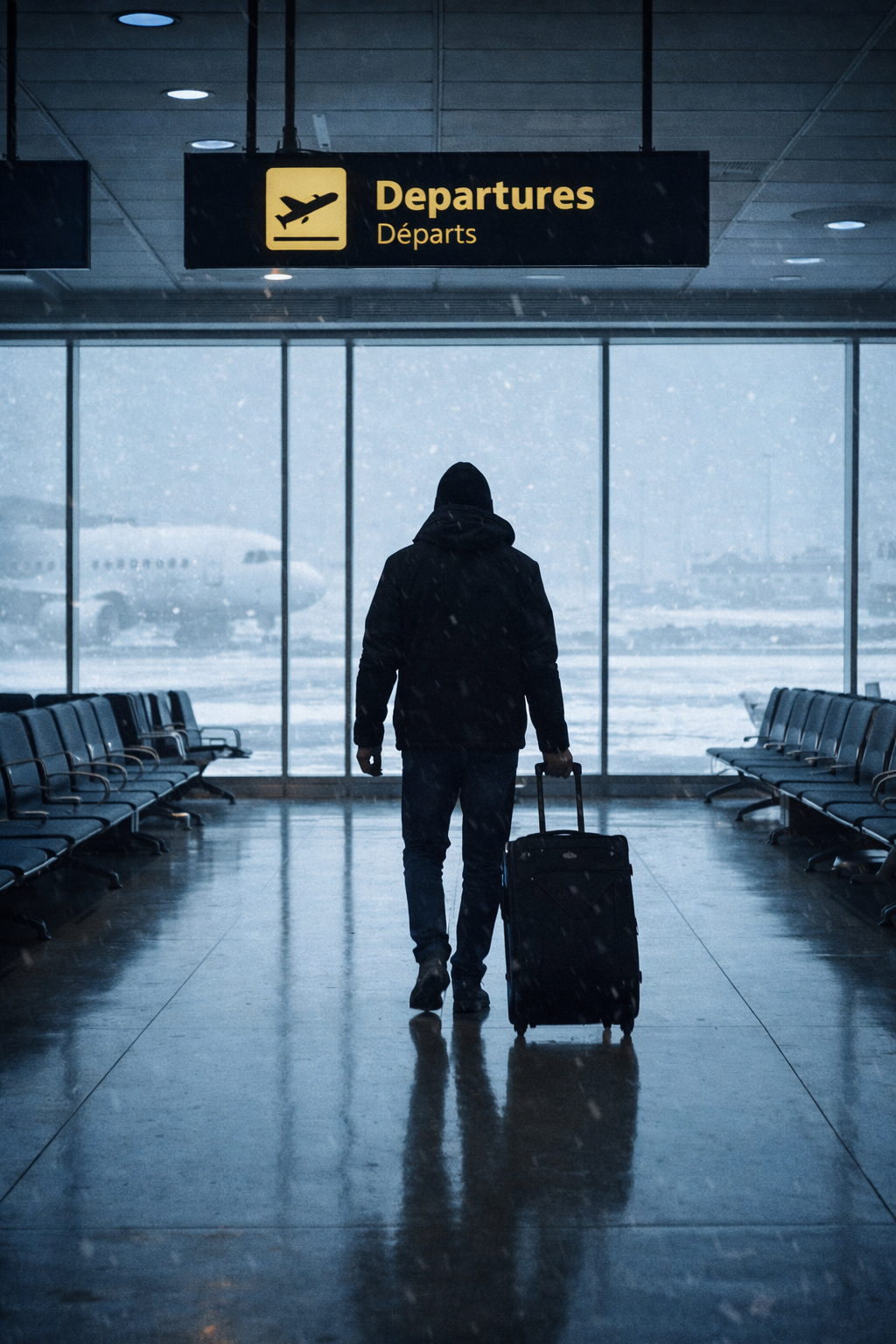
Across the country, airlines and airport authorities report hundreds of flight cancellations and delays directly linked to the storm and the accompanying Arctic air mass. Passengers are being urged to check flight status before heading to airports, as schedule changes continue to ripple through airline networks.
Air Canada has implemented flexible rebooking and change-fee waivers for flights to, from, and through affected airports, particularly Toronto and Montreal, citing continued operational challenges. WestJet has issued similar advisories covering multiple Canadian and U.S. destinations, warning travellers that disruptions may continue as crews and aircraft are repositioned.
At Toronto Pearson International Airport, Canada’s busiest air hub, operations remain strained as of noon Monday. Wind chills dipping well below minus 30 degrees Celsius have complicated de-icing procedures, aircraft inspections, and runway maintenance. Airport officials say these conditions have slowed aircraft turnaround times, resulting in missed departures, delayed arrivals, and a growing backlog of rescheduled flights. Airlines operating out of Pearson continue to offer travellers flexible change policies through late January in anticipation of further impacts.
Conditions are also challenging at Ottawa Macdonald–Cartier International Airport, where persistent cold air and intermittent blowing snow have disrupted schedules. While Ottawa is accustomed to winter weather, the combination of low temperatures and ongoing cleanup efforts has led to delays and some cancellations. Airlines serving the nation’s capital are advising passengers to monitor updates closely and allow extra time at the airport.
At Montréal–Trudeau International Airport, extreme cold and snow removal operations have continued to affect flight schedules. Air Canada’s travel alerts list Montreal among the most heavily impacted airports, alongside Toronto. WestJet and other carriers are similarly encouraging passengers to rely on airline apps and airport notifications for real-time updates, as conditions remain fluid.
The challenges extend beyond cancellations. Even flights operating as scheduled are experiencing longer ground times due to mandatory de-icing, cold-weather mechanical checks, and air traffic control adjustments designed to maintain safety in extreme conditions. These delays are compounding throughout the day, particularly during peak travel periods.
On the ground, Toronto, Ottawa, and Montreal remain in full cleanup mode. In Toronto, snow removal crews continue working around the clock to clear main roads, transit routes, and residential streets following a historic snowfall event over the weekend. Temporary parking restrictions remain in effect in many areas to facilitate snow clearing, and residents are urged to watch for posted signage to avoid fines or towing.
Most Toronto-area schools and many government services remain closed or operating on modified schedules as of Monday, with officials warning that conditions may vary by location. Residents are advised to check local school boards and government websites before travelling.
In Ottawa and Montreal, municipal crews are also continuing snow removal operations, and residents are being asked to comply with parking restrictions and avoid unnecessary travel while cleanup continues. Transit service in both cities remains subject to delays as vehicles navigate snow-narrowed streets and ongoing maintenance.
Compounding the situation is the bitter cold, which is expected to persist through at least midweek. Public health officials are warning of frostbite risks within minutes for exposed skin and are urging residents to dress in layers, limit time outdoors, and check on vulnerable neighbours.
To support those most at risk, warming centres remain open across all three cities, providing shelter and relief from the extreme cold. Authorities stress that availability and hours may change as conditions evolve.
For a city-by-city breakdown, click here for a complete and regularly updated list of warming centres available across Toronto, Ottawa, and Montreal as the continuing cold persists.


Post comments (0)