Listeners:
Top listeners:
-
 play_arrow
S1 E9 | Are We That Incompetent? Canada vs Saudi Arabia
-
 play_arrow
S1 E2 | Milk, Markets, and the Cost of Protection

Pierre Poilievre survives leadership confidence vote at Conservative convention in Calgary
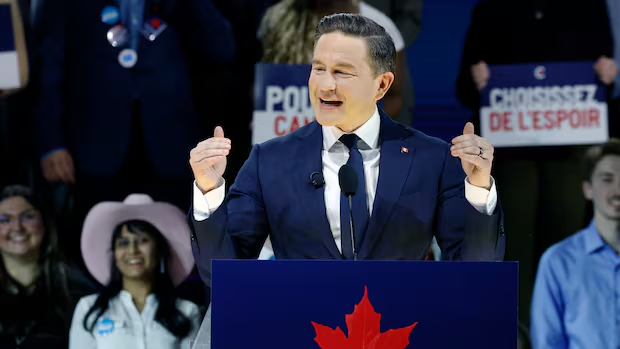
Calgary — Conservative Party leader Pierre Poilievre has survived a leadership confidence vote at the party’s national convention in Calgary, securing enough support from delegates to remain leader as the party prepares for the next federal election.
The vote, held during the multi-day gathering of party members, MPs, and organizers, followed longstanding party rules requiring a leadership review after a federal election loss. While Poilievre remained leader, the results offered a snapshot of the party’s internal dynamics as it looks ahead to a potential election campaign.
Party officials said the outcome demonstrated continued confidence in Poilievre’s leadership and message, particularly on issues such as affordability, inflation, crime, and government accountability. Supporters argue that Poilievre has successfully broadened the party’s appeal by tapping into economic frustration and skepticism toward federal institutions.
“This vote confirms that Conservatives are united in wanting change in Ottawa,” a senior party organizer said following the announcement. “The leader has a clear mandate to keep pushing forward.”
The Calgary convention marked the first major national gathering of Conservatives since the last federal election, drawing thousands of delegates from across the country. The agenda included policy debates, panel discussions, and strategy sessions aimed at refining the party’s platform and positioning it against the governing Liberals.
While the leadership vote passed, the level of support also revealed underlying tensions within the party. Some delegates expressed concern about tone, messaging, and the long-term electoral strategy, particularly in urban and suburban ridings that often decide national elections. Others questioned whether the party’s confrontational approach toward media and institutions could limit its ability to form government.
Political analysts note that leadership review votes often serve as both affirmation and warning.
“Surviving a confidence vote is important, but it doesn’t automatically resolve internal debates,” said one Conservative-aligned strategist. “It tells you where the floor of support is, not necessarily where the ceiling lies.”
Poilievre, who became leader in 2022, has built his political brand around populist economic messaging, frequent use of social media, and direct attacks on Prime Minister Justin Trudeau’s record. His supporters credit him with energizing the Conservative base and dominating online political discourse. Critics argue that this style risks alienating moderate voters and reinforcing polarization.
In his address to delegates following the vote, Poilievre struck a tone of determination and focus, emphasizing affordability, housing supply, public safety, and what he described as the need to restore “common sense” to federal governance. He also framed the next election as a choice between what he called continued decline and national renewal.
“We are here to give Canadians hope,” Poilievre told the convention floor. “Hope that hard work will once again be rewarded, that families can afford homes, and that government will respect the people it serves.”
The convention also featured policy resolutions on energy development, carbon pricing, crime, and federal spending, many of which align closely with Poilievre’s existing positions. Delegates debated proposals related to federal-provincial relations, resource development, and the role of government in economic planning.
Calgary, a longtime Conservative stronghold, provided a symbolic backdrop for the convention. Alberta remains a core base of support for the party, though strategists continue to stress that winning government will require gains in Ontario, British Columbia, and Quebec.
With the leadership review now behind him, Poilievre is expected to intensify his public campaign against the Liberal government in the House of Commons and on the road. Party officials say the focus will shift toward candidate recruitment, fundraising, and refining messaging ahead of a possible election call.
Despite the vote’s outcome, questions remain about how the Conservative Party balances internal unity with broader electoral appeal. As one delegate put it, “This wasn’t the end of the conversation. It was the start of the next phase.”
For Poilievre, the message from Calgary is clear: he remains leader, but the work of proving he can turn momentum into government is far from over.


Post comments (0)