Listeners:
Top listeners:
-
 play_arrow
S1 E9 | Are We That Incompetent? Canada vs Saudi Arabia
-
 play_arrow
S1 E2 | Milk, Markets, and the Cost of Protection

Maritimes News Round-Up: Top 5 Stories for February 18, 2026

Here’s what’s happening across Nova Scotia, New Brunswick, Prince Edward Island, and Newfoundland and Labrador today. From offshore wind developments to Olympic curling and new fisheries regulations, here are the five biggest stories making headlines in the Maritimes.
1. Atlantic Canada’s Offshore Wind Potential: New Report Shows Massive Opportunity

A comprehensive report released today by engineering consultancy Stantec confirms Atlantic Canada has significant offshore wind energy potential, though revised estimates suggest the capacity is lower than previous projections indicated.
The study, commissioned by regional economic development agencies, identifies the waters off Nova Scotia, New Brunswick, Prince Edward Island, and Newfoundland and Labrador as among the world’s most viable locations for offshore wind farm development. The region benefits from consistent wind speeds, relatively shallow continental shelf areas in key zones, and proximity to existing electrical infrastructure.
According to the report, Atlantic Canada could realistically develop between 15 and 25 gigawatts of offshore wind capacity over the next two decades. While substantial, this figure represents a downward revision from earlier estimates that suggested potential capacity of 35 gigawatts or more.
The revised numbers reflect more conservative assumptions about seabed conditions, environmental constraints related to marine protected areas and fishing grounds, and updated cost projections for offshore installation and grid connection.
Despite the adjustment, energy analysts say the findings remain encouraging for the region’s clean energy transition. Several pilot projects are already in various stages of development off the coast of Nova Scotia, with companies evaluating both fixed-bottom and floating turbine technologies.
The report emphasizes that offshore wind development could create thousands of jobs in manufacturing, installation, maintenance, and supporting industries across the four Atlantic provinces. Port facilities in Halifax, Saint John, and St. John’s are being assessed for their potential to serve as staging and service hubs for offshore wind operations.
2. DFO Launches Whalesafe Fishing Gear Strategy to Protect North Atlantic Right Whales
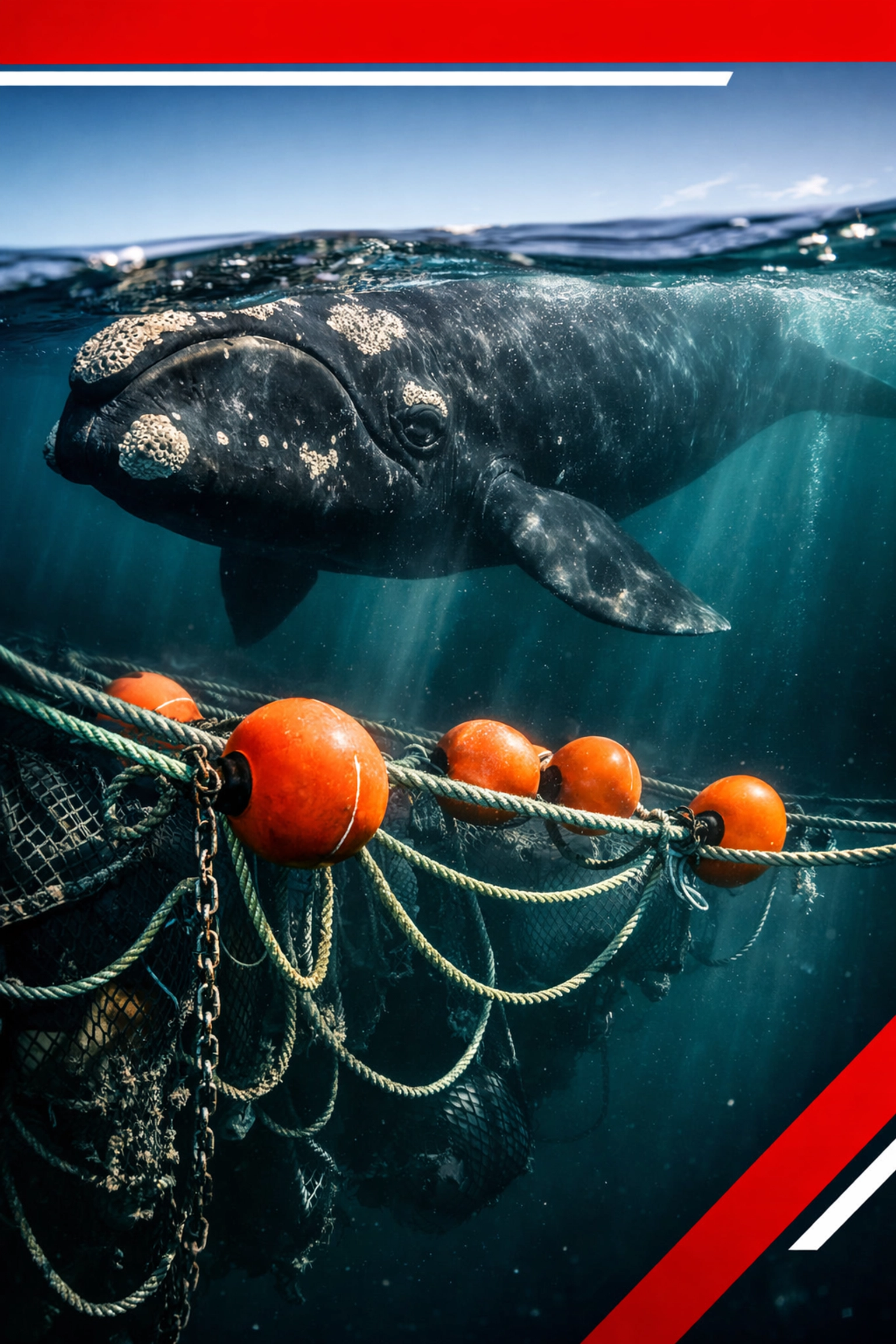
The Department of Fisheries and Oceans Canada announced today the implementation of a new Whalesafe Fishing Gear Strategy, introducing mandatory gear modifications for commercial fishing operations in Atlantic Canadian waters.
The strategy targets the ongoing threat fishing gear poses to the critically endangered North Atlantic right whale population, which numbers fewer than 350 individuals. Entanglement in fishing lines and gear remains one of the leading causes of injury and death for the species.
Under the new regulations, which take effect for the 2026 fishing season, commercial fishers in designated whale protection zones must use breakaway rope systems, ropeless fishing technology where feasible, and colour-coded gear for improved tracking and accountability.
The Snow Crab and Lobster fisheries, two of Atlantic Canada’s most economically important sectors, will see the most significant operational changes. Fishers will be required to reduce the amount of vertical line in the water by using configurations with more traps per line and installing weak links designed to break under the strain of a whale encounter.
DFO will provide financial support to help fishing enterprises transition to compliant gear. The department has allocated $47 million in funding over three years for gear replacement, vessel modifications, and training programs.
Industry response has been mixed. The Fish, Food and Allied Workers union and several fishing associations acknowledge the conservation necessity but have expressed concerns about implementation timelines and the financial burden on smaller operations, particularly with reduced funding compared to previous gear modification programs.
Marine conservation groups have welcomed the initiative, though some argue the measures don’t go far enough and are calling for seasonal fishing closures in critical right whale habitat areas.
3. PEI Government Announces $12 Million Stabilization Package for Oyster Industry
Prince Edward Island’s oyster aquaculture sector is receiving a financial lifeline from the provincial government, which announced a $12 million stabilization program today aimed at supporting producers facing multiple challenges.
The industry has been hit by a combination of factors including disease pressures, climate-related water temperature fluctuations, labour shortages, and market disruptions. PEI produces approximately 50 percent of Canada’s oysters, making the sector critical to the Island’s economy and coastal communities.
The stabilization package includes direct financial assistance for producers experiencing reduced harvest yields, subsidized disease testing and monitoring programs, and investments in research focused on resilient oyster strains and improved growing techniques.
Premier Dennis King said the program recognizes oyster farming’s importance to rural PEI and the province’s reputation as a premium seafood producer. The industry employs more than 800 Islanders directly and supports numerous related businesses in processing, transportation, and tourism.
Specific funding allocations include $5 million in emergency operating support for producers who have documented significant revenue losses over the past two years, $4 million for equipment upgrades and lease site improvements, and $3 million for collaborative research initiatives with the University of Prince Edward Island and the Atlantic Veterinary College.
Industry representatives from the PEI Aquaculture Alliance described the announcement as necessary but noted that long-term sustainability will require ongoing support and streamlined regulatory processes to help operations adapt to changing environmental conditions.
The program will begin accepting applications next month, with the first funding disbursements expected in April 2026.
4. Thousands of Nova Scotia Public Servants Required to Return to Office

The Nova Scotia government is implementing a province-wide return-to-office policy affecting approximately 8,500 provincial employees who have been working remotely or in hybrid arrangements since the pandemic.
The directive, which takes effect on March 31, 2026, requires most provincial public servants to work from government offices a minimum of four days per week. Exceptions will be made for specific roles where remote work is operationally necessary or for employees with documented accommodation needs.
The Department of Public Service Commission says the decision is based on improving collaboration, enhancing service delivery to Nova Scotians, and better utilizing government office space across the province. Officials cite concerns about team cohesion, training effectiveness for newer employees, and declining occupancy rates in provincial buildings.
Union representatives have criticized the mandate, arguing that remote and hybrid work arrangements have proven effective and offer employees better work-life balance while reducing commuting costs and environmental impacts. The Nova Scotia Government and General Employees Union has indicated it will challenge aspects of the policy through the grievance process.
The return-to-office mandate applies to employees in Halifax Regional Municipality and across the province, including those working in Sydney, Truro, New Glasgow, Yarmouth, and other regional centres.
Several departments had already initiated partial returns over the past year, but this represents the first comprehensive mandate affecting the majority of the provincial public service workforce.
Employee surveys conducted over the past six months show mixed reactions, with approximately 40 percent of respondents preferring continued flexible arrangements, 30 percent supporting a full return to office, and the remainder indicating no strong preference.
The policy mirrors similar decisions by the federal government and several other provinces, though Nova Scotia’s four-day-per-week requirement is more stringent than some jurisdictions that have adopted three-day minimums.
5. PEI’s Brett Gallant Eyes Olympic Medal in Mixed Doubles Curling

Prince Edward Island curler Brett Gallant and his mixed doubles partner are representing Team Canada at the Winter Olympics, competing for a medal as the round-robin stage concludes today.
Gallant, originally from Charlottetown and now based in St. John’s, Newfoundland and Labrador, is partnered with skip Jennifer Jones in the mixed doubles event. The team has posted a strong preliminary round record and is positioned for a playoff berth heading into the final day of round-robin competition.
Mixed doubles curling, which made its Olympic debut in 2018, features two-person teams playing eight-end games with five stones per end. The format emphasizes strategy and precision, with each player delivering and sweeping stones.
Gallant brings extensive traditional team curling experience to the Olympic competition, having played third for Brad Gushue’s rink that won the 2017 World Championship and multiple Grand Slam titles. His transition to mixed doubles has been successful, with the partnership qualifying for the Olympics through Canada’s trials process last fall.
Family and friends from PEI are tracking the competition closely, with viewing parties organized at curling clubs in Charlottetown, Montague, and Summerside. The Charlottetown Curling Club, where Gallant developed his skills as a junior player, has displayed Olympic banners and Team Canada memorabilia throughout the facility.
If the Canadian duo medals, Gallant would become one of relatively few athletes from Prince Edward Island to win an Olympic medal in any sport. The province’s most recent Olympic medalist was speed skater Jack McLaughlin, who competed in the 1940s.
The medal round begins later this week, with semifinals scheduled for Friday and the gold and bronze medal matches on Saturday. Team Canada remains among the favourites to reach the podium in a competitive field that includes strong entries from Sweden, Switzerland, and South Korea.
That’s your Maritimes news wrap for Wednesday, February 18, 2026. Check back tomorrow for the latest from across Atlantic Canada.


Post comments (0)