Listeners:
Top listeners:
-
 play_arrow
S1 E9 | Are We That Incompetent? Canada vs Saudi Arabia
-
 play_arrow
S1 E2 | Milk, Markets, and the Cost of Protection

A Turning Point in U.S. Trade Policy: What Canada Should Know
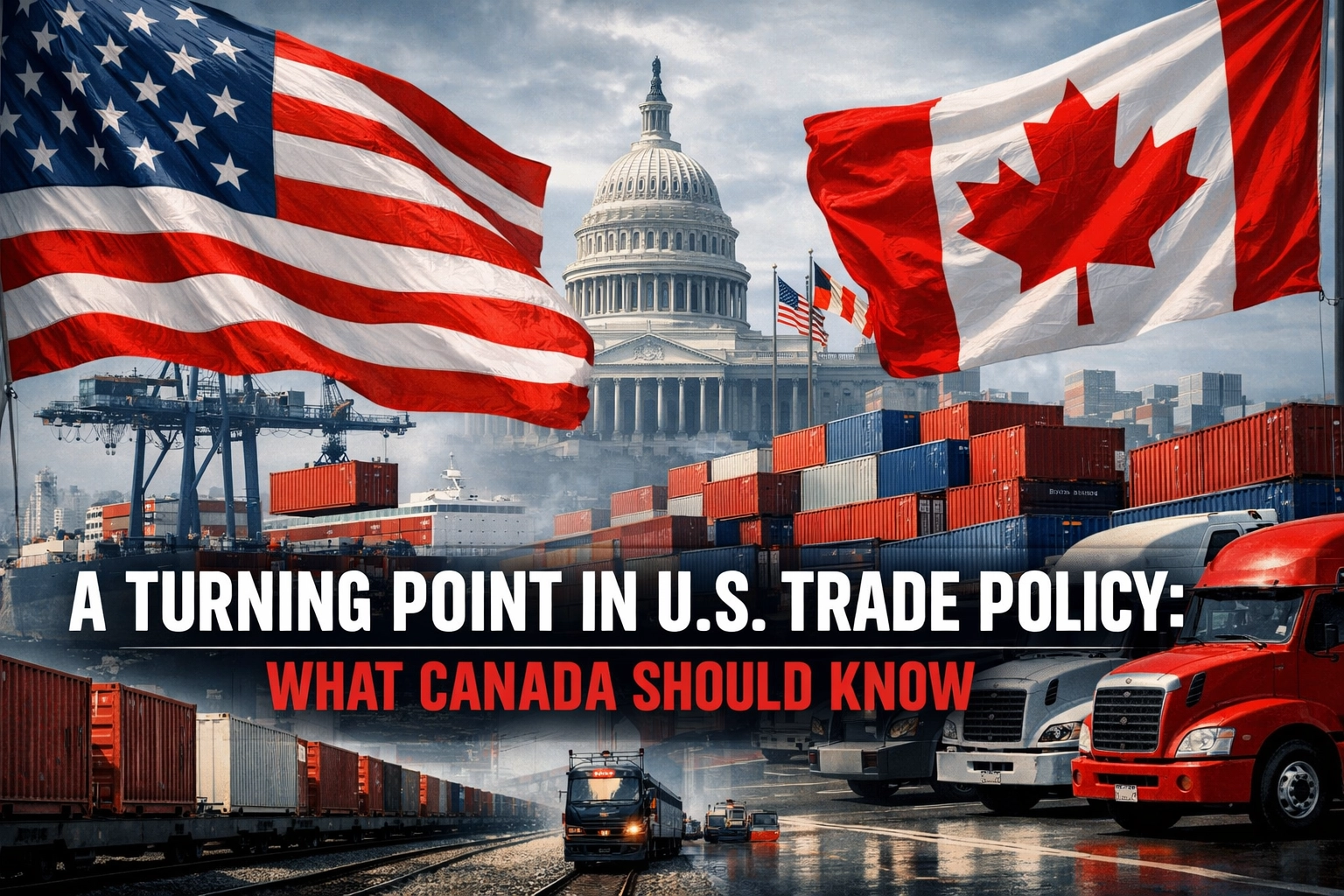
On February 20, 2026, the U.S. Supreme Court delivered a landmark decision, ruling that a large portion of President Trump’s sweeping tariffs imposed under the International Emergency Economic Powers Act (IEEPA) were not authorized by that statute and are therefore invalid. This is a significant development in North American trade policy, and it has direct implications for Canadian businesses, workers, and economic planning.
What This Ruling Means Right Now
This ruling removes the legal foundation for large, broadly applied U.S. tariffs imposed through emergency powers. For Canadian exporters who have been operating under the cloud of that tariff authority, this brings a measure of clarity and relief. Markets reacted positively because a major source of policy uncertainty has been taken off the table.
However, it is important to be precise: this decision does not automatically eliminate all tariffs affecting Canadian trade. The Court’s decision pertains specifically to the use of IEEPA in this context. Tariffs imposed under other legal authorities : such as those tied to national security or specific industry statutes : can remain in force, and negotiations around these will continue.

Immediate Impacts for Canada
Reduced Legal Risk for Broad Tariffs
The decision invalidates one of the most expansive legal justifications for tariffs. For Canadian firms supplying goods across a wide spectrum of sectors, this reduces the risk of sudden, economy-wide tariff spikes based on that authority.
Uncertainty Around Collected Duties
While tariffs may be struck down, whether the duties already collected will be refunded is still unresolved. Companies and governments will need to work through legal and administrative processes to clarify what happens next.
Targeted Tariffs Could Persist
Sectors historically under pressure : such as steel, aluminum, automotive parts, and forestry products : may still face tariffs if the U.S. invokes other statutes. That means Canadian industries must stay vigilant and engaged.
What Canadians Can Expect in the Weeks Ahead
This Supreme Court decision changes the legal landscape, but it does not end trade tensions or policy shifts. We are likely to see:
Continued use of alternative legal tools
The U.S. government may pursue tariffs or trade restrictions under different authorities, such as those tied to national security or specific industry safeguards. These avenues require more procedural steps, but they can still have meaningful impact.
Greater clarity over time
As U.S. agencies respond to the ruling, we will see more concrete guidance about what tariff measures are being maintained, withdrawn, or reissued under different laws.
Opportunities for structured negotiation
The removal of one broad tariff authority creates space for more structured, rule-based discussions between Canadian and U.S. authorities on sector-specific concerns.

A Principled Path Forward for Canada
In a moment like this, stability and clarity matter most for workers, businesses, and investors. Canada’s response should reflect three core principles:
1. Certainty and clarity for Canadian businesses
We need clear, written commitments from the U.S. on the status of existing tariffs and how they plan to proceed legally. Canadian companies cannot plan effectively amid ambiguity.
2. Balanced, strategic responses : not escalations
Where Canadian industries remain exposed, responses should be carefully calibrated to protect jobs and supply chains while avoiding unnecessary cost pressures for Canadian consumers.
3. Strengthening economic resilience
Diversifying our export markets remains a practical priority. By deepening trade relationships beyond a single partner and enhancing competitiveness at home, Canada reduces vulnerability to external policy shifts.

The Bottom Line
The Supreme Court’s ruling is a welcome development because it removes a wide source of tariff risk. But it is not an end to trade policy challenges with the United States : it simply reshapes them. For Canadians, that means staying engaged, defending our economic interests firmly, and working toward predictable frameworks that support jobs and prosperity.
In the days and months ahead, Canada will continue to press for clarity, protect its industries, and build the strong, resilient economy that Canadians deserve.
Stay informed on the latest developments in Canadian trade policy and national affairs at The Canadianist News.
Post comments (0)