Listeners:
Top listeners:
-
 play_arrow
S1 E9 | Are We That Incompetent? Canada vs Saudi Arabia
-
 play_arrow
S1 E2 | Milk, Markets, and the Cost of Protection

Gold Fever: The $5,000 Ounce and Canada’s New Northern Boom
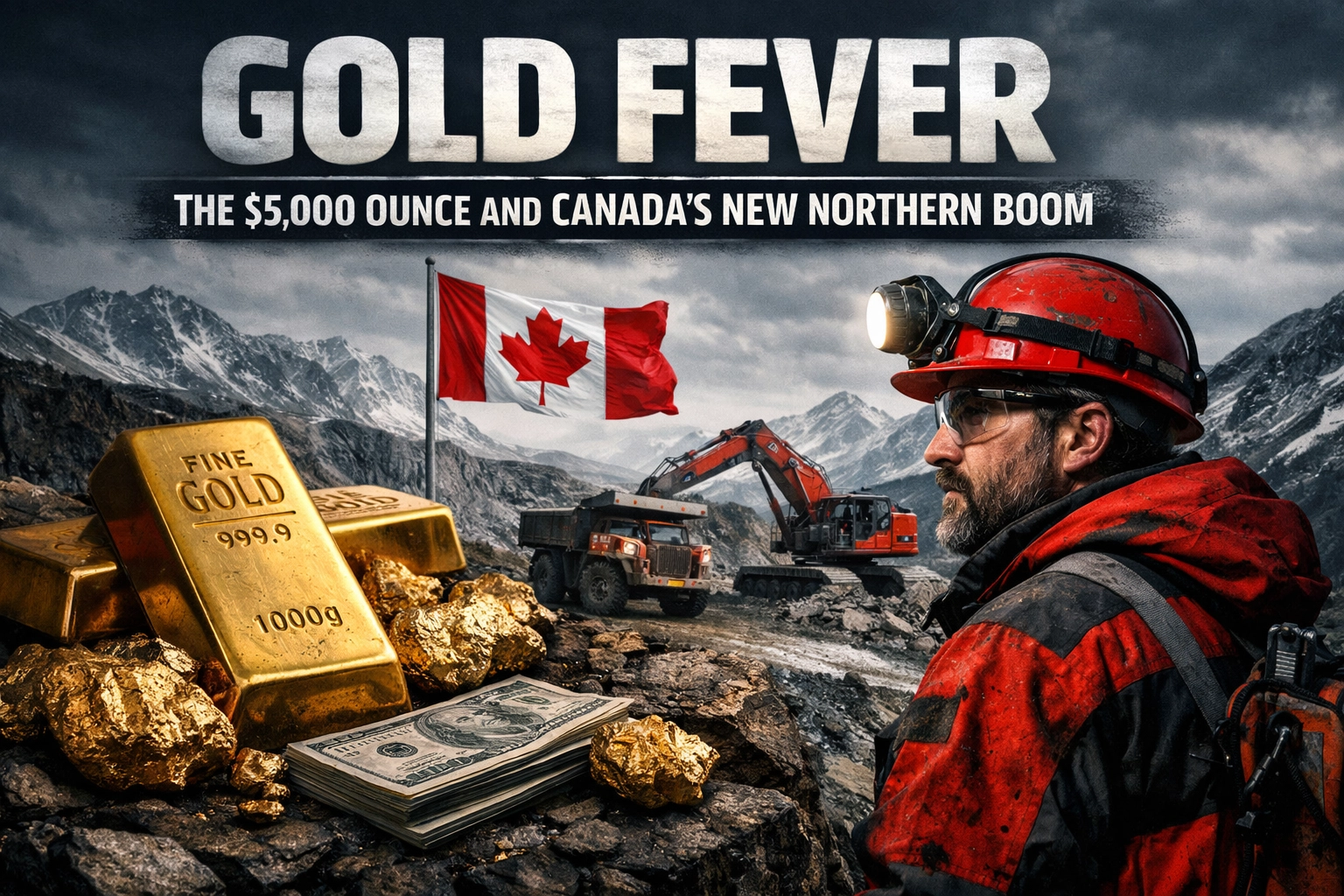
Watch the numbers climb. Listen to the drills spinning up across the Canadian Shield. Read the tea leaves in gold price charts that look more like rocket trajectories than commodity markets.
We’re in the middle of a northern gold rush, and this time, it’s not about prospectors with pickaxes: it’s about billion-dollar mines, regulatory fast-tracks, and a metal that just won’t stop climbing.
The $5,000 Threshold
Gold cracked $4,650 per ounce in early February. Goldman Sachs is calling for $5,400 by year’s end. Some analysts are whispering about $10,000 in a full historical bull run. Those aren’t typos. That’s the new reality of a commodity market being reshaped by U.S. dollar concerns, central bank hoarding, and investors hedging against everything from trade wars to fiscal meltdowns.
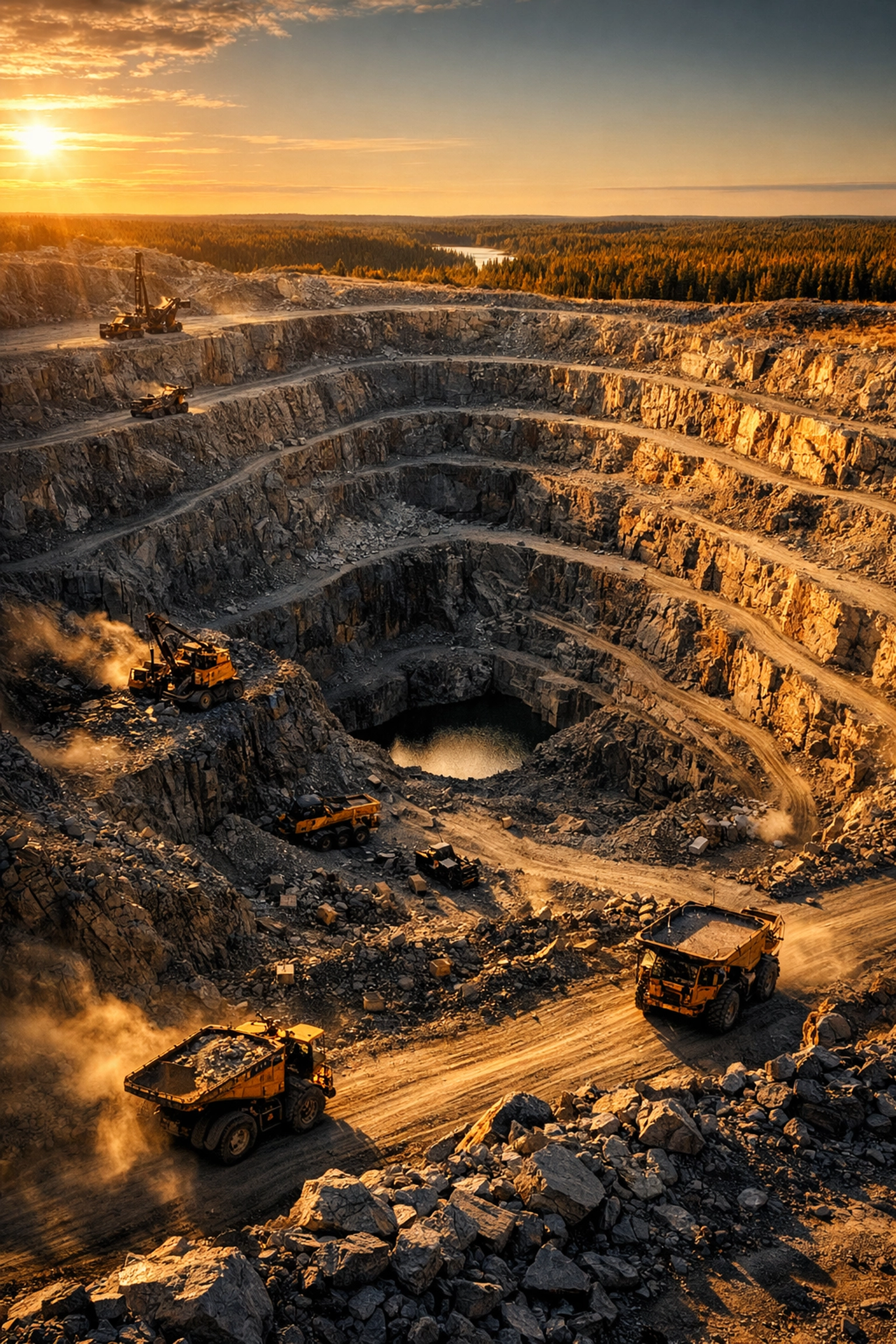
For Canada: already the world’s fourth-largest gold producer: this isn’t just good news. It’s nation-building news. Gold exports now outpace the entire auto sector in value. Production has jumped more than 30% over the past decade. And with multiple major projects coming online in 2026, we’re not just riding the wave. We’re helping create it.
Ontario’s Fast-Track Gambit
Enter Kinross Gold and Ontario’s latest play: a regulatory fast-track that’s raising eyebrows and raising stakes. The provincial government is greenlighting accelerated approvals for high-priority mining projects, slashing timelines that traditionally stretch years into months. For Kinross, operating multiple sites across Northern Ontario, this means getting shovels in the ground faster than ever before.
Critics call it corner-cutting. Supporters call it common sense. The truth? It’s desperation meeting opportunity. Northern Ontario communities have watched resource booms fuel other provinces while their own infrastructure crumbles and young people flee south. A gold boom: handled right: could reverse decades of economic decline.
The fast-track isn’t without guardrails. Environmental assessments still happen. Indigenous consultation remains mandatory. But the message is clear: Ontario wants its share of the gold rush, and it wants it now.

The Yukon’s Royalty Reckoning
Meanwhile, 3,000 kilometres northwest, the Yukon is having a very different conversation. The territory’s mineral royalty structure hasn’t changed substantially since 1906. Read that date again. King Edward VII was on the throne. The first Model T wouldn’t roll off Ford’s assembly line for another two years.
Yukon’s current royalty rates are so low they’re practically a rounding error: 2.5% on net smelter returns for most precious metals. In an era when gold miners are printing money at $5,000 per ounce, Yukoners are asking a reasonable question: Why are we leaving so much wealth on the table?
The mining industry, predictably, is pushing back hard. Higher royalties, they argue, will kill investment and send capital fleeing to friendlier jurisdictions. But the counterargument is gaining traction: If you can’t make money mining gold at $5,000 an ounce with slightly higher royalties, maybe you shouldn’t be in the mining business.
It’s a debate that cuts to the heart of resource economics. Who benefits from Canada’s mineral wealth? And how do we balance immediate jobs with long-term community prosperity?
The National Unity Angle
Here’s where the gold boom gets genuinely interesting for national unity. For decades, Western and Northern Canada have felt like resource colonies: extracting wealth that flows to Toronto banks and Ottawa bureaucrats while local communities see environmental damage and boom-bust cycles.
A well-managed gold boom could flip that script. Fast-tracked projects mean jobs now, not five years from now when the price might have crashed. Updated royalty structures mean communities actually capture lasting wealth from finite resources. Infrastructure investments: roads, transmission lines, broadband: built for mines also serve everyone else.
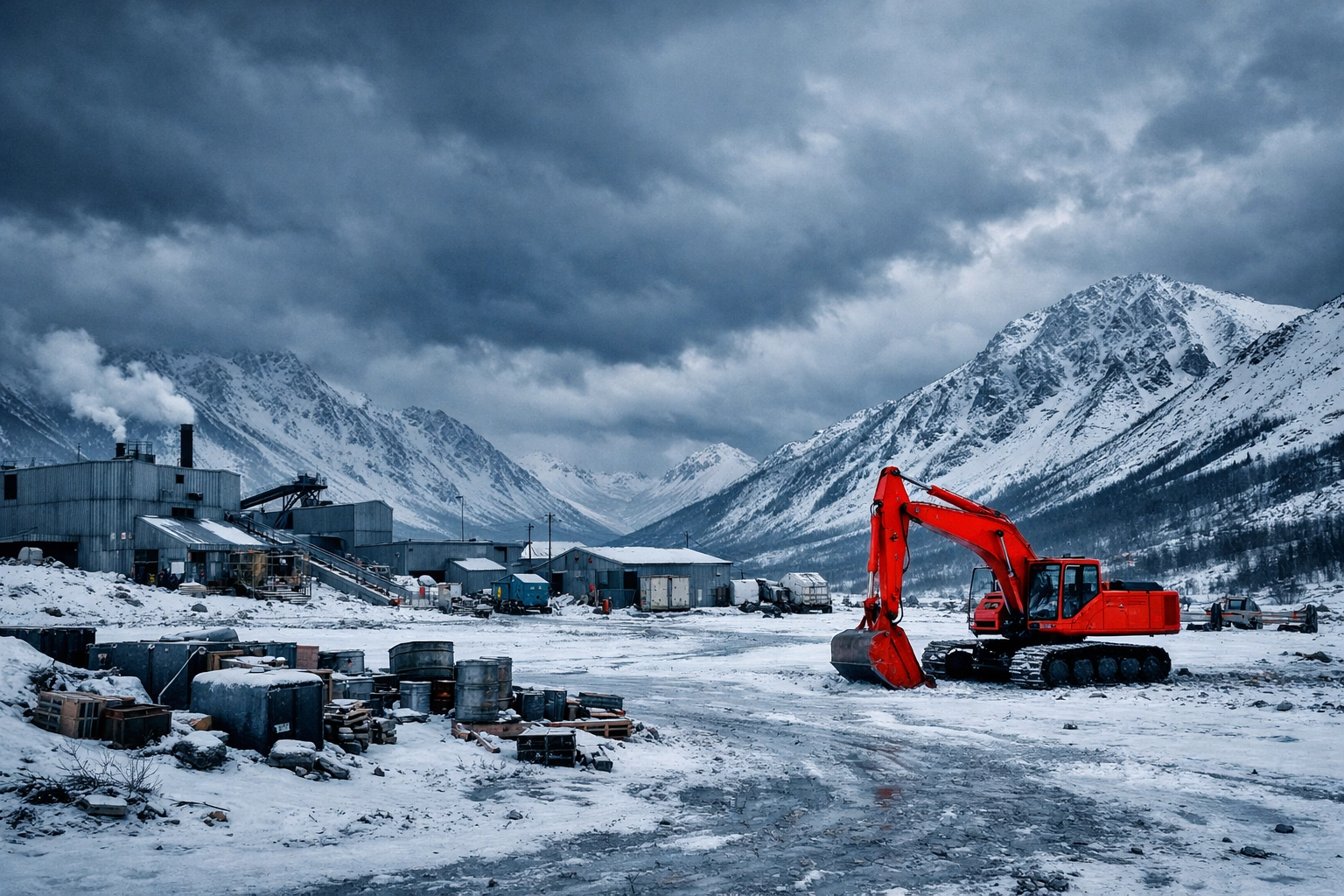
This isn’t Pollyanna economics. It’s pragmatism. Gold won’t stay at $5,000 forever. The window for transformative development in Canada’s north is measured in years, not decades. Get it right, and you build sustainable economies that outlast the mining cycle. Get it wrong, and you’re left with giant holes in the ground and nothing to show for it.
The Bigger Picture
Canada’s gold boom is unfolding against a backdrop of global uncertainty: trade tensions, monetary instability, geopolitical fractures. In that context, gold isn’t just a commodity. It’s a safe haven. And Canada, blessed with stable governance and massive deposits, is positioned to be the safe haven’s safe haven.
The question isn’t whether we’ll mine the gold. We will. The question is whether we’ll use this moment to build something lasting: economies that work for actual Northerners, regulatory frameworks that balance speed with sustainability, and wealth-sharing models that keep communities whole.
Gold fever is back. This time, let’s make sure we don’t blow it.
Stay informed on Canada’s economic transformation. Visit The Canadianist News for balanced coverage that digs deeper.

Post comments (0)