Listeners:
Top listeners:
-
 play_arrow
S1 E9 | Are We That Incompetent? Canada vs Saudi Arabia
-
 play_arrow
S1 E2 | Milk, Markets, and the Cost of Protection

The Wild Rose Referendum: Danielle Smith’s High-Stakes Bet on Alberta’s Future

Circle your calendars, Alberta. October 19, 2026 just became the most important date in your province’s recent history.
Premier Danielle Smith dropped a political bomb last night, announcing not one, not two, but nine referendum questions that could fundamentally reshape the relationship between Alberta and the rest of Canada. If you thought the Fair Deal Panel was spicy, buckle up. This is constitutional poker with the highest possible stakes.
Nine Questions, One Vision
Here’s what Albertans will be voting on come fall:
Five questions tackle immigration head-on. Smith wants Alberta to control who comes in, how many arrive, and what services they can access once they’re here. The proposals would grant the provincial government authority to decrease immigration levels, prioritize economic migrants, and, here’s the kicker, restrict provincial social programs like healthcare and education to Canadian citizens, permanent residents, and specifically approved Alberta immigrants.
Translation: If you’re an international student or asylum seeker, your access to provincial services could be on the chopping block.
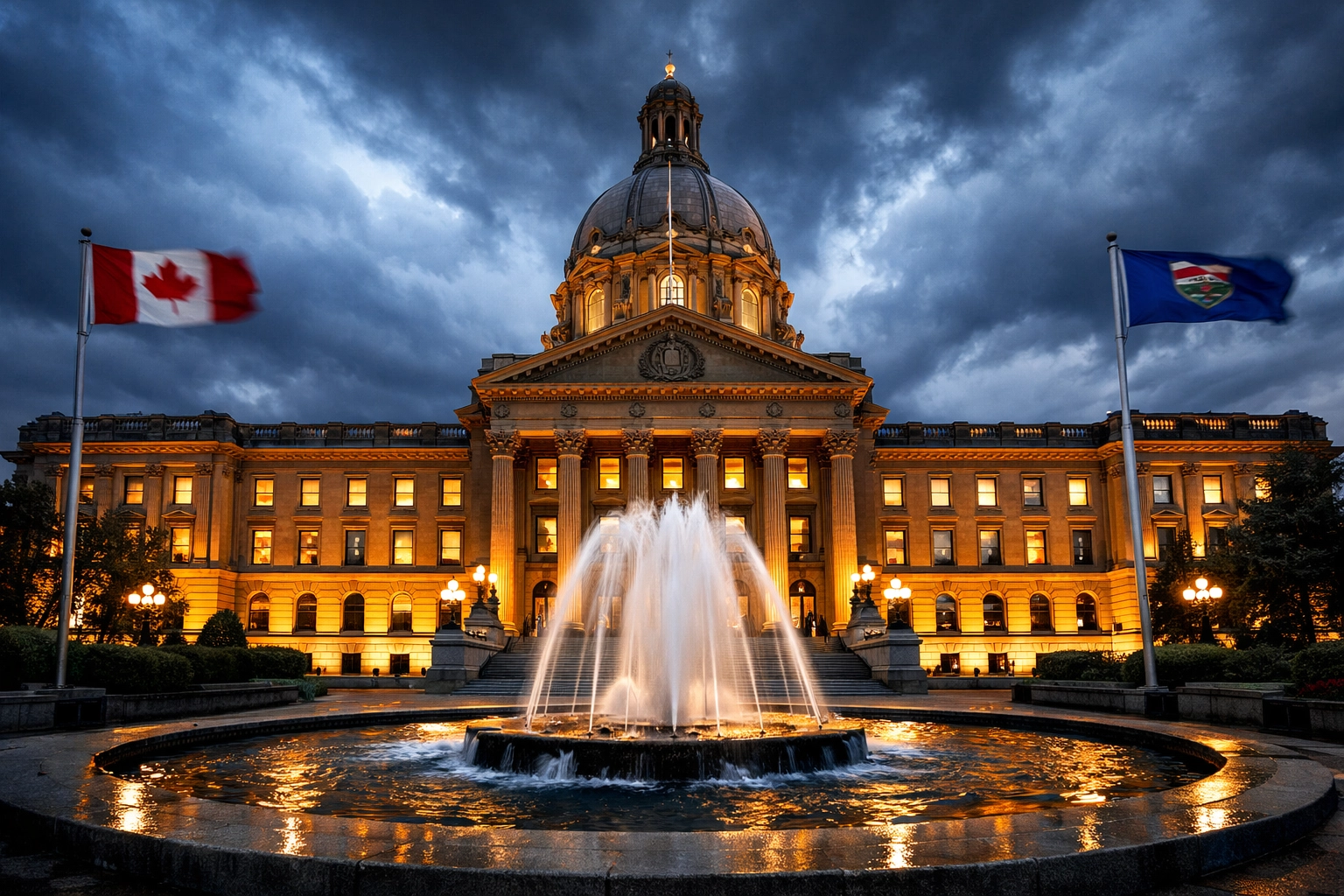
The other four questions go straight for the constitutional jugular. Smith is proposing that Alberta select its own provincial court justices instead of letting Ottawa do it. She wants to abolish the Senate entirely. She’s pushing for provinces to opt out of federal programs without losing the funding. And she wants provincial laws to take priority over federal laws in areas of shared jurisdiction.
That last one isn’t a typo. Provincial laws. Over federal laws. In shared jurisdiction.
The Case for Change
To be fair, Smith isn’t pulling these ideas from thin air. Alberta’s argument rests on a foundation of legitimate frustration.
The province has been absorbing massive population growth, much of it driven by federal immigration policy, without proportional increases in federal transfers. Classrooms are bursting. Healthcare wait times are stretching. Housing costs are climbing. And the province is staring down a budget deficit that makes provincial treasurers wake up in cold sweats.
Smith’s pitch is simple: Ottawa sets immigration targets without consulting provinces properly, then leaves them to deal with the infrastructure crunch and service delivery chaos. Why shouldn’t Alberta have a say in who settles within its borders, especially when it’s footing the bill?
It’s a question that resonates with a lot of Albertans who feel like they’ve been playing by rules written in Ottawa for Ottawa’s benefit.
The Separatist Sleight of Hand
But here’s where things get interesting.
Political analysts aren’t buying Smith’s “just fixing federation” framing. They see something more calculated at play. The referenda are designed to succeed at the ballot box, they’re populist catnip, but fail in implementation. Why? Because constitutional amendments require agreement from other provinces and navigating the labyrinthine amending formula.
When these proposals inevitably hit the constitutional brick wall, Smith gets to turn to Albertans and say, “See? The rest of Canada won’t let us have a voice. Maybe we need to think about going it alone.”
It’s separation by another name. Or at least, it’s laying the groundwork for that conversation.
This isn’t happening in a vacuum, either. In 2025, Alberta lowered the threshold for triggering provincial referenda from 20 percent of eligible voters to just 10 percent, and extended the signature-gathering period from 90 to 120 days. The deck is being reshuffled to make these kinds of exercises easier to launch and harder to ignore.
Treaty Rights in the Crossfire
There’s another voice that needs to be heard here: Indigenous nations.
The Confederacy of Treaty No. 6 and other First Nations groups have been vocal in their opposition to any separation-adjacent moves, calling them unconstitutional and a direct threat to treaty rights. When you’re talking about fundamentally altering the nature of Canadian federalism, you’re talking about agreements that predate Confederation itself.
The Alberta Legislature passed Bill 14 in December 2025 to address some of these concerns, but the tension remains. Any reshuffling of federal-provincial power dynamics has to account for Indigenous sovereignty and treaty obligations, full stop.
The Canadianist Take
So where does that leave the rest of us?
Here’s the thing: Alberta’s frustrations are real. Provincial governments do bear the brunt of immigration-driven infrastructure strain without adequate federal support. The immigration system does need reform. And yes, the federation could stand to be more flexible about one-size-fits-all federal programs.
But Smith’s approach isn’t just about fixing those problems. It’s about creating a constitutional crisis as a political strategy.
There’s a massive difference between negotiating in good faith for better federal-provincial coordination and launching referenda designed to fail so you can stoke separatist sentiment. One builds a stronger Canada. The other tears it apart.
The irony? The best parts of Smith’s proposals: better immigration coordination, more provincial flexibility: could actually happen if approached through collaborative channels. Premiers have more leverage than ever with a minority Parliament in Ottawa. There’s room to negotiate.
But negotiation requires partners, not ultimatums. And referenda that pit Alberta against the rest of Canada don’t exactly create a collaborative atmosphere.
What Happens Next
Between now and October 19, expect this to dominate Canada headlines in ways we haven’t seen since the Quebec referendums. Every provincial capital will be watching. Every federal party will be calculating. And every Albertan will be deciding what kind of province: and what kind of country: they want to live in.
This isn’t just about immigration levels or Senate reform. It’s about whether Canada works as a federation or whether we’re headed for a fundamental reckoning about what this country is and who gets to decide.
Smith is betting that Albertans want change more than they want stability. That they’re frustrated enough to blow up the constitutional order. That the pain of the present outweighs the uncertainty of the future.
She might be right. Or she might be about to learn that most Canadians: even frustrated, deficit-staring, classroom-bursting Albertans: still believe we’re better together than apart.
Either way, October 19 will tell us something important about where this country is headed. And whether the Wild Rose is ready to go it alone, or just wants Ottawa to finally listen.
Stay tuned. This is just getting started.

Post comments (0)