Listeners:
Top listeners:
-
 play_arrow
S1 E9 | Are We That Incompetent? Canada vs Saudi Arabia
-
 play_arrow
S1 E2 | Milk, Markets, and the Cost of Protection

Janice Charette Named Chief Negotiator for CUSMA Trade Negotiations
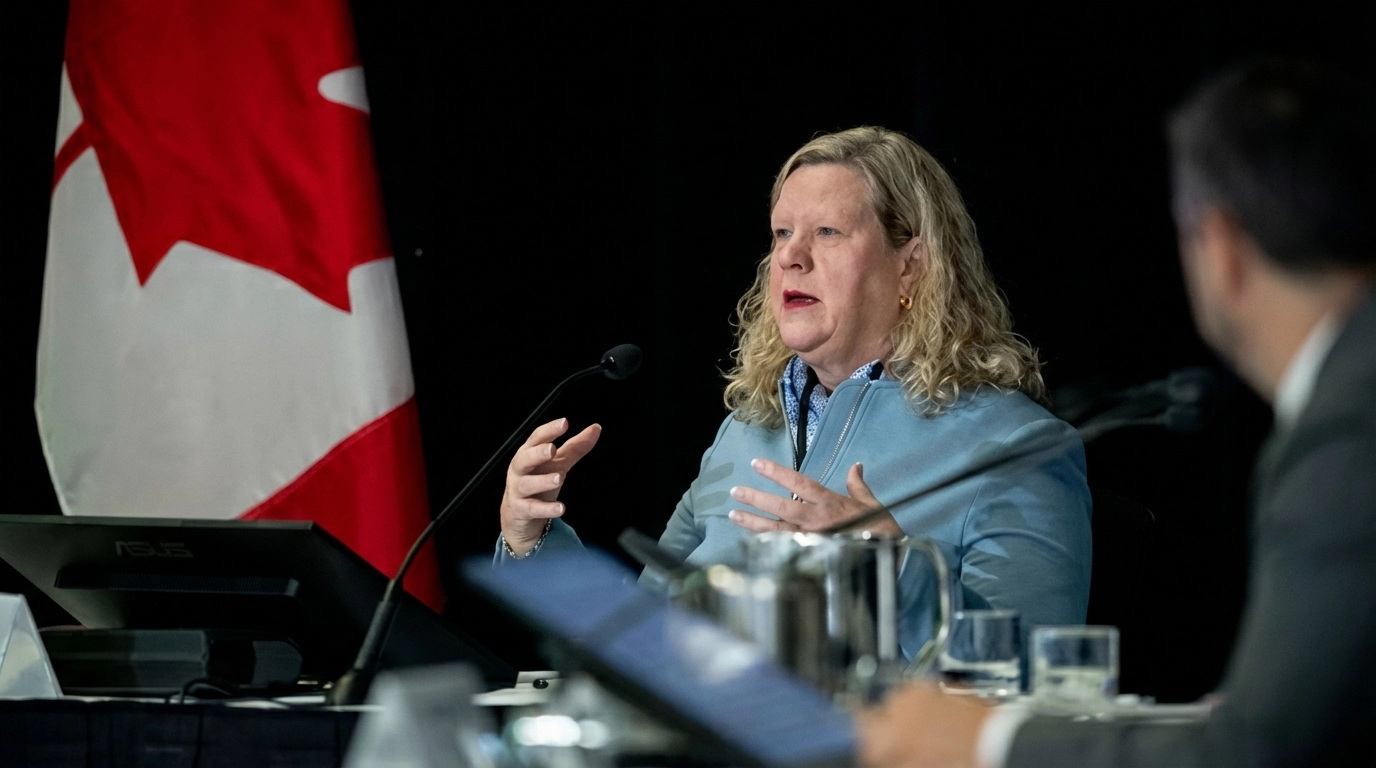
OTTAWA : The federal government has appointed Janice Charette as Canada’s chief trade negotiator to lead the country’s upcoming negotiations on the Canada-United States-Mexico Agreement (CUSMA).
Prime Minister Mark Carney announced the appointment on February 16, 2026, as Canada prepares for a mandated review of the trilateral trade agreement. Charette will work alongside Canada’s Ambassador to the United States, Mark Wiseman, to manage the review process.

Background on the Appointment
Charette brings four decades of experience in public policy and diplomacy to the role. She previously served as clerk of the Privy Council, the highest-ranking civil servant in the Canadian government. Her appointment positions her to coordinate Canada’s negotiating team domestically while Wiseman engages directly with U.S. counterparts.
The CUSMA review becomes mandatory on July 1, 2026, marking the sixth anniversary of the agreement’s implementation. The trade pact, which entered into force on July 1, 2020, includes a 16-year term requiring the three member nations to conduct a joint review at the six-year mark.
Trade Relationship Context
The Canada-U.S. trade relationship represents one of the world’s most significant economic partnerships. More than 3.5 billion Canadian dollars in goods and services cross the border daily between the two countries. Under CUSMA, approximately 85 percent of merchandise trade between Canada and the United States remains tariff-free.

Provincial Budget Pressures
The appointment comes as several Canadian provinces face challenging budget seasons. Provincial governments have expressed concerns about ongoing trade pressures from the United States, which could impact economic planning and fiscal forecasts for the coming year.
Finance ministers across multiple provinces have indicated that uncertainty in cross-border trade relations complicates budget preparation, particularly in sectors heavily dependent on exports to U.S. markets.
Negotiation Timeline
The formal CUSMA review process is scheduled to begin this summer. The agreement’s structure requires the three member countries: Canada, the United States, and Mexico: to participate in the review jointly. The process will examine the agreement’s implementation and effectiveness over its first six years of operation.

Trade experts note that the review provides an opportunity for member nations to address any concerns that have emerged since the agreement took effect, as well as to consider adjustments based on changing economic conditions.
Key Sectors Under Scrutiny
While the specific agenda for the review has not been publicly released, several sectors are expected to receive attention during negotiations. These include agriculture, automotive manufacturing, digital trade, and labor standards: all areas that were subjects of extensive debate during the original CUSMA negotiations.
The dairy sector in Canada, automotive parts manufacturing in Mexico, and digital services provisions affecting all three countries are among the topics likely to be discussed during the review process.
Government Statement
The Prime Minister’s Office stated that Charette’s appointment reflects the government’s commitment to protecting Canadian interests in North American trade. The office emphasized the importance of the CUSMA framework to Canada’s economic stability and growth.
No additional details about the composition of Canada’s broader negotiating team have been announced at this time.
What Happens Next
Charette is expected to begin assembling Canada’s negotiating team in the coming weeks. The team will include representatives from various government departments, including Global Affairs Canada, Innovation, Science and Economic Development Canada, and Agriculture and Agri-Food Canada.
The federal government has indicated it will consult with provincial and territorial governments, as well as industry stakeholders, throughout the review process to ensure Canadian positions reflect a broad range of interests.
The joint review between Canada, the United States, and Mexico is scheduled to commence on July 1, 2026, with preliminary discussions expected to begin in the months leading up to that date.


Post comments (0)