Listeners:
Top listeners:
-
 play_arrow
S1 E9 | Are We That Incompetent? Canada vs Saudi Arabia
-
 play_arrow
S1 E2 | Milk, Markets, and the Cost of Protection

TERRITORIES BUREAU Morning Roundup: February 18, 2026

Good morning from Canada’s three territories. Here are the top five stories across Yukon, Northwest Territories, and Nunavut for Wednesday, February 18, 2026.
1. Northern Premiers Push Infrastructure Funding During Ottawa Meetings
Territorial leaders from Yukon, Northwest Territories, and Nunavut met with federal officials in Ottawa this week to advocate for increased infrastructure investments tied to Arctic security spending.
The premiers presented a coordinated position to federal ministers, requesting that housing and energy infrastructure receive equivalent priority and funding alongside military and security initiatives in the North. The meetings occurred Tuesday and Wednesday at various federal department offices.
Yukon Premier Ranj Pillai, Northwest Territories Premier R.J. Simpson, and Nunavut Premier P.J. Akeeagok emphasized the connection between national security objectives and territorial infrastructure capacity. The premiers argued that Arctic sovereignty depends on sustainable northern communities supported by adequate housing stock and reliable energy systems.
Federal Arctic security funding announcements over the past year have focused primarily on military installations, surveillance technology, and Coast Guard capabilities. Territorial governments now seek parallel commitments for civilian infrastructure that supports permanent northern populations.
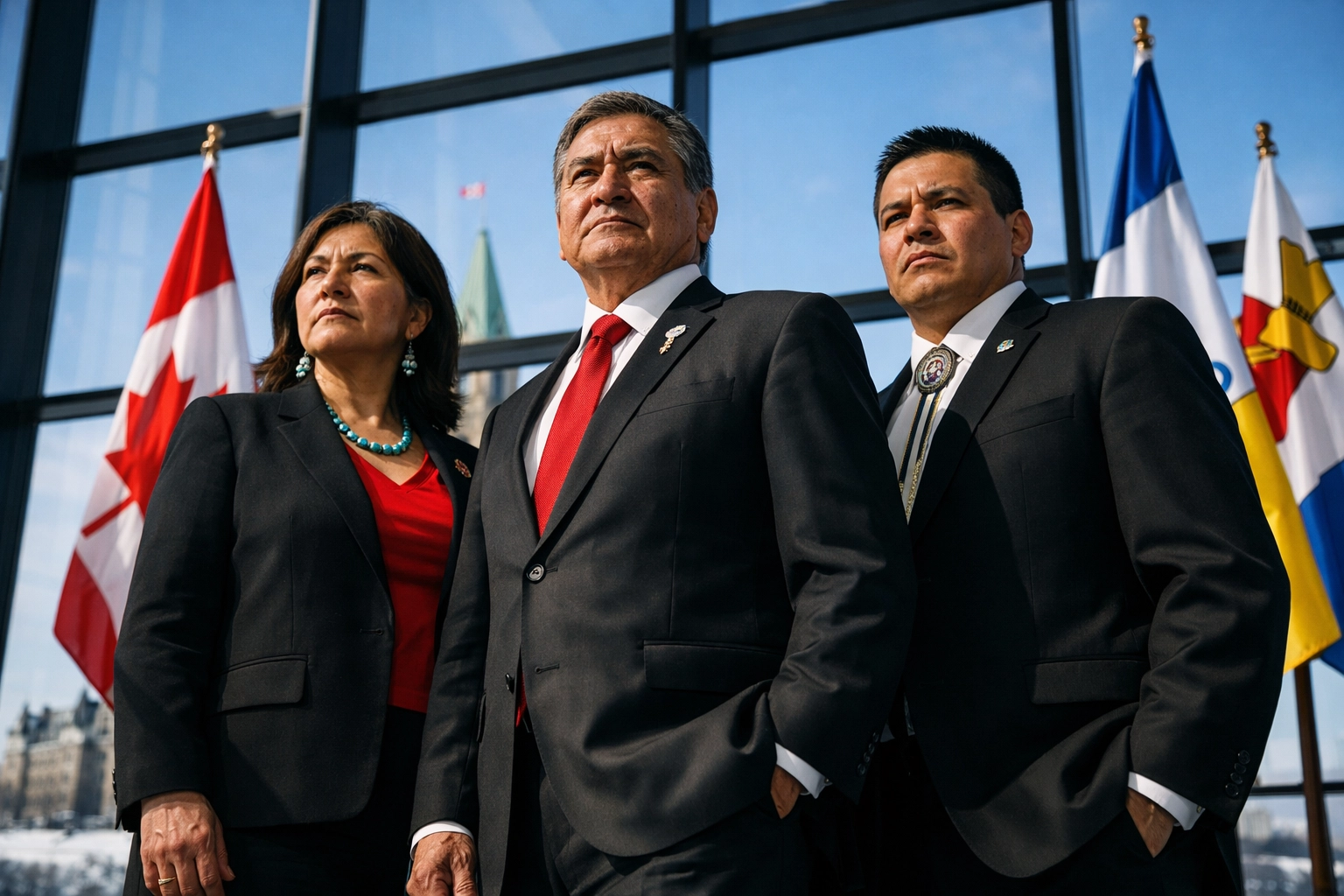
The premiers’ delegation met with Housing and Infrastructure Minister Gregor Robertson, Northern Affairs Minister Dan Vandal, and Defence Minister Anita Anand. No specific funding commitments were announced following the meetings, though officials confirmed ongoing discussions about infrastructure priorities in upcoming budget planning.
The coordinated advocacy effort reflects growing concern among territorial governments that federal Arctic policy emphasizes defence spending while underfunding the infrastructure needs of northern residents. Housing shortages, energy reliability issues, and aging transportation networks remain critical challenges across all three territories.
2. Northwest Territories Diamond Industry Faces Operational Challenges
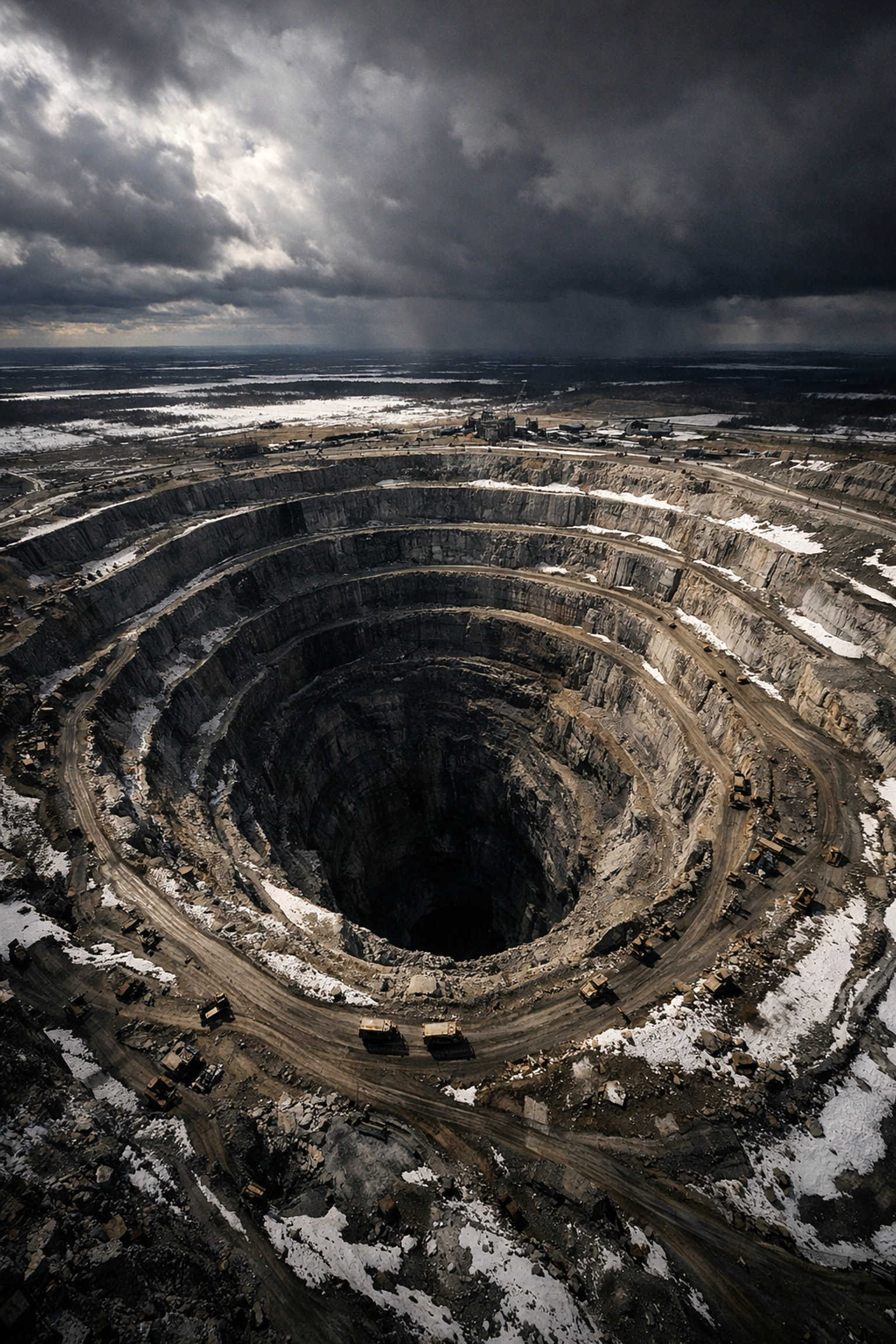
The Northwest Territories’ diamond mining sector is experiencing significant economic strain as multiple operations confront market downturns and operational difficulties, territorial Industry Minister Caroline Wawzonek confirmed Tuesday.
Wawzonek delivered remarks to the Legislative Assembly outlining the current state of the territory’s diamond industry, which has been a cornerstone of the N.W.T. economy since the Ekati mine opened in 1998. The minister cited declining diamond prices in international markets, aging mine infrastructure, and increased operational costs as primary factors affecting the sector.
The territory’s three major diamond operations: Ekati, Diavik, and Gahcho Kué: collectively employ approximately 1,800 workers directly and support thousands of additional positions through contracting and supply chain relationships. Diamond mining accounts for approximately 30 percent of the N.W.T.’s gross domestic product.
Wawzonek did not specify which operations face the most immediate challenges but acknowledged that the territorial government is engaged in discussions with mining companies about potential support measures. The minister emphasized that any territorial assistance would need to balance economic support with fiscal responsibility.
Global diamond markets have experienced sustained pressure since 2023, driven by oversupply conditions, competition from laboratory-grown diamonds, and reduced luxury spending in key markets including China and the United States. Rough diamond prices have declined approximately 20 percent from 2023 levels.
The N.W.T. government has convened an industry working group including mining company representatives, Indigenous government leaders, and labour organizations to assess the sector’s medium-term outlook and potential policy responses. The working group is scheduled to deliver preliminary recommendations by April 2026.
3. Whitehorse Athlete Wins Bronze with Team Canada at World Juniors
Whitehorse-born forward Gavin McKenna secured a bronze medal with Team Canada at the World Junior Hockey Championships, which concluded Sunday in Minneapolis, Minnesota.
McKenna, 18, contributed two goals and four assists in seven tournament games as Canada defeated Sweden 4-2 in the bronze medal final. The Yukon athlete played on Canada’s second line throughout the tournament and recorded points in five of his seven appearances.
The championship marked Canada’s return to the medal podium after failing to reach the final round in 2025. The United States won gold, defeating Finland 3-1 in the championship game.
McKenna currently plays for the Medicine Hat Tigers in the Western Hockey League, where he has recorded 64 points in 43 games this season. The young forward was selected fourth overall in the 2025 NHL Entry Draft by the Anaheim Ducks and is expected to begin his professional career following the 2026-27 junior season.
McKenna is the second Whitehorse-born player to win a medal at the World Junior Championships, following goaltender Tyson Sexsmith, who won gold with Canada in 1997. McKenna learned to skate at the Canada Games Centre in Whitehorse and played youth hockey with the Whitehorse Minor Hockey Association before moving to British Columbia for bantam-level competition.
Yukon Hockey congratulated McKenna on social media Tuesday, noting his achievement as an inspiration for young players across the territory. The organization reported increased youth hockey registration following McKenna’s selection in the 2025 NHL Draft.
4. Nunavut Communities Announce Local Government Changes
Pangnirtung will hold a mayoral byelection on March 2 following the resignation of the community’s previous mayor, while Rankin Inlet hamlet council has formally requested territorial support for enhanced road safety measures.
The Pangnirtung byelection was confirmed by Nunavut’s Chief Electoral Officer on Monday. Three candidates have registered to compete for the mayoral position: former deputy mayor Susan Aglukark, hamlet councillor Peter Kilabuk, and business owner James Arragutainaq. Advance polling will occur February 27 at the community hall.
The previous mayor resigned in December 2025 citing personal reasons. Deputy Mayor Aglukark has served as acting mayor during the interim period. Pangnirtung, located on Baffin Island’s Cumberland Sound, has a population of approximately 1,500 residents.
In Rankin Inlet, hamlet council passed a resolution requesting territorial government assistance with road safety improvements, particularly along the community’s main thoroughfare. The resolution, approved at council’s February 12 meeting, cites increasing vehicle traffic and inadequate lighting as primary concerns.

Rankin Inlet Mayor Harry Towtongie confirmed that the hamlet has submitted a formal request to the Department of Community and Government Services for funding to install additional streetlights and improved signage along key routes. The hamlet is also requesting support for traffic calming measures near the community school.
Rankin Inlet, with a population of approximately 2,900, serves as Nunavut’s second-largest community and a regional hub for the Kivalliq region. Vehicle ownership in the community has increased approximately 15 percent since 2022, according to territorial motor vehicle registration data.
The Department of Community and Government Services has not yet responded publicly to Rankin Inlet’s request. Territorial officials typically review municipal infrastructure requests during annual capital planning processes.
5. Military Fuel Truck Spill Triggers Cleanup Response on Northern Highway
Emergency crews are conducting environmental cleanup operations following a 3,000-liter diesel fuel spill caused when a Canadian Armed Forces fuel tanker overturned on the Dempster Highway Tuesday morning.
The incident occurred approximately 85 kilometres north of the Yukon-Northwest Territories border near kilometre marker 450. The military vehicle left the roadway during transport operations and rolled onto its side, rupturing one of its fuel compartments. No injuries were reported.
Yukon’s Emergency Measures Organization confirmed the spill at approximately 11:00 a.m. Tuesday and deployed response teams to the site. Environmental contractors established containment booms and began fuel recovery operations Tuesday afternoon. The affected area includes highway shoulder terrain and limited drainage into adjacent muskeg.
The Dempster Highway remained open to single-lane alternating traffic throughout the response. Delays of 30 to 45 minutes were reported Tuesday afternoon as heavy equipment removed the overturned vehicle from the scene.
The Canadian Armed Forces confirmed the vehicle was part of a northern training exercise and was transporting fuel between Inuvik and Whitehorse when the incident occurred. Military officials are conducting an internal investigation into the cause of the rollover.
Environment and Climate Change Canada dispatchers notified territorial environmental response authorities and are monitoring cleanup progress. Initial assessments indicate the spill is contained and has not reached any watercourses.
Recovery operations are expected to continue through Thursday, with soil remediation work scheduled for spring 2026 following ground thaw. The military has committed to covering all cleanup and environmental remediation costs.
Yukon Highways and Public Works reports normal winter driving conditions on the Dempster Highway, with temperatures ranging from minus 18 to minus 25 degrees Celsius in the affected area.
For more territorial news, visit The Canadianist.
Post comments (0)