Listeners:
Top listeners:
-
 play_arrow
S1 E9 | Are We That Incompetent? Canada vs Saudi Arabia
-
 play_arrow
S1 E2 | Milk, Markets, and the Cost of Protection

Backroom Deals or Front-Door Realignment? Poilievre’s Fight for the Conservative Soul

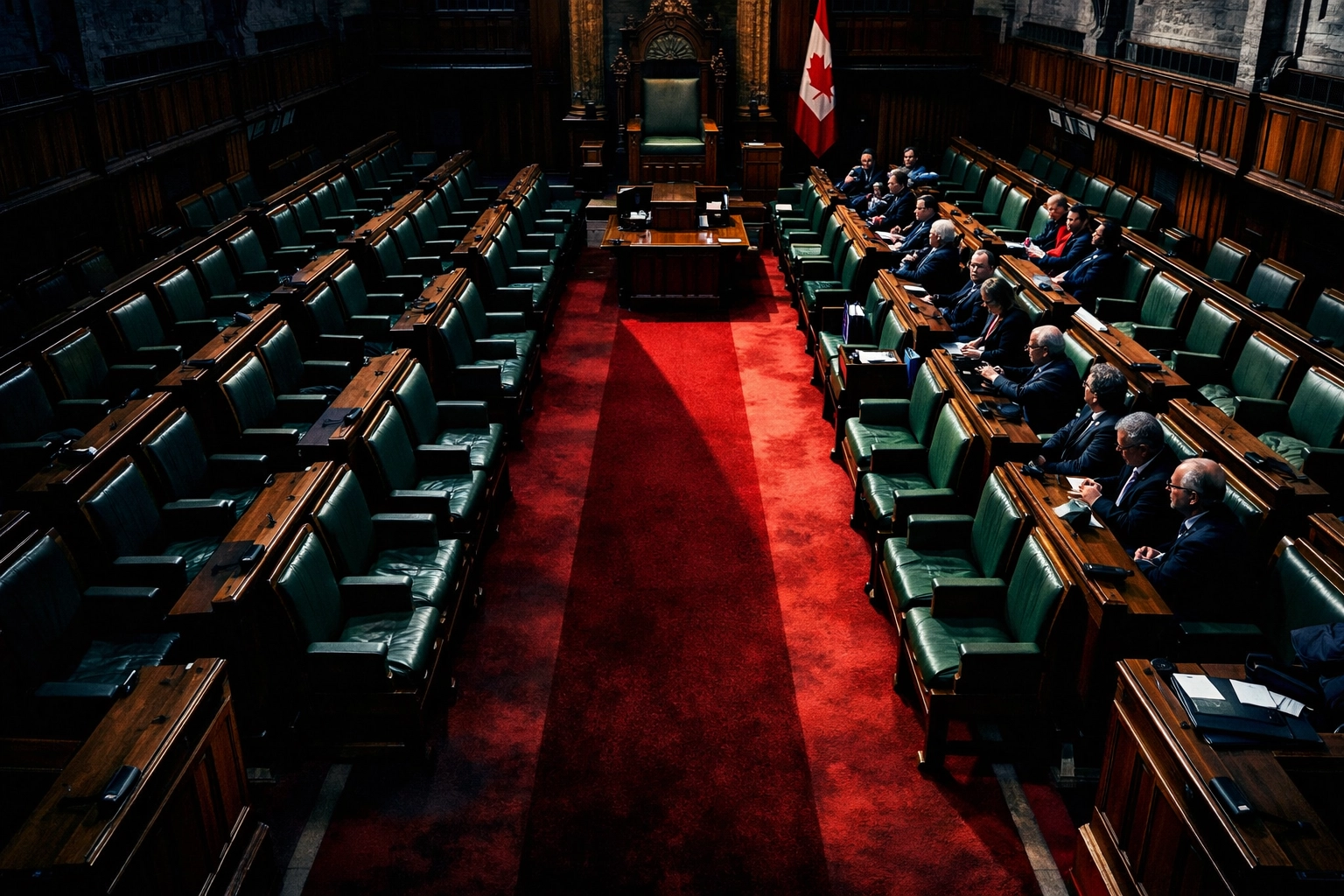
Watch the House of Commons these days. Count the seats. Do the math.
Three Conservative MPs have crossed the floor to join Mark Carney’s Liberals in the past six weeks. Matt Jeneroux. Chris d’Entremont. Michael Ma. Three names that Pierre Poilievre probably mutters in his sleep. Three votes that inch the Liberals closer to that magic number: 170 seats. A majority government.
And Poilievre? He’s calling it what he always calls it: backroom deals. Betrayal. The kind of political maneuvering that insults voters and undermines democracy itself.
But here’s the question we need to ask, uncomfortable as it might be: Is he right?
The Rhetoric Gets Loud
Poilievre has never been one for subtlety. Since Jeneroux became the first to jump ship in early January, the Conservative leader has been on a full-court press, accusing Carney of luring MPs with promises of cabinet positions, plum committee assignments, and the kind of political insurance that only comes with being on the government side of the aisle.
“These aren’t principled decisions,” Poilievre told reporters outside the House last week. “These are calculated career moves dressed up as national unity.”
The language is sharp. The implication is sharper: that these MPs are putting personal ambition ahead of the people who elected them under the Conservative banner.
It’s effective messaging, particularly with the Conservative base. Nothing galvanizes the faithful quite like the narrative of betrayal. It taps into a deep well of suspicion about Ottawa elites, backroom handshakes, and the kind of political deal-making that happens behind closed doors while regular Canadians are trying to pay their mortgages.
But effective messaging doesn’t always equal accurate messaging.
The National Unity Card
Mark Carney, for his part, has framed these floor-crossings very differently. He’s not buying MPs. He’s building a coalition. A government that reflects the breadth of Canadian values. A cabinet that includes voices from across the political spectrum.
“We’re living in a time when Canadians are exhausted by division,” Carney said during a press conference in Ottawa following Ma’s defection. “These MPs didn’t leave their principles behind. They’re bringing them forward: into a government committed to finding common ground.”
It’s a compelling counter-narrative. And it’s working, at least partially, because all three MPs who crossed have echoed similar themes: frustration with partisan gridlock, a desire to be part of solutions rather than opposition, and a belief that Carney’s centrist approach better reflects their own values.
d’Entremont, who represented a Nova Scotia riding, was explicit: “I didn’t leave my voters. I’m serving them better now than I ever could in opposition.”

Whether you believe that depends largely on whether you think political parties are sacred contracts or temporary vehicles for advancing ideas.
The Numbers Don’t Lie (But They Do Complicate)
Here’s where it gets interesting. Poilievre secured an 87.4% vote of confidence at the Conservative convention in Calgary just last month. That’s higher than Stephen Harper ever achieved. By that measure, the party is unified. The base is loyal. The leadership is secure.
But dig a little deeper, and the cracks start to show.
Poilievre’s personal approval ratings are, to put it gently, challenging. He’s underwater in every region except Alberta: sometimes by staggering margins. Minus twenty-six in Ontario. Minus twenty-seven in Manitoba. Minus thirty-three in Quebec. These aren’t numbers that suggest a leader poised to sweep into power. They suggest a leader who energizes his base but repels the middle.
And the middle, as every political strategist knows, is where elections are won and lost.
So when Jeneroux, d’Entremont, and Ma looked at their own ridings: at the voters they represent: they saw something Poilievre might not be willing to acknowledge: a growing appetite for collaboration over confrontation. For pragmatism over purity. For a political culture that prioritizes results over rhetoric.
Betrayal or Realignment?
This is the uncomfortable question at the heart of the whole affair. Are these MPs betraying their voters, or are they responding to a political realignment that’s already underway?

The traditional answer would be simple: you run under a party banner, you stay loyal to that party. Crossing the floor is a violation of the democratic contract. Voters chose you based on the platform you campaigned on, and switching sides retroactively invalidates that choice.
But Canadian political history tells a more complicated story. Floor-crossings have been a feature of our parliamentary system since Confederation. Sometimes they’re cynical. Sometimes they’re principled. Often they’re a bit of both.
What makes this moment different is the sheer stakes involved. We’re not talking about individual MPs making isolated decisions. We’re talking about a potential shift in the balance of power. Three more floor-crossings, and Mark Carney has a majority government. He can govern without constantly negotiating with the NDP or worrying about confidence votes.
That changes everything.
And Poilievre knows it.
The Fight for the Conservative Soul
The real story here isn’t just about three MPs. It’s about what kind of Conservative Party Pierre Poilievre is building: and whether that party has room for moderates, pragmatists, and MPs who prioritize regional concerns over national messaging.
The convention results suggest the party faithful are all in on Poilievre’s vision. But the defections suggest something else: that the parliamentary caucus isn’t as unified as the membership. That there’s a tension between the party’s populist wing and its more traditional, centrist elements.
And in that tension lies the real fight for the Conservative soul.

Poilievre can keep calling these defections backroom deals. He can keep casting himself as the defender of democratic principles and true representation. But unless he figures out how to broaden his appeal beyond the base: how to win back those moderates who are currently looking at Mark Carney as the safer, more centrist option: the floor-crossings might not stop at three.
The Bottom Line
Listen. This isn’t about picking sides. It’s about understanding the moment we’re in.
Are Jeneroux, d’Entremont, and Ma opportunists chasing power? Maybe. Are they principled MPs responding to a genuine shift in Canadian politics? Also maybe. The truth, as it usually does, probably lives somewhere in the messy middle.
What we know for certain is this: Mark Carney is three seats away from a majority. Pierre Poilievre is fighting to hold his coalition together. And somewhere in the space between “backroom deals” and “political realignment,” the future of Canadian politics is being written in real time.
Stay tuned. The floor isn’t done moving yet.
Read more national coverage at The Canadianist News.


Post comments (0)