Listeners:
Top listeners:
-
 play_arrow
S1 E9 | Are We That Incompetent? Canada vs Saudi Arabia
-
 play_arrow
S1 E2 | Milk, Markets, and the Cost of Protection

Vancouver Breaking News Today: 5 Stories Shaping the City Right Now


VANCOUVER: Here are the top five stories shaping the city on Tuesday, February 24, 2026.
1. Vancouver City Council Approves $1.8 Billion Infrastructure Budget
Vancouver City Council voted 8-3 Tuesday morning to approve an $1.8 billion infrastructure spending plan focused on expanding transit capacity and upgrading aging water systems across the city. The budget allocates $720 million toward Broadway Subway extension planning and $450 million for water main replacements in older neighborhoods.
Mayor Ken Sim announced the approval during a press conference at City Hall, stating the investment represents the largest infrastructure commitment in Vancouver's history. The plan includes $340 million for cycling infrastructure improvements and $290 million for road maintenance across the metropolitan area.
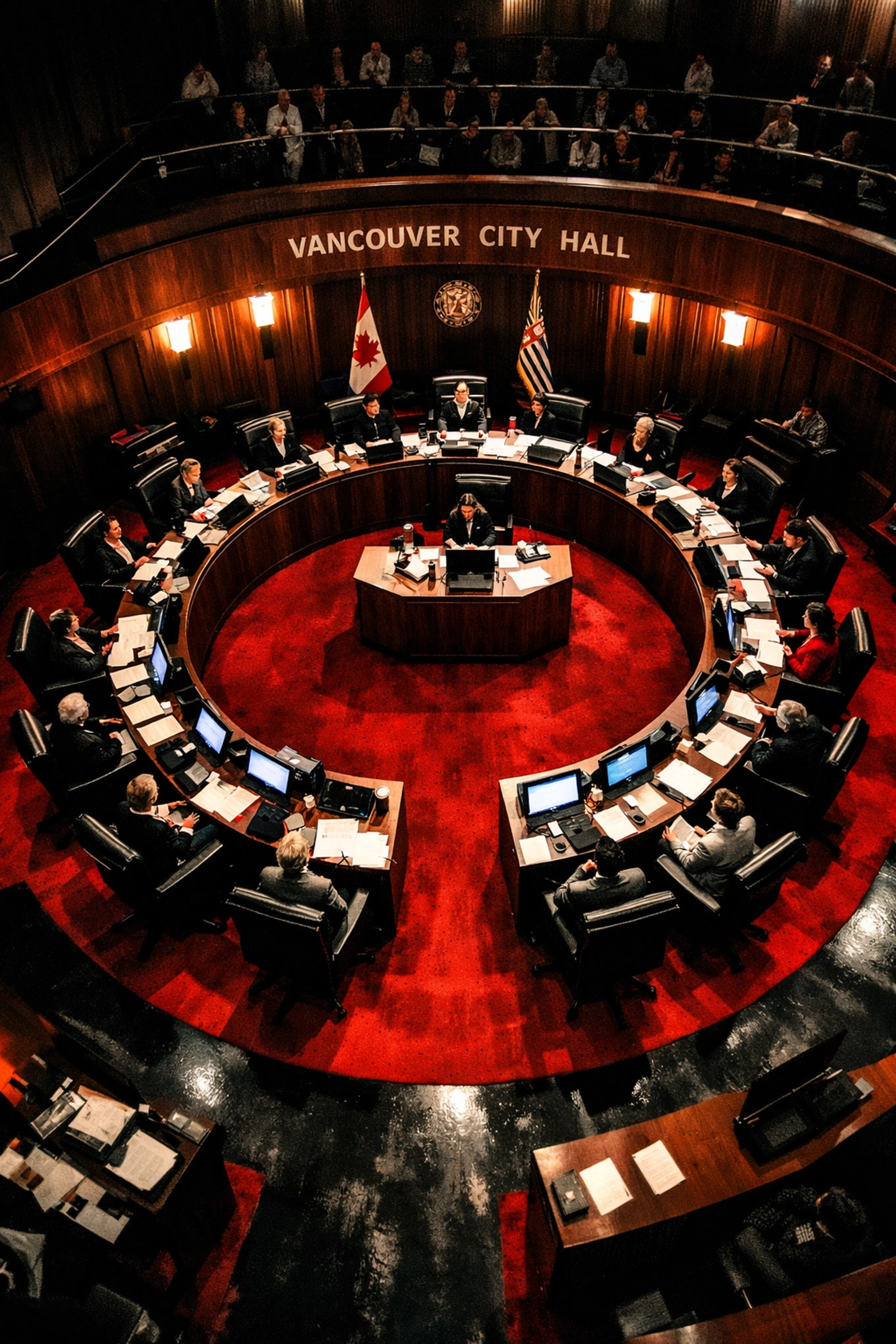
Opposition councillors raised concerns about property tax implications, with estimates suggesting residential property taxes could increase by 4.2 percent to fund the initiatives. City finance officials confirmed the tax increase would be phased over three years beginning in the 2027 fiscal year.
The infrastructure plan prioritizes projects in East Vancouver and South Vancouver neighborhoods, where water infrastructure has not been updated since the 1960s. Construction on priority projects is scheduled to begin in September 2026.
2. Vancouver Canucks Extend Winning Streak to Six Games
The Vancouver Canucks defeated the Seattle Kraken 4-2 Monday night at Rogers Arena, extending their winning streak to six consecutive games. Forward Elias Pettersson scored twice in the second period, bringing his season total to 38 goals.
Canucks head coach Rick Tocchet told reporters the team's defensive structure has improved significantly over the past three weeks. Goaltender Thatcher Demko recorded 31 saves, maintaining a .927 save percentage over the current winning streak.
The victory moves Vancouver into second place in the Pacific Division with 87 points, three points behind the Vegas Golden Knights. The Canucks have won 12 of their last 15 games, positioning the team for a strong playoff run.
Vancouver faces the Edmonton Oilers Thursday night at Rogers Arena in a crucial divisional matchup. Ticket sales for the game exceeded arena capacity within two hours of going on sale Tuesday morning, according to Canucks Sports and Entertainment officials.
3. Port of Vancouver Reports Record Container Volume for January
The Port of Vancouver announced Tuesday that January 2026 container volumes reached 342,000 twenty-foot equivalent units (TEUs), representing a 7.3 percent increase compared to January 2025. The growth reflects increased import activity from Asian markets and expanded rail capacity connecting Vancouver to central Canada.
Port officials attributed the volume increase to infrastructure improvements completed in late 2025, including the expansion of the Deltaport container terminal and upgraded rail connections. The port handled $28 billion in total trade value during January, officials confirmed.

Robin Silvester, President and CEO of the Vancouver Fraser Port Authority, stated the port is on track to process 3.8 million TEUs in 2026. The projected volume would establish Vancouver as the busiest container port in Canada.
Trade economists noted the container volume growth occurs despite ongoing tariff discussions between Canada and the United States. Port officials confirmed they are monitoring trade policy developments but have not adjusted capacity planning based on potential tariff scenarios.
The port employs approximately 29,400 workers directly and supports 115,300 jobs across British Columbia through related economic activity.
4. Metro Vancouver Housing Starts Decline 12 Percent in January
Canada Mortgage and Housing Corporation released data Tuesday showing Metro Vancouver housing starts declined 12 percent in January 2026 compared to the same period in 2025. Developers initiated construction on 1,847 new housing units in January, down from 2,099 units in January 2025.
The decline affected both single-family home construction and multi-unit developments, with condominium starts dropping 15 percent year-over-year. Industry analysts attributed the slowdown to higher construction costs and elevated interest rates affecting project financing.
Anne McMullin, President of the Urban Development Institute, stated developers are delaying project launches until construction costs stabilize. Material costs increased 8.4 percent over the past 12 months, according to Statistics Canada data.

The Metro Vancouver rental vacancy rate remained at 1.2 percent in January, indicating sustained housing demand despite reduced construction activity. Average rental rates for one-bedroom apartments reached $2,340 per month, representing a 6.8 percent increase from January 2025.
Provincial housing officials confirmed they are reviewing incentive programs to encourage residential construction. The BC government allocated $4.2 billion toward housing initiatives in the 2026 provincial budget announced earlier this month.
5. TransLink Announces SkyTrain Service Expansion for Expo Line
TransLink confirmed Tuesday that SkyTrain service frequency on the Expo Line will increase by 20 percent starting March 15, 2026. The expansion adds trains during morning and evening peak periods, reducing wait times from six minutes to four minutes between trains.
The service improvement responds to ridership increases of 18 percent on the Expo Line over the past six months. TransLink data shows average daily ridership on the Expo Line reached 247,000 passengers in January 2026.
Transit officials stated the expansion requires adding six trains to the active fleet and hiring 34 additional SkyTrain attendants. The operating cost increase totals $12.7 million annually, funded through fare revenue growth and provincial transit subsidies.
TransLink CEO Kevin Quinn announced the agency is conducting feasibility studies for extending Expo Line service hours on weekends. Current service ends at 1:15 AM on Friday and Saturday nights, with proposals suggesting extension to 2:30 AM to accommodate hospitality workers and late-night entertainment district traffic.
The Expo Line connects downtown Vancouver with Burnaby, New Westminster, and Surrey, serving 20 stations across 28.9 kilometres. The line opened in 1985 and carries approximately 40 percent of Metro Vancouver's total rapid transit ridership.
Stay informed with vancouver breaking news and vancouver daily news coverage at The Canadianist. For comprehensive regional coverage, visit our Toronto, Montreal, and Ottawa sections.


Post comments (0)