


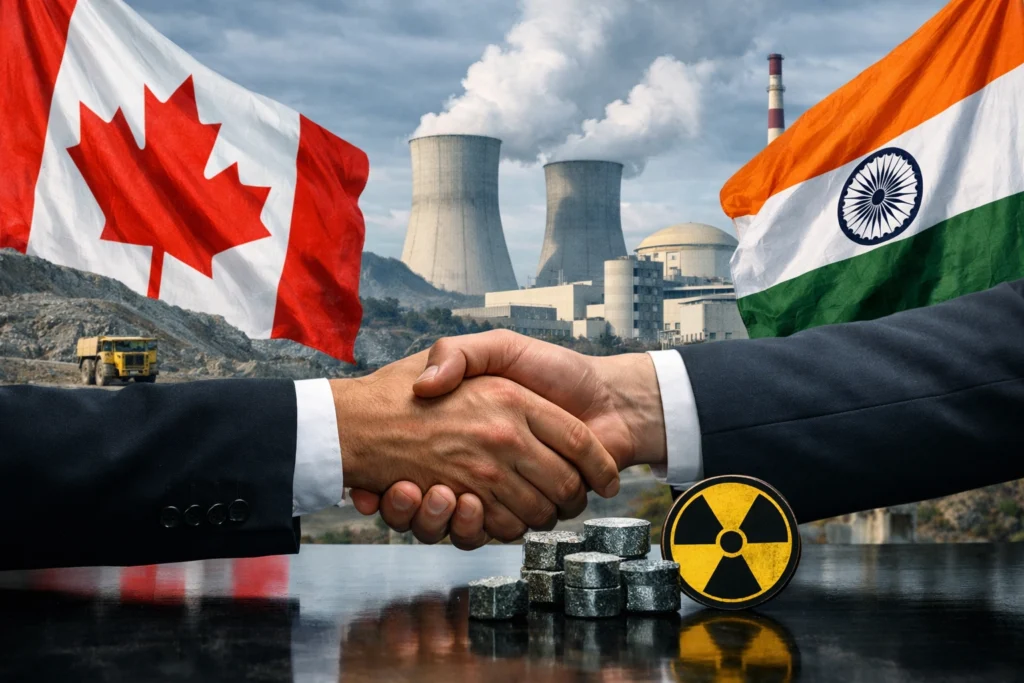
NEW DELHI : The Canadian government and the Republic of India have formalized a long-term commercial agreement for the supply of uranium, marking a significant milestone in bilateral trade and energy cooperation. The deal, valued at approximately $2.6 billion (CAD), was finalized during a high-level diplomatic mission to New Delhi led by Prime Minister Mark Carney.
Under the terms of the agreement, Saskatoon-based Cameco Corporation will supply nearly 22 million pounds of uranium ore concentrate to India’s Department of Atomic Energy. The contract spans a nine-year period, with deliveries scheduled to commence in 2027 and run through 2035. This agreement solidifies Canada’s position as a primary fuel supplier for India’s rapidly expanding civil nuclear energy sector.
A Strategic Energy Partnership
The signing ceremony took place following bilateral discussions between Prime Minister Mark Carney and Indian Prime Minister Narendra Modi. The meeting, which included Saskatchewan Premier Scott Moe and Cameco CEO Tim Gitzel, signaled a definitive "reset" in Canada-India relations, which have faced various diplomatic challenges in recent years.
"This agreement is a testament to the enduring economic ties between our two nations," Prime Minister Carney stated during a joint press conference. "By providing a stable and reliable source of uranium, Canada is supporting India’s transition toward a lower-carbon economy while securing long-term prosperity for Canadian workers in the mining sector."
Prime Minister Modi characterized the deal as a "landmark" for India’s energy security. He noted that the partnership extends beyond simple resource extraction, as both nations have agreed to explore further collaboration in the development of small modular reactors (SMRs) and advanced nuclear technologies.
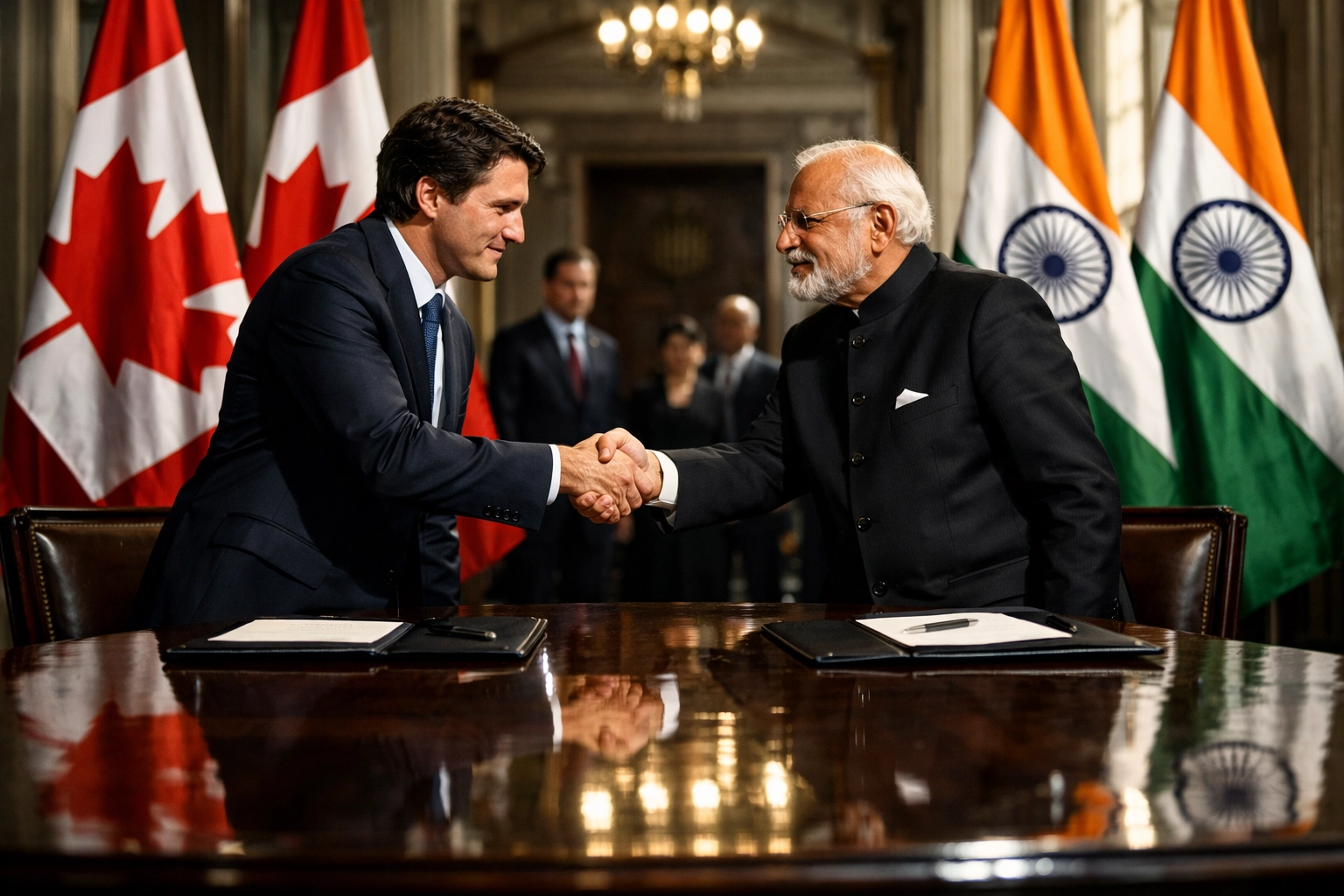
Caption: Diplomatic officials from Canada and India meet in New Delhi to finalize the $2.6-billion energy agreement.

Detailed Contractual Obligations
The estimated $2.6 billion value of the contract is tied to current market fluctuations. According to industry analysts, the figure is based on a uranium price of roughly US$86.95 per pound: the average spot price recorded as of February 28, 2026: and the prevailing exchange rates between the Canadian and U.S. dollars.
Cameco Corporation, one of the world’s largest providers of uranium fuel, will source the material primarily from its operations in Northern Saskatchewan. The province holds some of the highest-grade uranium deposits globally, and the deal is expected to provide significant economic stability for the region’s mining industry for the next decade.
Tim Gitzel, CEO of Cameco, emphasized the necessity of the deal for India’s infrastructure goals. "India is embarking on one of the most ambitious nuclear expansion programs in the world," Gitzel said. "That growth is only possible with a guaranteed, long-term supply of fuel. Cameco is proud to be the partner that helps power India’s development."
Powering India’s 2047 Vision
India currently operates 24 nuclear reactors, providing a significant portion of the country’s baseline electricity. However, the Indian government has set a target of reaching 100 gigawatts (GW) of nuclear capacity by 2047. This expansion is viewed as critical to meeting the energy demands of a growing population while adhering to international climate commitments.
The civil nuclear program in India relies heavily on international imports for fuel, as domestic uranium reserves are limited and often lower in grade. The Canadian deal ensures that India’s existing and future pressurized heavy water reactors (PHWRs) have a consistent supply of ore concentrate, which will be processed and fabricated into fuel bundles within India.
This cooperation is made possible under the framework of the 2008 Indo-U.S. nuclear agreement, which paved the way for India to engage in international nuclear commerce despite not being a signatory to the Nuclear Non-Proliferation Treaty (NPT), provided its civil facilities remain under International Atomic Energy Agency (IAEA) safeguards.
Economic Impact on Saskatchewan and Canada
The deal is a major victory for the Saskatchewan mining sector. Premier Scott Moe, who accompanied the federal delegation, noted that the agreement directly supports thousands of jobs in the province, particularly in indigenous communities where many of the mine sites are located.
"Saskatchewan is a global leader in sustainable mining," Premier Moe said. "This contract with India reinforces our province’s role as a critical minerals powerhouse. It’s about more than just exports; it’s about the long-term viability of our northern communities."
The infusion of $2.6 billion into the Canadian economy comes at a time when the federal government is looking to diversify its trade portfolio. For more insights on how global trade shifts affect the domestic economy, readers can visit The Canadianist News.

Caption: The deal represents a significant achievement for Canadian trade representatives and energy sector leaders.

Diplomatic Context and the "New Delhi Reset"
The visit by Prime Minister Carney is the first official visit by a Canadian Prime Minister to India in eight years. Relations between the two countries had cooled significantly following disagreements over security and trade issues. However, the uranium deal is being interpreted by many analysts as a "pragmatic pivot" by the Carney administration to prioritize economic cooperation and energy security.
The "New Delhi Reset" involves not only energy but also a broader commitment to Indo-Pacific security. By strengthening ties with India, Canada aligns itself more closely with its allies in the region who are seeking to create stable supply chains for critical minerals and energy resources.
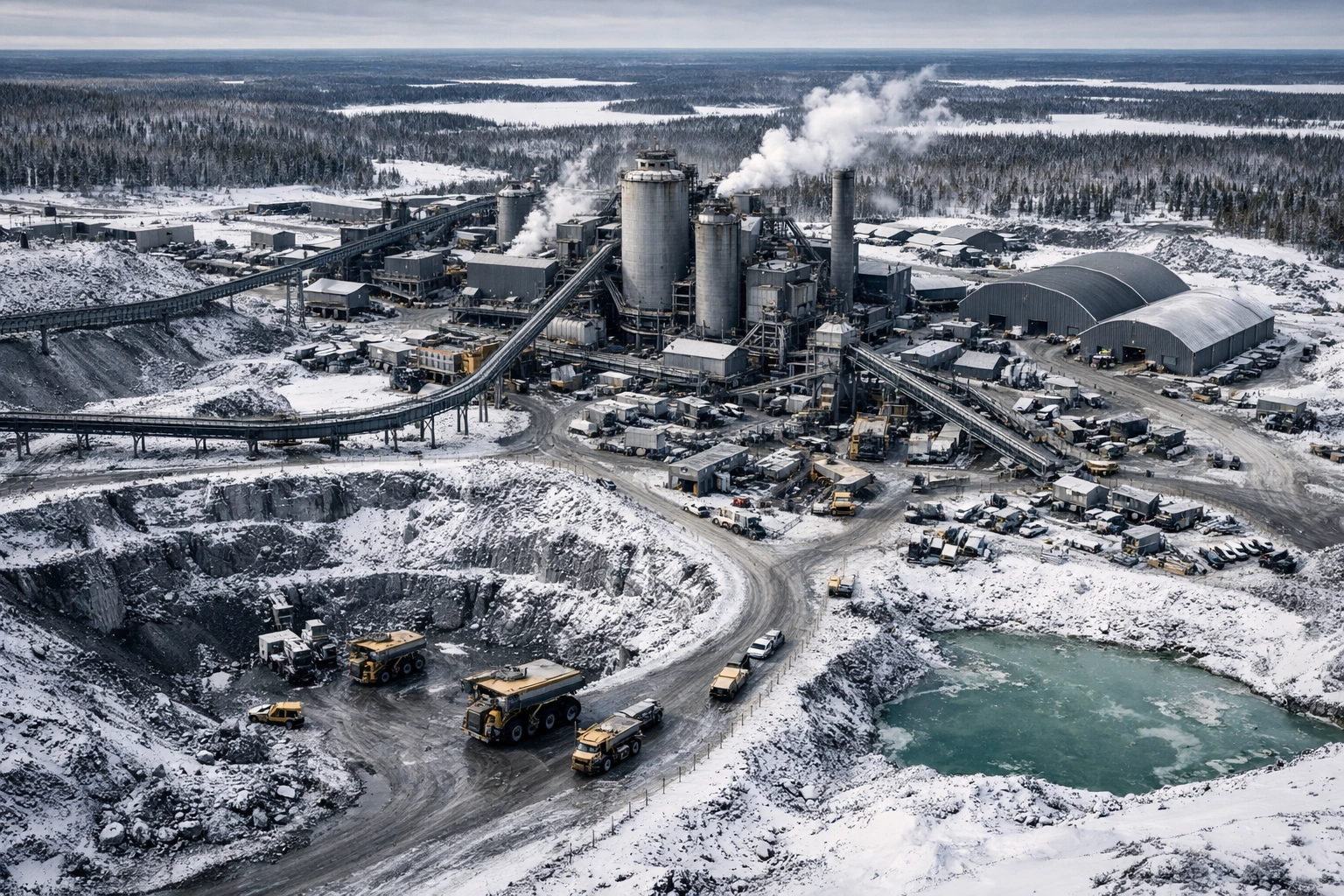
Caption: A high-capacity uranium mining facility in Northern Saskatchewan, the source for the multi-billion dollar export deal.
Looking Forward: SMRs and Research
Beyond the immediate supply of uranium ore, the joint statement released by the two leaders highlighted a shared interest in the future of nuclear technology. Canada is currently a leader in the development of Small Modular Reactors (SMRs), which are smaller, more flexible, and easier to deploy than traditional large-scale reactors.
India has expressed interest in SMR technology to provide power to remote industrial hubs and to supplement its existing grid. Collaborative research and development in this area could lead to further multi-billion dollar contracts for Canadian engineering firms and technology providers in the coming years.
Conclusion
The finalization of the $2.6-billion deal marks the end of a long period of negotiation and the beginning of a new chapter in Indo-Canadian relations. For India, it provides the fuel necessary to sustain its massive industrial growth. For Canada, it secures a decade of demand for its most valuable mineral export and re-establishes its presence in one of the world's most important emerging markets.
As deliveries prepare to begin in 2027, the focus will shift to the logistical and regulatory frameworks required to transport the material safely and securely across the globe, adhering to all international atomic energy protocols.
For further updates on Canadian international trade and energy policy, visit thecanadianist.news. Detailed information on regional impacts can be found through our dedicated sections for Ottawa and Quebec.