


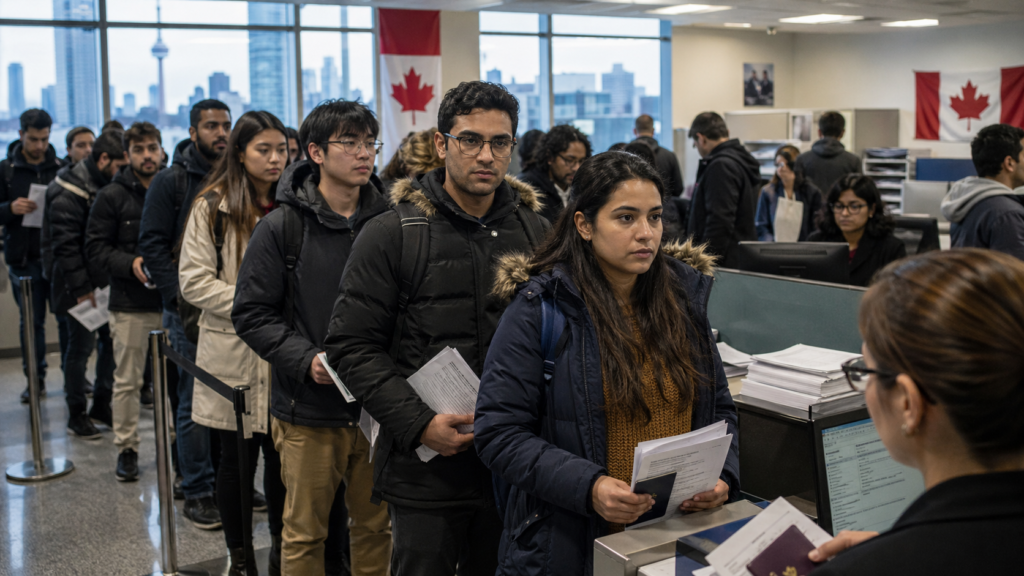
Ottawa says the program is designed to stabilize the immigration system and address labour shortages, but the move is reigniting debate over housing pressure, temporary resident growth, and Canada’s long-term capacity limits.
Canada is moving ahead with a new pathway that could allow up to 33,000 temporary foreign workers already living in the country to transition to permanent residency over the next two years, as Ottawa attempts to balance labour-market needs with mounting pressure to reduce overall immigration growth.
The measure, part of the federal government’s 2026–2028 Immigration Levels Plan, was quietly launched earlier this year and has drawn renewed attention following reporting by the Toronto Star and immigration industry publications. Immigration Minister Lena Metlege Diab has confirmed the initiative is already underway, though full eligibility details have yet to be formally released.
According to federal planning documents, the one-time program is expected to focus on temporary workers already employed in Canada in sectors facing labour shortages, particularly in rural communities. The pathway operates separately from existing Express Entry and Provincial Nominee Program streams.
The government says the policy is intended to provide stability for workers who are already contributing to the economy while helping Canada reduce its reliance on continuously expanding temporary resident populations. Ottawa has simultaneously pledged to lower the percentage of temporary residents within Canada’s overall population in the coming years.
The announcement comes amid growing public debate over immigration levels, housing affordability, labour-market pressures, and the rapid growth of Canada’s temporary resident population during the past decade.
Federal data cited in immigration reporting suggests more than two million temporary resident permits expired during 2025, with millions more expected to reach expiry windows through 2026 across categories including international students, temporary foreign workers, and post-graduate work permit holders.
Immigration advocates and business groups have argued that many temporary workers have already established lives in Canada, pay taxes, and fill labour shortages in industries ranging from agriculture and transportation to hospitality and care services. Supporters of the new pathway say transitioning some workers already living in Canada to permanent residency may be less disruptive than relying on continued high temporary inflows.


Critics, however, argue the measure risks reinforcing public concerns that temporary immigration programs increasingly function as de facto permanent settlement streams. The program has also sparked broader debate over whether Canada’s immigration system expanded faster than housing, infrastructure, and labour-market capacity could sustainably support.
The federal government has defended the broader immigration plan as an attempt to stabilize the system after years of rapid growth while maintaining economic competitiveness and addressing demographic pressures tied to an aging workforce.
Further details regarding eligibility criteria, sector prioritization, and application procedures are expected to be released later this year.
Okay, so it needs a headline and a deck.
Headline:
Canada Launches New Pathway Allowing 33,000 Temporary Workers to Become Permanent Residents
Deck:
Ottawa says the program is designed to stabilize the immigration system and address labour shortages, but the move is reigniting debate over housing pressure, temporary resident growth, and Canada’s long-term capacity limits.