


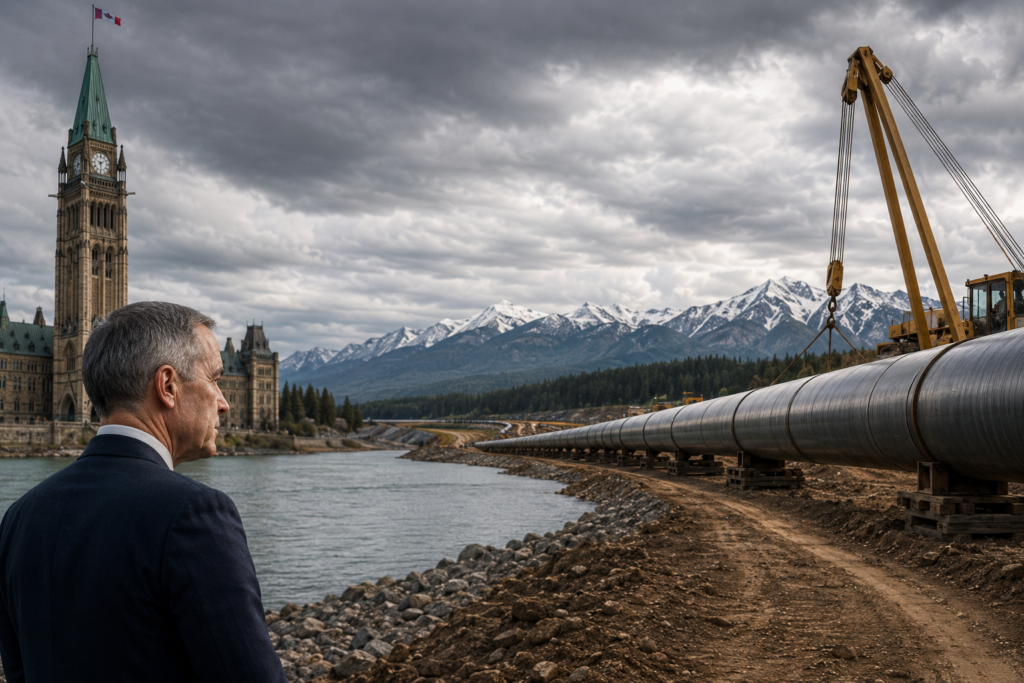
The May 15 implementation agreement between Ottawa and Alberta on industrial carbon pricing continued to draw scrutiny through the long weekend, as climate organizations, former Liberal politicians, and policy analysts assessed its implications for Canada’s emissions targets. The agreement could see construction on an oil pipeline to the West Coast begin as early as September 2027. CBC News
The agreement pushes back the deadline for Alberta to reach an effective carbon price of $130 per tonne to 2040 — a full decade later than previously planned — and frames it as a target rather than a minimum. Climate Action Network Canada called it “a sledgehammer to one of the last remaining pillars of Canada’s climate plan.” NDP Leader Avi Lewis characterized the deal as “the Carney government’s official surrender to the oil and gas lobby,” adding it had “gutted carbon pricing to the point of irrelevance.” ClimateactionnetworkGlobal News
The Canadian Climate Institute’s modelling found the carbon pricing schedule in the implementation agreement would result in an additional 230 megatonnes of greenhouse gas emissions over the next 15 years, and that the agreement would “put Canada’s target of net zero by 2050 well out of reach.” Radio-Canada reported that 14 Liberal MPs sent a letter to Carney warning him against major environmental concessions to Alberta, emphasizing that climate change “remains the greatest threat of our time.” CBC NewsAl Jazeera
Why it matters: Carney came to office as a credentialed climate economist. The industrial carbon deal is the clearest evidence yet that his government is prepared to subordinate climate architecture to national unity and energy development objectives. Whether this reflects strategic pragmatism or structural retreat from Canada’s climate commitments will define his legacy — and is already generating internal Liberal pressure.