


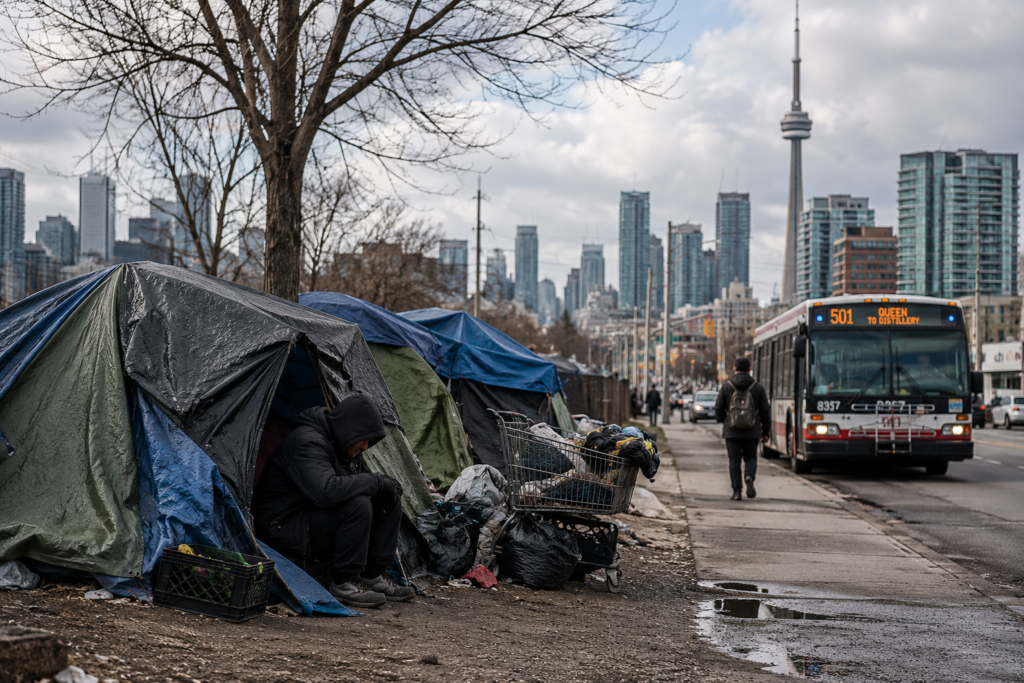
According to the Canadian Alliance to End Homelessness, overall homelessness in Canada has doubled and unsheltered homelessness has increased by 300 percent since 2018, based on the latest national point-in-time count. The organization has called Budget 2026 a critical moment for the federal government to take the next step toward ending chronic homelessness. CAEH
City of Toronto data released in late April shows the number of encampments on city properties decreased year-over-year from 283 in March 2025 to 84 as of March 15, 2026. City officials attributed the decrease to increased outreach resources, fewer refugee claimants arriving in need of immediate shelter, and more staff dedicated to connecting people with services. However, advocates for unhoused people cautioned that the drop in encampment numbers does not necessarily reflect a reduction in homelessness, warning that people experiencing homelessness may simply have become less visible. CBC News
The tension between the federal government’s transitional housing investments — including a $1 billion Build Canada Homes commitment to supportive housing and a $125 million extension of the Unsheltered Homelessness and Encampments Initiative — and the depth of structural need remains acute. A national housing and homelessness system under sustained demographic, economic, and policy pressure cannot be meaningfully measured by encampment counts alone.
Why it matters: Canada is heading into a federal Budget 2026 cycle with homelessness at generational highs by at least two key metrics. The gap between the federal government’s housing supply agenda — which is oriented primarily toward ownership, rental construction, and the middle class — and the depth of non-market need for very low-income Canadians is a defining governance tension of the Carney government’s housing mandate.