


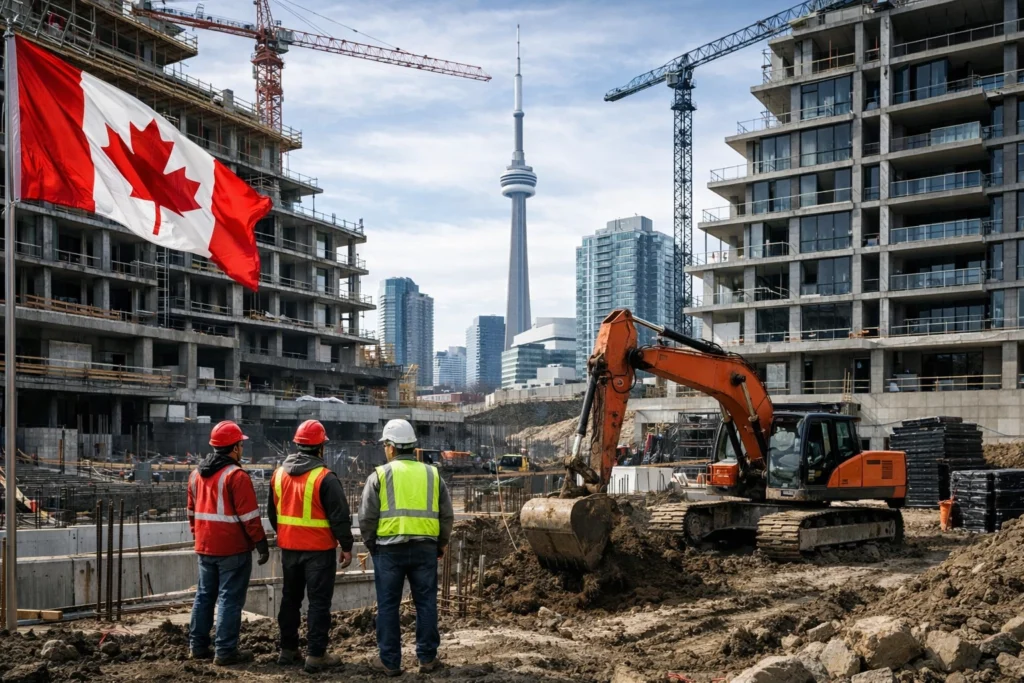
Federal, provincial and municipal officials broke ground in downtown Toronto on March 6 on the latest phase of the Regent Park redevelopment, a project being advanced under the federal government’s Build Canada Homes program and expected to deliver 271 affordable rental units.
The development, known as Regent Park Phase 4A, is backed by a multi-jurisdictional investment totalling more than $226 million, according to figures released alongside the announcement. Ottawa is contributing $86 million through the Affordable Housing Fund. The City of Toronto is providing $50.7 million, while Toronto Community Housing is contributing $82.5 million. The Province of Ontario has added more than $7.6 million for environmental remediation.
The project comes as governments face sustained public pressure to increase housing supply in high-cost markets, including Toronto, where vacancy rates and rent levels have remained a focus of debate. Supporters of the initiative say adding purpose-built rental units is intended to ease long-term pressure on the market, while critics have questioned whether construction timelines and overall pace can keep up with demand.
Build Canada Homes was established in September 2025 to centralize and accelerate the federal housing response, with a mandate that includes direct-build projects on federal lands and support for high-density, mixed-income developments in Canada’s most expensive urban centres.
Regent Park, once one of the country’s largest social housing developments, has been undergoing a multi-decade transformation into a mixed-income, mixed-use community. Phase 4A is planned to include retail and commercial space and community facilities in addition to the 271 affordable rental homes. City officials have said the model aims to integrate affordable housing into neighbourhoods with access to services and public space. Some units are expected to be reserved for households on Toronto Community Housing’s waiting list.
Federal projections indicate occupancy for this phase could begin in early 2029, reflecting the complexity of large-scale urban infill construction and ongoing constraints related to labour availability and supply chains.
Nationally, the agency has said it has advanced six initial “Direct Build” projects in Dartmouth, Longueuil, Ottawa, Toronto, Winnipeg and Edmonton, representing more than 7,500 homes in the federal pipeline. It has also earmarked $1 billion for transitional and supportive housing, which the federal government says is intended to reduce pressures on shelters and hospital services through partnerships with Indigenous communities and provincial health authorities.
Affordability definitions remain a recurring issue in federal housing policy. For Regent Park Phase 4A, affordability is tied to Toronto’s median market rent, with some units set at deeper discounts for lower-income households.
Project partners have also pointed to construction cost inflation and skilled-labour shortages in the Greater Toronto Area as factors that can affect delivery timelines. The federal government has signalled it may pursue measures to support construction labour supply, including faster credential recognition for immigrant tradespeople.
Build Canada Homes is expected to release its first annual report later in 2026, outlining costs, timelines and progress across direct-build projects.