
OTTAWA : New data released by the Canada Mortgage and Housing Corporation (CMHC) on Friday indicates a significant cooling in the nation’s residential construction sector. Despite a flurry of federal announcements and the aggressive rollout of the "Build Canada Homes" initiative, national housing starts trended downward by 3.5% in February 2026.
The decline represents a growing disconnect between government policy objectives and the operational realities of the Canadian construction industry. While the federal government has committed billions in subsidies to spur development, industry analysts point to a "perfect storm" of high material costs, labor shortages, and a cautious lending environment that continues to keep shovels out of the ground.
The 3.5% Disconnect
The CMHC’s latest report shows that the seasonally adjusted annual rate (SAAR) of housing starts fell to levels not seen since the mid-pandemic lull. The drop was most pronounced in multi-unit urban starts, which fell by 4% globally across Canada’s major metropolitan areas. Single-detached urban starts also saw a modest decline of 1%.
For the federal government, the timing of the report is sensitive. Only days ago, officials gathered in Toronto to celebrate the launch of the Regent Park expansion, a project aimed at adding 271 affordable units through an $86 million investment. However, the CMHC data suggests that such individual projects are currently failing to offset a broader systemic slowdown.
"What we are seeing is a momentum stall," said Marcus Thorne, a senior economist specializing in Canadian real estate. "The government is writing checks, but the private sector is struggling to cash them. When you factor in the current cost of debt and the volatility of the supply chain, a 3.5% slide is an indicator that the market is waiting for a more stable signal before proceeding with large-scale projects."

The Cost of Building: A Rising Barrier
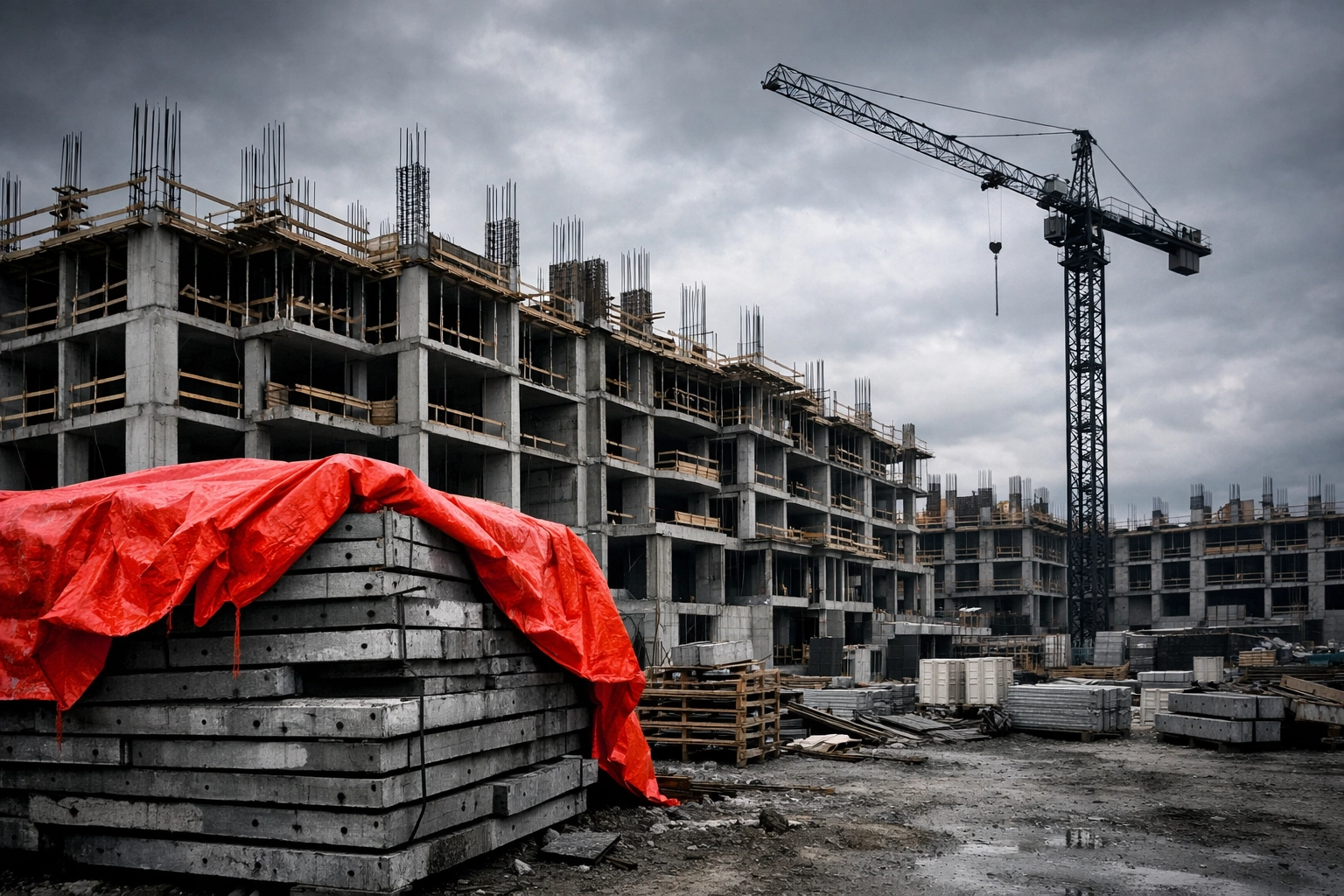
One of the primary drivers behind the stall is the persistent rise in construction costs. According to Statistics Canada’s building construction price index, the cost of residential building has increased by 7% year-over-year, significantly outstripping the general rate of inflation.
The "Build Canada" promises were predicated on a stabilized supply chain that has yet to materialize fully. The price of structural steel and specialized glass, often used in the high-density developments the government is prioritizing, remains at historical highs. Furthermore, the cost of compliance with new environmental and net-zero building codes, while aligned with federal climate goals, has added an estimated $15,000 to $30,000 to the per-unit cost of new builds.
"The friction is visible in the margins," Thorne added. "Developers are finding that even with federal subsidies, the break-even point for a new mid-rise development in a city like Ottawa or Montreal is shifting further away. This leads to project deferrals, which is exactly what we are seeing in this month’s numbers."
Labor Shortages and Training Gaps
Beyond materials, the human element of the housing crisis is facing a "double-squeeze." The Canadianist News has previously reported on the impact of federal immigration cooling, which has traditionally been a primary source of skilled and semi-skilled labor for the construction sector.
Compounding this is the recent provincial shift in Ontario regarding educational funding. The provincial government’s overhaul of the Ontario Student Assistance Program (OSAP): which shifted the funding model from 85% grants to 25% grants: has seen a measurable impact on enrollment in trade schools. Students who might have pursued certifications in carpentry, electrical work, or plumbing are reporting higher barriers to entry due to the increased loan burden.
This domestic training gap, combined with tighter immigration caps, has left construction firms competing for a shrinking pool of workers, driving up wages and, by extension, the final price tag of new homes.


The Debt Mountain and Consumer Demand
While the supply side of the equation struggles with construction starts, the demand side is grappling with an affordability crisis that continues to reshape the Canadian economy. Current reports suggest that Canadian household debt has hit record highs, creating a "debt mountain" that limits the pool of qualified buyers for new inventory.
Although some market analysts note that mortgage applications for home purchases have seen a slight uptick as interest rates begin a slow descent from their 2025 peaks, the CMHC data indicates that this has not yet translated into new construction activity. Developers remain wary of starting new projects if the end-user: the Canadian homebuyer: cannot secure the financing necessary to close on the units.
The "momentum stall" in housing starts is particularly concerning for first-time buyers. Data suggests that first-time buyers currently make up only 21% of the market, an all-time low. With fewer new starts, the inventory for "entry-level" homes remains constrained, forcing many young Canadians to remain in a rental market that is equally pressured by high demand.
Regional Variations: A Divided Map
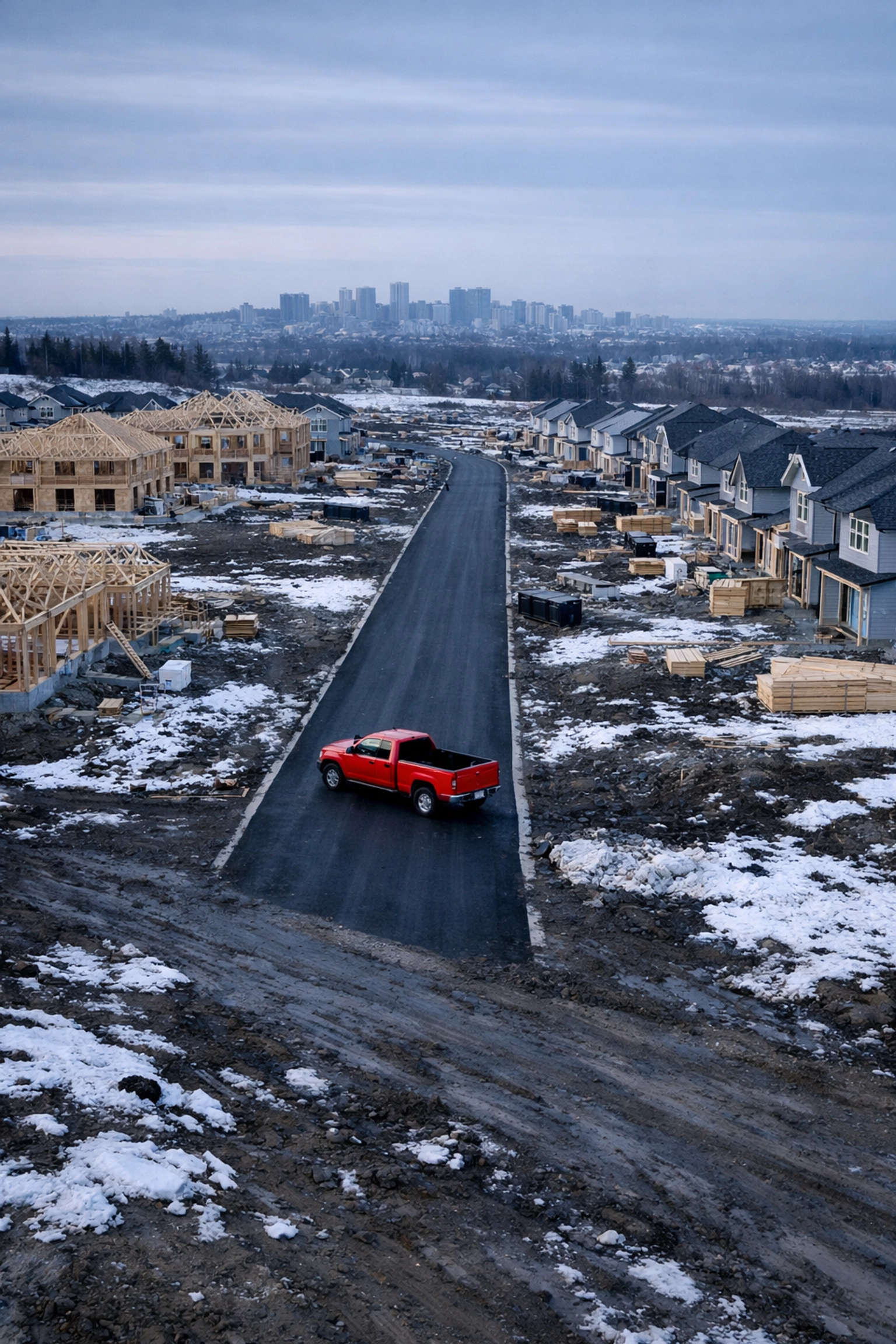
The 3.5% slide is not uniform across the country. While Toronto and Vancouver saw significant dips in activity: largely due to the high cost of land and complex municipal approval processes: other regions are showing more resilience.
Mid-sized cities in the Prairies and parts of Atlantic Canada have managed to maintain steadier numbers. This aligns with the "Great Suburban Pivot," a trend where newcomers and internal migrants are bypassing the traditional "Big Three" cities in favor of more affordable secondary markets. However, these smaller municipalities are now facing their own infrastructure strains as they attempt to scale up services to match a population growth they were not entirely prepared for.
In the latest news, municipal leaders in regions like Kitchener-Waterloo and Halifax have called for more direct federal funding to upgrade sewage, water, and electrical grids, arguing that without these upgrades, housing starts will continue to lag regardless of federal housing grants.

The Government Response
In response to the CMHC figures, the Ministry of Housing issued a statement emphasizing the long-term nature of their strategy. A spokesperson noted that "monthly fluctuations are expected in a high-interest-rate environment" and that the "Build Canada" program is designed to create a pipeline of housing over the next decade, rather than a single quarter.
However, opposition critics have pointed to the 3.5% slide as evidence that the current approach is failing to address the fundamental "friction" in the market. They argue that the government’s focus on high-density urban projects does not account for the rising costs of labor and materials that are stalling those very developments.
The government maintains that the $86 million Regent Park investment and similar projects are blueprints for the future. These "mixed-income" models are intended to provide a buffer against market volatility by guaranteeing a percentage of affordable units regardless of shifting construction costs. Whether these models can be scaled fast enough to reverse the national trend remains a central question for 2026.
Looking Ahead: The 2026 Outlook
As Canada enters the spring building season: traditionally the busiest time for the industry: all eyes will be on the CMHC’s March and April reports. For a recovery to take hold, analysts say three things must happen: interest rates must continue their downward trend to lower financing costs for developers, the labor gap must be addressed through either policy shifts or provincial incentives, and the price of materials must stabilize.
Without a shift in these fundamentals, the "Momentum Stall" may become a long-term plateau. For a country with a growing population and a desperate need for inventory, a 3.5% decline is more than just a statistic; it is a signal that the path to housing affordability remains fraught with significant economic hurdles.
The Canadianist News will continue to monitor the housing sector as more data becomes available. For further analysis on the intersections of the economy and federal policy, visit our economy category or meet the team behind these reports at thecanadianist.news/meet-the-team.