


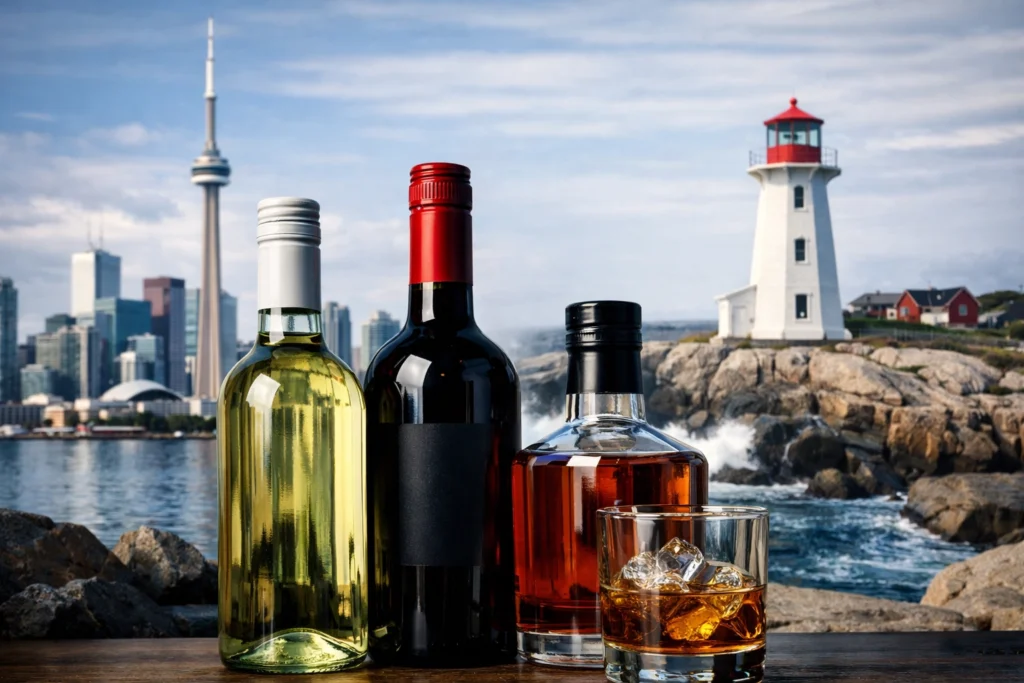
TORONTO and HALIFAX : In a move intended to reduce internal trade barriers within Canada, the governments of Ontario and Nova Scotia officially launched a historic direct-to-consumer (DTC) alcohol agreement on March 3, 2026. The deal, signed yesterday by Ontario Premier Doug Ford and Nova Scotia Premier Tim Houston, allows residents in both provinces to purchase wine, beer, and spirits directly from producers located in the other jurisdiction.
The agreement marks a significant shift in how controlled substances are traded across provincial lines, addressing a long-standing point of contention for Canadian wineries, breweries, and distilleries. Effective immediately, producers can begin the application process to facilitate legal, cross-border shipments to individual households.
The Mechanics of the Agreement
Under the new framework, alcohol producers must obtain specific authorizations to sell to out-of-province customers. Ontario-based producers are required to apply for permission through the Nova Scotia Liquor Corporation (NSLC), while Nova Scotia-based producers must seek approval from the Liquor Control Board of Ontario (LCBO).
Once authorized, businesses can ship products directly to consumers aged 19 and older. This bypasses previous requirements that necessitated third-party ordering or personal transport of goods across provincial borders. The agreement covers a broad range of products, including craft beers, spirits, and artisanal wines, providing small-scale producers with direct access to larger consumer markets.

A realistic photograph of a sprawling vineyard during the morning hours, showing rows of grapevines under a clear sky, representing the wine production industries in Ontario and Nova Scotia.

To maintain a level playing field for local retailers and ensure provincial revenues are not negatively impacted, the agreement includes a "mark-up structure." This financial mechanism aligns out-of-province sales with domestic tax rates and markup policies. By doing so, both governments aim to ensure that imported products do not hold an unfair price advantage over locally produced goods, while still providing consumers with increased variety.
Overcoming Historical Trade Barriers
For decades, the movement of alcohol between Canadian provinces has been restricted by a complex web of regulations dating back to the Prohibition era. Until this week, an Ontarian wishing to purchase a specific bottle of Nova Scotian sparkling wine generally had to use the LCBO’s private ordering program: a process often cited by consumers as being slow and expensive: or physically travel to the province to bring the product back in person.
Direct-to-consumer shipping was effectively prohibited under previous provincial statutes. This latest agreement is a direct result of the Protect Ontario Through Free Trade Within Canada Act, legislation passed last year designed to dismantle such internal hurdles. The act granted the Ontario government the authority to establish the very DTC frameworks being utilized in this deal.
The legal landscape regarding inter-provincial trade has been a subject of national debate since the 2018 Supreme Court of Canada ruling in R. v. Comeau. While that case upheld the right of provinces to regulate the possession of out-of-province liquor, it also highlighted the economic inefficiencies inherent in internal trade barriers. This bilateral agreement between Ontario and Nova Scotia represents a legislative solution to those inefficiencies.
Regional Impact and Economic Projections
The economic implications of the deal are expected to be felt most acutely by small and medium-sized enterprises (SMEs). For Nova Scotia’s burgeoning wine industry, particularly in the Annapolis Valley, the agreement opens the door to the Ontario market: the largest consumer market in Canada. For more details on regional developments in Atlantic Canada, readers can visit thecanadianist.news/maritimes.
Conversely, Ontario’s craft breweries and Niagara-region wineries now have streamlined access to Nova Scotian consumers. Industry analysts suggest that the removal of these barriers could lead to a significant increase in e-commerce sales for the beverage sector. The Toronto business community has noted that the ability to ship directly to the East Coast could provide a vital new revenue stream for GTA-based craft producers who have faced stagnating domestic growth.

A realistic photo of a modern craft brewery production line, showing stainless steel vats and a conveyor system for glass bottles, highlighting the industrial scale of the beverage sector.

Producers will be responsible for ensuring that all shipments meet strict social responsibility guidelines. This includes mandatory age verification at the point of delivery to ensure that no minors receive shipments. Failure to comply with these regulations could result in the immediate revocation of the producer’s cross-border selling license.
Part of a Larger National Strategy
This bilateral deal is not an isolated event but rather a component of a broader national push toward trade liberalization. Since July 2025, Ontario has signed memorandums of understanding (MOUs) with ten other Canadian jurisdictions. The stated goal of the federal and provincial trade ministers is to implement a pan-Canadian direct-to-consumer alcohol sales framework by May 2026.
The move comes at a time when Canada is also navigating complex international trade waters. As noted in recent reports on U.S. trade policy, the ability of Canadian provinces to coordinate and strengthen internal markets is seen by some economists as a necessary hedge against external global volatility. By harmonizing internal regulations, Canada strengthens its domestic supply chains and improves the ease of doing business for homegrown companies.
Logistical and Regulatory Hurdles
While the agreement is now in effect, the logistics of shipping controlled substances across provincial lines remain a primary focus for regulators. Couriers and shipping companies must also adhere to specific provincial guidelines regarding the transport of alcohol.

A realistic photograph of organized retail shelving in a modern liquor store, featuring a diverse array of bottles with varying labels, reflecting the consumer choice facilitated by the new agreement.
The LCBO and NSLC have indicated that they will monitor the initial rollout closely. Key performance indicators will include the volume of trade, the speed of delivery, and compliance with the aforementioned markup structures. There is also the matter of data sharing; both provinces have agreed to share sales data to ensure that tax obligations are met and that the agreement remains mutually beneficial.
For consumers, the primary change will be visible on the websites of their favorite producers. Many wineries and breweries are expected to update their online storefronts this week to include shipping options for Ontario and Nova Scotia addresses.
Conclusion and Next Steps
As of March 3, 2026, the application portals for producers are officially open. The success of this agreement may serve as a blueprint for the remaining provinces and territories as the May 2026 deadline for a pan-Canadian framework approaches.
While British Columbia and Quebec: other major players in the Canadian alcohol industry: have engaged in similar discussions, they have yet to finalize a deal of this specific scope with Ontario. Industry observers will be watching the Ontario-Nova Scotia corridor closely to see if the promised economic benefits materialize without compromising provincial regulatory control.
For ongoing coverage of Canadian trade and economic policy, visit The Canadianist News. Information regarding provincial specificities and broader news categories can be found in our category sitemap.