


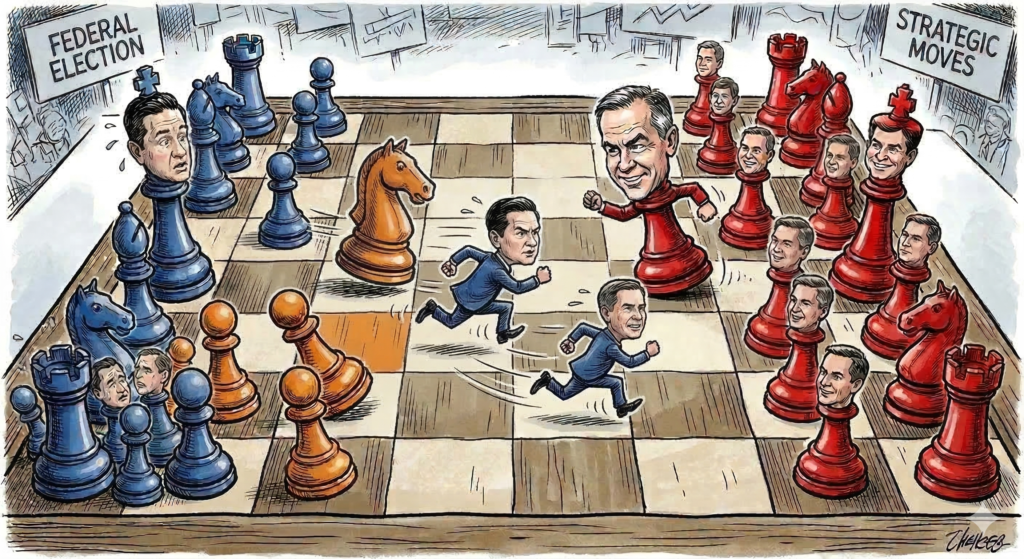
Canada’s political landscape shifted again Tuesday night after Nunavut NDP MP Lori Idlout announced she would cross the floor and join the Liberal caucus.
The move was confirmed in a statement by NDP interim leader Don Davies, who said he was “very disappointed” by the decision.
Davies reiterated the New Democratic Party’s longstanding position that MPs who leave their party should return to voters for a new mandate.
“The position of the New Democrats on floor crossing is longstanding and clear,” Davies said. “We believe that when someone rejects the decision of their electors and wants to join another party, they should put that decision to their voters.”
The defection immediately strengthens the Liberal government’s position in the House of Commons. With Idlout joining their ranks, the Liberals now hold 170 seats, just two short of the 172 required for a majority government.
That puts the outcome of three upcoming byelections squarely at the center of the government’s political strategy.
Prime Minister Mark Carney recently called byelections for April 13 in three ridings: Scarborough Southwest, University—Rosedale, and Terrebonne.
If the Liberals capture two of those seats, they would reach the majority threshold and govern without relying on support from other parties.
Two of the seats up for election are in Toronto.
University—Rosedale became vacant earlier this year when former finance minister Chrystia Freeland stepped down. Scarborough Southwest opened after former public safety minister Bill Blair resigned his seat.
The third contest, in Terrebonne, Quebec, follows an unusual legal battle. The riding was originally won by Liberal candidate Tatiana Auguste by a margin of just one vote. However, the Supreme Court of Canada overturned the result after a voter’s mail-in ballot was returned due to an incorrect postal code printed on a label supplied by Elections Canada. The challenge had been brought by Bloc Québécois candidate Nathalie Sinclair-Desgagné.
Beyond the immediate parliamentary math, Idlout’s decision further weakens the New Democratic Party in Ottawa.
The NDP caucus now falls to just six MPs in the House of Commons, a dramatic reduction for a party that once held the position of Official Opposition. The defection also arrives at an awkward moment for the party, coming just one day after voting began in the federal NDP leadership race to choose a successor to former leader Jagmeet Singh.
The new leader is expected to be announced later this month.
Floor crossing is not uncommon in Canadian politics, but it regularly reignites debate about whether MPs should be required to seek a fresh mandate from voters after changing parties.
Under Canada’s parliamentary system, MPs are elected individually and are legally free to sit with any caucus or as independents. While some critics argue that switching parties disregards voters’ expectations, others maintain that the next general election provides the ultimate test of accountability.
For the moment, however, the immediate effect is clear.
The Liberal government is now within striking distance of a majority, and the balance of power in the House may soon hinge on three byelections scheduled just weeks from now.