


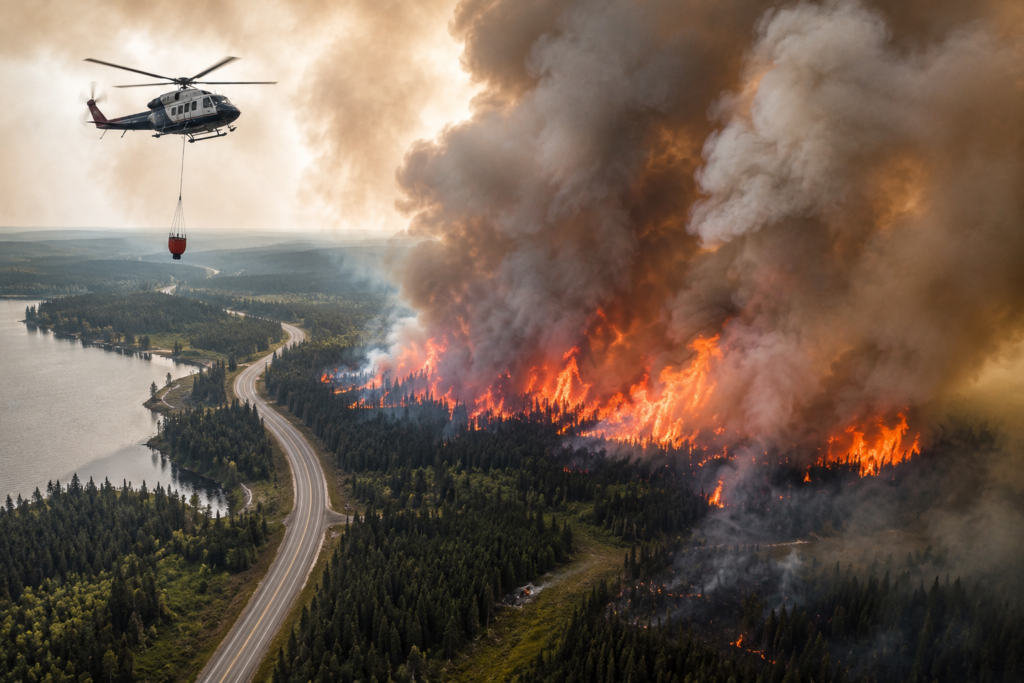
Ontario continues to battle one of its most demanding wildfire seasons in recent years, with nearly 140 active wildfires burning across the province’s northwest and thousands of residents displaced as emergency crews work to contain several major blazes.
As of Tuesday, approximately 45 fires remained out of control, according to provincial wildfire officials. The largest, known as Thunder Bay 36, has grown to more than 318,000 hectares, making it one of the largest fires currently burning in Canada. While recent weather conditions have allowed firefighters to strengthen containment lines, officials caution that the fire remains active and poses a continuing threat.
The emergency has forced approximately 2,415 people from their homes. Evacuees have been relocated to host communities across Ontario, including Thunder Bay, Kenora, Fort Frances, Lac Seul, Sioux Lookout, Red Lake, Barrie, Niagara Falls, and Toronto, where emergency accommodation and support services are being provided.
The situation has also disrupted transportation in the region. Highway 811 remains closed because of wildfire activity, while Gull Bay First Nation is under an evacuation order being coordinated with assistance from the Ontario Provincial Police.
The fires have had a particularly significant impact on Indigenous communities. At least ten First Nations have been affected by evacuations or nearby wildfire activity, placing additional pressure on emergency management officials responsible for coordinating air transportation, temporary housing, medical services, and community support.
The growing scale of the emergency prompted Premier Doug Ford to publicly confirm that Ontario has formally requested federal assistance to help evacuate northern communities by aircraft. Speaking earlier this week, Ford said the province is “in desperate need of support,” marking the first public appeal for federal assistance he has made during the 2026 wildfire season.
Ford also noted that the United States, which has often provided firefighting personnel and equipment during major Canadian wildfire seasons, has not offered assistance this year. No explanation has been provided publicly for the absence of American support, although the U.S. has experienced its own significant wildfire pressures in recent years.
The request to Ottawa places additional attention on federal-provincial coordination during large-scale emergencies, particularly when remote communities depend on aircraft for evacuation because road access is limited or unsafe.
The political response has extended beyond Queen’s Park. Ontario NDP Leader Marit Stiles said she has been in contact with northern representatives, including Kiiwetinoong MPP Sol Mamakwa, regarding conditions facing affected First Nations and the resources required to support displaced residents.
For emergency officials, however, the immediate priority remains protecting lives and containing the fires before changing weather conditions reverse the recent progress made by firefighters.
With much of Ontario’s wildfire season still ahead, provincial authorities continue to warn that the situation remains highly volatile. Residents in affected regions are being urged to monitor official evacuation notices and avoid unnecessary travel near active fire zones as crews continue their efforts on multiple fronts simultaneously.