


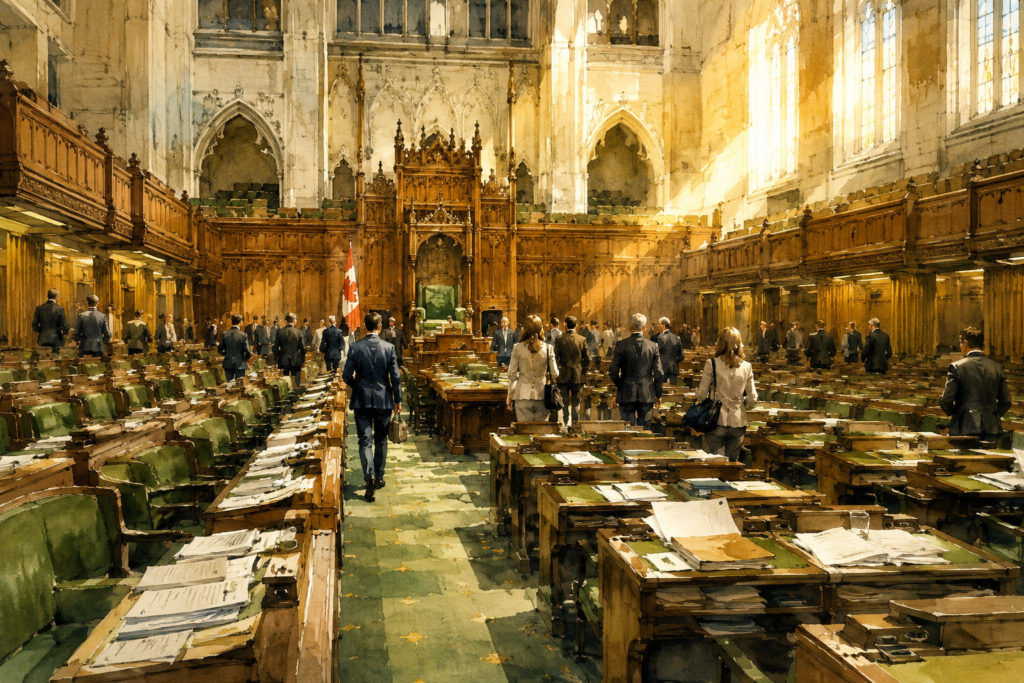
The first extended spring sitting of Canada’s 45th Parliament concluded Thursday as MPs rose for the summer recess following a session that stretched roughly six months and saw the Carney government advance a significant legislative agenda through the House of Commons.
In total, Parliament passed 24 pieces of legislation during the sitting, including 19 government bills, three Conservative private members’ bills, and two Senate bills. Several major measures received royal assent before the House adjourned.
Among the final bills approved were three justice-focused initiatives: legislation tightening bail provisions, a new hate crimes bill, and a measure criminalizing AI-generated sexual deepfakes. MPs also passed, on division, legislation formally recognizing Sahtu Dene and Métis self-government in the Northwest Territories. In addition, the House accepted a Senate amendment to Bill C-11 that transfers jurisdiction over sexual offences involving Canadian Armed Forces members from military courts to the civilian justice system.
Not all government legislation cleared Parliament before the break. Several bills, including portions of the government’s spring economic package, remain before the Senate and will not advance further until Parliament returns in the fall.
Throughout the sitting, Conservatives argued the government’s legislative record fell short of the scale of Canada’s economic challenges. Government House Leader Steven MacKinnon defended the government’s output, pointing to progress on crime, justice, and economic measures during a period that began with a minority Parliament before the Liberals consolidated a working majority through floor crossings.
MPs are scheduled to return to Ottawa on September 21.
Why It Matters
The end of the spring sitting shifts much of the country’s political activity away from Parliament and into the hands of the executive branch for the summer months. With the House no longer sitting, opportunities for opposition parties to scrutinize government decisions become significantly more limited.
The government enters the recess with Mark Carney’s approval ratings remaining relatively strong, but against a backdrop of growing economic and political pressures. Canada is now officially in a technical recession, key elements of the CUSMA review process remain unresolved, and the Alberta pipeline proposal faces a critical July 1 submission deadline.
By the time MPs return in September, Alberta’s separation referendum campaign will be well underway, CUSMA negotiations will have progressed further behind closed doors, and several major legislative files will still be awaiting Senate action. For the next three months, some of the most consequential decisions facing the country will occur largely outside the parliamentary spotlight.