



In a move aimed at stabilizing the domestic labor market and providing a structured transition for established foreign nationals, the Canadian government has officially activated a new Temporary Resident to Permanent Resident (TR to PR) pathway. As part of the 2026-2028 Immigration Levels Plan, this one-time initiative seeks to grant permanent residency to up to 33,000 temporary workers currently residing in Canada. Launched in mid-March 2026, the program represents a strategic pivot toward "inland" selection, prioritizing individuals who have already demonstrated economic utility and social integration within Canadian borders.
The Legislative Landscape: Bill C-12 and Immigration Reform
The rollout of the 2026 TR to PR pathway occurs against a backdrop of significant legislative overhaul. Earlier this year, the Senate approved Bill C-12, which introduced sweeping reforms to the Immigration and Refugee Protection Act (IRPA). Proponents argue that these reforms provide the executive discretion necessary to respond to immediate economic exigencies, while critics note that the rapid succession of policy changes can create administrative hurdles for applicants.
This specific pathway is designed to operate outside the traditional Express Entry Comprehensive Ranking System (CRS). By bypassing the high-point thresholds often associated with federal programs, the government is effectively lowering the barrier for essential workers who may lack the high-tier academic credentials required for Express Entry but possess critical on-the-ground experience.


Targeted Demographics: Addressing Sectoral Labor Shortages
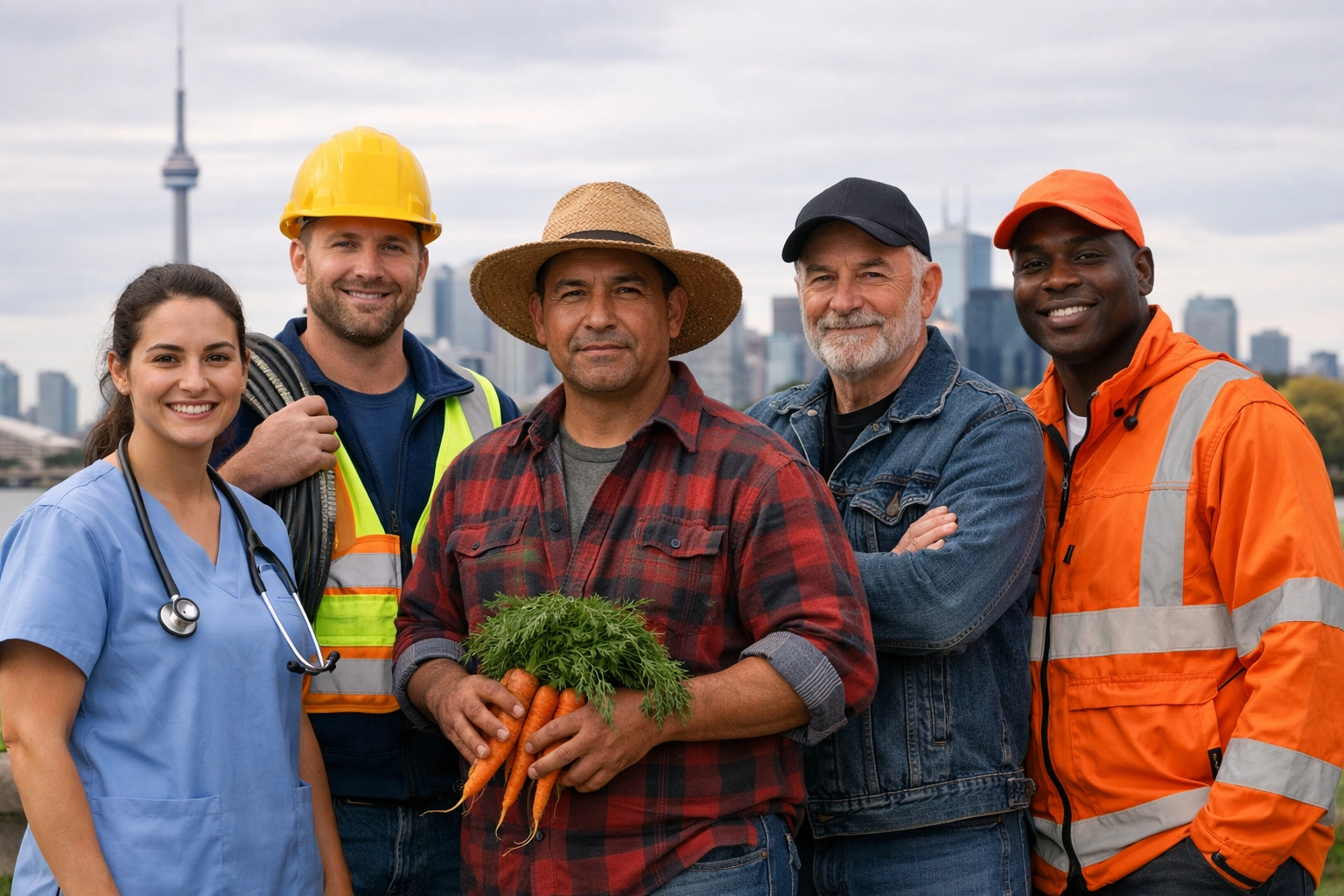
The 2026 program is not a universal amnesty but a precision-targeted instrument. Analysis of the current economy suggests that Canada continues to grapple with asymmetric labor demand, particularly in the wake of demographic aging. To combat this, the pathway prioritizes five core sectors:
- Healthcare: Nursing coordinators, specialized physicians, and support workers.
- Skilled Trades: Carpenters, electricians, and industrial mechanics.
- Agriculture: Essential for maintaining food security amidst rising costs.
- Transport: Truck drivers and logistics managers responsible for supply chain integrity.
- Small-City Infrastructure: Roles essential to the maintenance of rural municipalities.
Government data indicates that workers in these sectors contribute significantly to the tax base while filling roles that domestic recruitment has failed to satisfy. By providing a pathway to PR, the Department of Immigration, Refugees and Citizenship Canada (IRCC) aims to reduce the "churn" of temporary labor and foster long-term community investment.
Strategic Geographical Distribution: A Shift to Provincial Control
A defining feature of the 2026 initiative is its emphasis on regionalization. Unlike previous iterations, this pathway includes a distinct preference for applicants established in rural areas and mid-sized cities. This policy alignment reflects a broader shift in sentiment among the Canadian public, with recent polling suggesting that a majority of citizens support increased provincial control over immigration levels to ensure local infrastructure can keep pace with growth.
By incentivizing settlement outside of major hubs like Toronto and Montreal, the government seeks to alleviate pressure on housing markets and public transit systems in metropolitan centers. Analysts suggest that this "decentralization" strategy is key to maintaining the social license for high immigration levels during a period of economic uncertainty.
Eligibility Criteria and Economic Integration
To succeed in the 2026 TR to PR stream, applicants must meet rigorous standards of "integration readiness." The criteria go beyond mere employment history, focusing on the candidate's established roots in the country. Key requirements include:
- Active Employment: Proof of current employment in an eligible sector at the time of application.
- Fiscal Contribution: Evidence of tax filings and a consistent history of contributing to the Canadian economy.
- Language Proficiency: A minimum benchmark in English or French, ensuring that candidates can navigate Canadian professional and social environments effectively.
- Residency Intent: A documented intention to reside in a province or territory other than Quebec (which maintains its own jurisdictional autonomy over economic immigration).
The focus on "tax-paying residents" is a deliberate attempt to frame the program as a reward for those who have already participated in the national economy during a challenging fiscal period.
Administrative Readiness: Lessons from 2021
Stakeholders and immigration consultants have issued urgent warnings regarding the timing of the 2026 portal launch. Historical data from the 2021 TR to PR pathway serves as a cautionary tale; in that instance, some streams reached their intake caps within 24 hours of opening.
While the government has signaled that full operational instructions and application forms will be finalized in April 2026, experts suggest that waiting for the formal launch to gather documentation is a high-risk strategy. The complexity of obtaining Police Certificates from foreign jurisdictions and securing Educational Credential Assessments (ECAs) means that proactive preparation is the primary determinant of success.
Critical Documentation Checklist
Potential applicants should begin digitizing and verifying the following documents immediately:
- Language Test Results: Results must be valid (typically less than two years old).
- Work Permit Records: Comprehensive history of all legal work status in Canada.
- Proof of Current Employment: Employment letters on official letterhead, pay stubs, and T4 slips.
- Educational Credentials: ECAs for any degrees obtained outside of Canada.
- Identity Documents: Valid passports and civil status documents (marriage certificates, etc.).
Failure to provide a "complete" application at the moment of submission will likely result in a summary rejection, as the high volume of interest precludes the possibility of IRCC officers requesting missing information.
Macroeconomic and Social Infrastructure Impacts
The 2026 TR to PR pathway is not occurring in a vacuum. It is deeply intertwined with the broader national discourse on infrastructure capacity. Analysts note that while 33,000 new permanent residents represent a significant human capital influx, the downstream effects on healthcare and housing must be managed.
Proponents of the pathway argue that since these individuals are already living and working in Canada, their transition to PR status does not add immediate "new" pressure to the housing stock or the healthcare system in the same way that new arrivals from abroad might. Instead, it provides these residents with the stability needed to transition from renters to potential homeowners, or from temporary workers to long-term taxpayers who fund the very services they utilize.

What This Means: Practical Implications for Temporary Residents
For the thousands of international students and temporary foreign workers currently navigating the "cap" environment, this pathway offers a rare window of opportunity. With the recent implementation of provincial Attestation Letters (PAL) and stricter caps on study permits, the traditional route from education to residency has become increasingly constricted.
The 2026 TR to PR stream serves as a vital "safety valve" for the immigration system. It acknowledges the contributions of those who remained in the workforce during the economic fluctuations of 2024 and 2025. For the individual, PR status means the end of work permit renewals, access to domestic tuition rates for further education, and the security of a permanent future in Canada.
Looking Ahead: The Future of the Pathway
As we approach the April 2026 full-program disclosure, the focus remains on the "integrity" of the intake process. The government maintains that this pathway is a necessary component of a balanced immigration strategy that weighs economic needs against social absorption capacity.
The success of this 33,000-person cohort will likely dictate whether similar pathways are utilized in the 2027 and 2028 cycles. If the integration of these residents continues to show positive correlations with labor market stability and regional growth, the "inland" selection model may become a permanent fixture of the Canadian immigration landscape, rather than a one-time emergency measure.

The long-term significance of the 2026 TR to PR pathway lies in its ability to reconcile Canada’s humanitarian reputation with its pragmatic economic requirements. By rewarding those who have already integrated, Canada is betting on a future where residency is earned through contribution, and where the immigration system acts as a responsive tool for national development.
Related Topics:
- Category: National News
- Category: Economy & Finance
- Canada's 2026-2028 Immigration Levels Plan Overview
Continue Reading:
- The Impact of Housing Caps on Permanent Residency
- Navigating the New Provincial Attestation Letter (PAL) System