


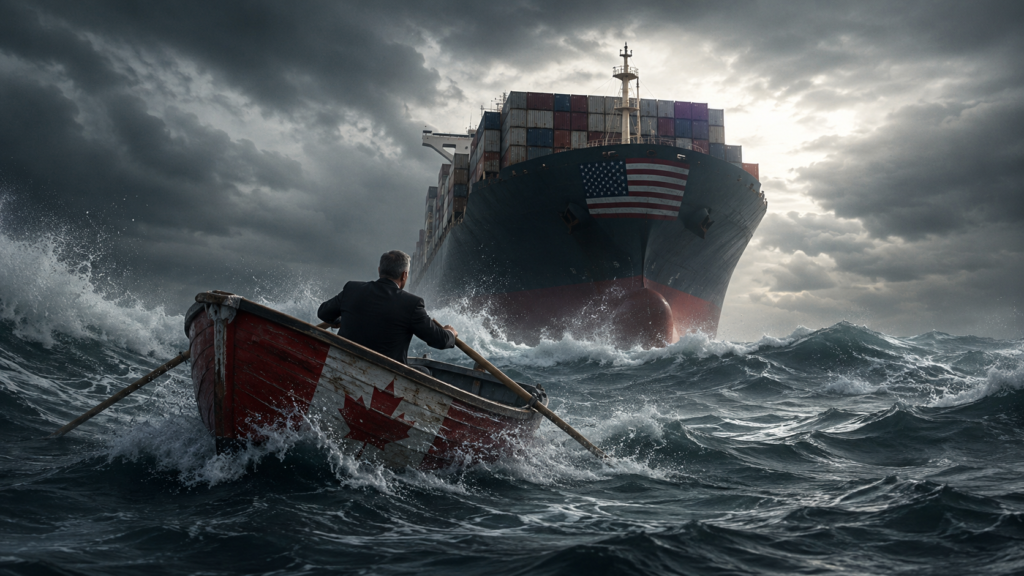
Every few years, Washington reminds us who we’re dealing with. Tariffs, softwood lumber, dairy quotas, now this — the specifics change, but the pattern doesn’t. The United States throws its weight around. Then the crisis passes, and so does the urgency.
Pierre Poilievre is right about one thing: a trade dispute with our largest trading partner isn’t a Liberal problem or a Conservative problem. Canadian workers absorb the consequences either way. But “Parliament should unite” is the kind of thing every politician says during a crisis and nobody says the week after. It’s not a strategy. It’s a mood.
The real question isn’t whether MPs can behave themselves for a news cycle. It’s why Canada keeps ending up here in the first place — reacting to Washington instead of having already built the leverage to not need to.
That’s not bad luck, and it’s not any one government’s failure of nerve. It’s what our electoral system is built to produce.
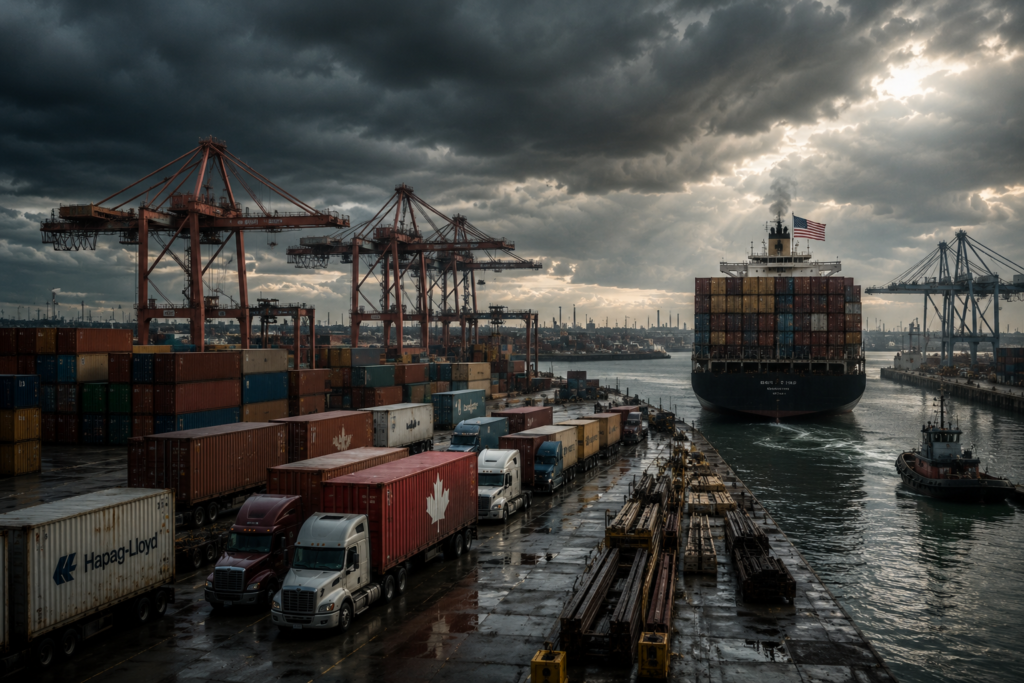

A majority government under first-past-the-post doesn’t need the rest of Parliament to agree with it about anything. It has the seats, it has four years, and everything gets triaged against the next election, not the next decade. Interprovincial trade barriers, port and rail capacity, new export markets in Asia and Europe — none of that pays off before the writ drops again, so it sits on the shelf until a crisis forces someone’s hand. A minority government has the opposite problem: everything, including trade policy, gets run through the lens of whether it costs you the next confidence vote. Either way, long-term economic positioning loses to short-term political survival. That’s not a character flaw in our politicians. It’s the incentive structure they’re operating in.
Now compare that to legislatures where coalition governments are the norm, as they are under most proportional systems. A government that has to keep a coalition together doesn’t get to treat trade diversification as someone else’s problem for three years and then panic. The negotiating happens before the crisis, because the coalition itself depends on parties actually agreeing on where the country’s headed. Under MMP, a durable economic strategy isn’t a nice idea Parliament reaches for when the Americans are threatening tariffs — it’s the price of governing at all.
None of this means the current negotiations should happen on live television. They shouldn’t. Nobody serious hands the other side their negotiating position for free, and Canadians who demand a play-by-play of ongoing talks are asking for a weaker outcome, not more accountability. But once a deal is done, Canadians are owed the terms, the reasoning, and the honest version of what it costs us long-term. Secrecy during negotiation and transparency after it aren’t in tension. They’re just two different jobs, done at two different times.
The tariff dispute will end. Another one will come. Canada will express surprise, Parliament will promise to learn from it, and we’ll congratulate ourselves for getting through another crisis.
Until the incentives change, the pattern won’t.
— Christopher M. Michaud