
Economy
Economy: Inflation Cools to 1.8%, But Oil Risks Loom

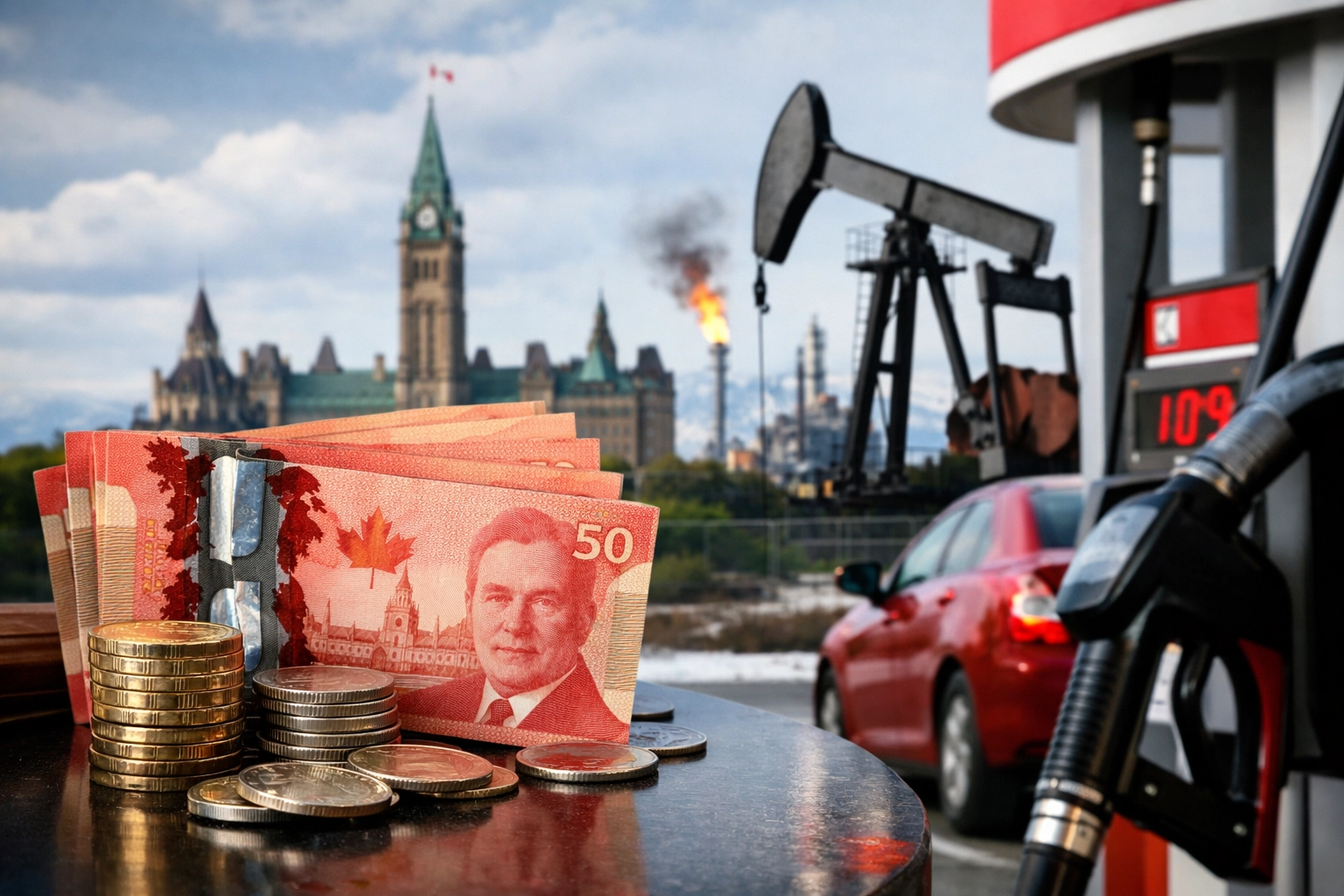
OTTAWA : This morning, Statistics Canada reported that the annual pace of inflation slowed to 1.8% in February 2026, marking the first time in nearly two years that the Consumer Price Index (CPI) has dipped below the Bank of Canada’s 2% target.
The report, which exceeded economist expectations of a 2.1% print, highlights a cooling Canadian economy even as global geopolitical tensions threaten to reverse these gains. While the cooling trend offers a reprieve for households, analysts warn that the underlying volatility in energy markets remains a significant risk factor for the remainder of the fiscal year.
The Impact of Policy and the Sales-Tax Holiday
A primary driver for the February deceleration was the conclusion of the federal government’s temporary sales-tax holiday, which had influenced consumer spending patterns over the previous quarter. As the tax holiday expired, the year-over-year comparisons showed a significant drop in the relative cost of taxable goods, providing a "base effect" that pulled the headline figure downward.
However, the "cooling" is not uniformly distributed across the economy. While the price of durable goods and certain retail sectors saw a marked decline, the services sector remains "sticky," according to senior analysts.
"The 1.8% figure is a welcome milestone for the Bank of Canada," said David Arnot, an economist specializing in Canadian monetary policy. "But we have to look at the mechanics. A large portion of this dip is technical, resulting from the end of last year’s fiscal interventions. When you strip away the tax holiday effects and seasonal adjustments, the core pressure on Canadian wallets is still present, particularly in the urban centers of Toronto and Montreal."

Oil Volatility and the Middle East Crisis
The most significant headwind facing the Canadian economy is the escalating instability in the Middle East. Supply chain disruptions and restricted transit risks through the Strait of Hormuz have already contributed to higher and more volatile pricing for Brent Crude and Western Canadian Select (WCS).
Energy analysts say that with crude prices elevated, the 1.8% inflation rate could prove short-lived. Some models suggest that sustained increases in fuel and transportation costs could push the CPI back toward the 3% mark by the summer of 2026. This "second wave" of inflation would be particularly difficult for the Bank of Canada to manage, as it would be driven by external supply shocks rather than domestic demand.
For many Canadians, the price at the pump remains the most visible indicator of this volatility. While gas prices were a downward contributor to the February report, early March data points to a sharp reversal that is already showing up at the pump in some regions. With energy costs now rising, transportation costs for food and consumer goods are expected to remain under pressure, potentially erasing some of the early-year relief.
Regional Disparities: Toronto and Montreal
The impact of the 1.8% headline figure is felt differently across Canada’s major metropolitan areas. In Toronto, high shelter costs continue to insulate the city from the broader cooling trend. While the price of goods may be falling, the cost of rent and mortgage interest remains a heavy burden on the average household.
According to data from The Canadianist News Finance category, the household debt-to-income ratio in major cities remains at historic highs. Even with lower inflation, the debt-servicing costs for many families are at a breaking point.
In Montreal, the end of the sales-tax holiday was met with a stabilization of retail prices, but the city’s manufacturing sector is keeping a close eye on the "Auto Industry Shield" policies proposed by federal leaders. Trade barriers and tariffs remain a secondary concern for inflation, as any increase in the cost of imported components could lead to higher prices for domestic consumers.
The Bank of Canada’s Next Move
The central bank now finds itself in a delicate position. Traditionally, an inflation rate below 2% would signal a green light for interest rate cuts. However, Governor Tiff Macklem and the Governing Council have expressed caution regarding "premature celebrations."
The concern is twofold: first, that cutting rates too quickly could reignite the housing market, leading to a fresh spike in shelter-related inflation; and second, that the aforementioned oil risks could cause inflation to bounce back before the bank’s policies have fully taken hold.
"The Bank of Canada is likely to maintain a 'wait and see' approach for the next two quarters," says Arnot. "They are looking for sustained stability, not just a one-month dip caused by the end of a tax holiday. They need to see how the energy situation unfolds before they commit to a downward path for the overnight rate."

Shelter Costs and the Housing Crisis
Despite the cooling headline inflation, the shelter component of the CPI remains the largest contributor to price growth in Canada. While the Ontario government has proposed measures such as an HST waiver on new home builds to stimulate supply, these policies take years to manifest in the market.
In the interim, the cost of housing remains the primary driver of the "cost of living" crisis. For those looking for a deeper dive into the structural issues facing the country, the framework outlined in The Case for Canadianism offers a perspective on how balanced policy can address these long-term systemic failures.
Global Comparisons: The U.S. Divergence
While Canada’s inflation has cooled to 1.8%, our largest trading partner is seeing a different trend. Recent data from the United States indicates that headline inflation remains higher, hovering between 2.39% and 2.43%. Core inflation in the U.S. is even higher, at approximately 2.5%.
This divergence creates a challenge for the Canadian dollar. If the Bank of Canada cuts rates while the U.S. Federal Reserve remains hawkish, the loonie could depreciate against the U.S. dollar. A weaker loonie would make imports more expensive, further contributing to the risk of "imported inflation" and potentially pushing the CPI back toward that 3% warning zone.
Looking Ahead: The Spring Forecast
As we move into the second quarter of 2026, the Canadian economy sits at a crossroads. The 1.8% inflation rate is a sign that the aggressive interest rate hikes of the past few years have successfully dampened domestic demand. However, the external risks are more potent than they have been in years.
The combination of Middle East tensions, oil price volatility, and a diverging economic path from the United States suggests that the path back to a stable 2% is still fraught with obstacles. For consumers, the message is one of cautious optimism: prices are rising more slowly for now, but the global energy market holds the key to whether this relief will last.
For further updates on the Canadian economy and shifting market trends, visit our Economy category or check the sitemap for a full list of our recent reporting.
Summary of Key Findings:
- Headline Inflation: 1.8% in February 2026.
- Primary Factor: End of the federal sales-tax holiday and base-effect comparisons.
- Major Risk: Middle East tensions pushing oil prices higher, with a potential return to 3% inflation.
- Regional Pressure: Shelter costs in Toronto and Montreal remain high despite the national average cooling.
- Central Bank Outlook: Likely to hold interest rates steady until energy risks are clarified.

As the fiscal year progresses, The Canadianist News will continue to monitor the interplay between federal policy, global energy markets, and the daily reality for Canadian households. For more on the philosophical and practical path forward for the country, consider reading Canadianism: A Calm Alternative for a Fractured Country.
Stay tuned for our upcoming coverage of the federal budget and its implications for the 2026 economic forecast.
