

Economy
Economy: Bank of Canada Prepares for Critical Interest Rate Decision


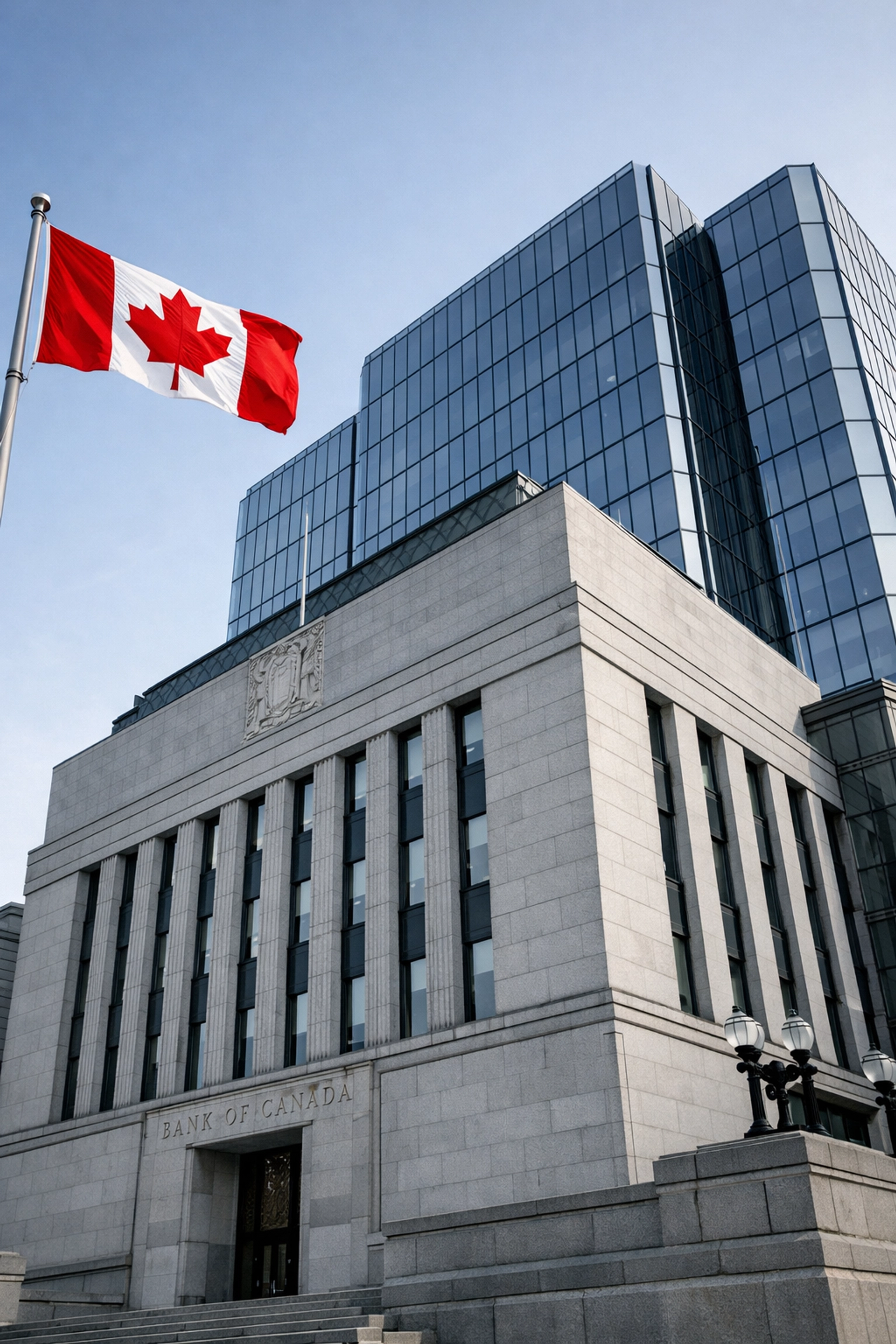
This morning, the Bank of Canada is scheduled to release its latest interest rate decision, a move that stands as a focal point for news across the country. Governor Tiff Macklem and Senior Deputy Governor Carolyn Rogers are expected to provide the central bank's updated stance on the overnight rate at 9:45 AM ET, followed by a formal press conference at 10:30 AM ET. This announcement comes at a juncture where economic indicators present a complex narrative for the canadian government and financial markets alike.
The central bank has maintained the overnight rate at 2.25 percent since October 2025. Current projections from market analysts and mortgage experts suggest that the Bank will likely hold this rate steady today. This consensus reflects a broader belief that the aggressive rate-cutting cycle observed over the previous year has reached a temporary plateau. The decision arrives as part of the regularly scheduled canada headlines that dictate the trajectory of the national economy.

The Context of 1.8% Inflation
A primary driver behind this morning's deliberations is the most recent Consumer Price Index (CPI) data. Statistics Canada reported that the national inflation rate has cooled to 1.8 percent, falling slightly below the Bank of Canada’s 2 percent target. Under normal circumstances, an inflation rate below target might signal the need for further rate cuts to stimulate economic activity. However, the current landscape is tempered by several counteracting forces that have introduced a "wait-and-see" sentiment among policymakers.
While the 1.8 percent headline figure suggests that price pressures are easing, the underlying components of the CPI provide a more nuanced view. Shelter costs, which have remained a persistent driver of inflation due to high mortgage interest costs and rising rents, continue to put upward pressure on the basket of goods. Conversely, the decline in prices for certain consumer goods and the stabilization of supply chains have helped pull the headline number down.
The Bank of Canada must now weigh whether the 1.8 percent print is a sign of long-term stability or a temporary dip that could be reversed by external shocks. This morning’s press conference will be closely watched for Macklem’s interpretation of these figures and whether the Bank views the current disinflationary trend as "sustainable."
Global Volatility and Oil Prices
One of the most significant hurdles facing the Bank of Canada this morning is the resurgence of geopolitical instability. Tensions in the Middle East, specifically involving the United States and Iran, have introduced fresh volatility into global energy markets. For Canada, a major oil exporter, these developments have a dual impact.
Rising crude prices can provide a boost to the Canadian trade balance and the energy sector, but they also pose a significant risk of reigniting inflationary pressures. If energy costs rise sharply at the pump and for home heating, the 1.8 percent inflation rate could quickly move back toward the 3 percent mark. Analysts suggest that the Bank of Canada is wary of cutting rates further while the risk of an "energy-led" inflation spike remains high.

Furthermore, the strength of the Canadian dollar is closely tied to oil prices and the interest rate differential between Canada and the United States. If the Bank of Canada were to cut rates while the U.S. Federal Reserve maintains a higher policy rate, it could lead to a weaker loonie, thereby increasing the cost of imported goods and further complicating the inflation outlook for the canadian government.
The Bond Market and Mortgage Rates
In the lead-up to this morning's announcement, the bond market has shown signs of nervousness. The federal government’s five-year bond yield recently surpassed the 3 percent threshold. This movement is critical because five-year bond yields are the primary benchmark used by financial institutions to price fixed-rate mortgages.
Despite the Bank of Canada keeping the overnight rate at 2.25 percent for several months, the rise in bond yields has placed upward pressure on fixed mortgage rates. Currently, five-year fixed rates are hovering around 3.69 percent, while variable rates: which are directly influenced by the Bank of Canada’s policy rate: remain the more affordable option for many borrowers at approximately 3.35 percent.
This divergence between bond yields and the policy rate suggests that the market is already pricing in a "higher-for-longer" scenario. Investors are increasingly skeptical that the U.S. Federal Reserve will implement its own expected rate cuts, and given the integration of North American finance markets, Canadian yields are being pulled upward in tandem.
Impact on the Canadian Housing Market
The housing sector remains one of the most sensitive areas of the economy regarding interest rate movements. Data released yesterday by the Canada Mortgage and Housing Corporation (CMHC) indicated that housing starts remained relatively stable in February, with a seasonally adjusted annual rate of approximately 256,000 units. However, there is a visible geographic divide.

Toronto has seen a notable decline in new housing starts as developers grapple with high financing costs and a cautious buyer pool. In contrast, British Columbia and parts of suburban Ontario have shown more resilience. The Bank of Canada’s decision this morning to likely hold rates is expected to prolong this period of stagnation in major urban centers. While there is ample supply in some segments of the market, the cost of borrowing remains high enough to keep many "motivated buyers" on the sidelines until more definitive downward movement is signaled.
For those interested in the broader philosophical and practical implications of Canada's current economic and social trajectory, the framework discussed in The Case for Canadianism offers a calm alternative for navigating these fractured economic times.
Household Wealth vs. Economic Anxiety
Compounding the central bank’s decision is the latest data on household wealth. National balance sheets recently showed that Canadian household wealth hit a record high of $18.6 trillion, largely driven by gains in the stock market. On the surface, this would suggest a robust consumer base. However, economists warn that much of this wealth is "on paper" and concentrated among older demographics and those with significant equity portfolios.
The average Canadian consumer remains under significant pressure from the cost of living. While the 1.8 percent inflation rate is a positive headline, it does not represent a decrease in prices, but rather a slower rate of increase. The cumulative impact of the inflation seen over 2023-2025 continues to weigh on discretionary spending. This morning, the Bank of Canada must decide if the current rate of 2.25 percent is restrictive enough to keep inflation down without causing an unnecessary contraction in consumer demand.
Looking Toward the Press Conference
When Governor Tiff Macklem takes the podium at 10:30 AM, observers will be listening for specific keywords. Phrases such as "neutral rate" and "balance of risks" will be analyzed for clues regarding the Bank's path for the remainder of 2026. The "neutral rate": the interest rate that neither stimulates nor restricts the economy: is a moving target, and Macklem’s assessment of where that rate lies will dictate future mortgage and loan pricing.
There is also the question of the Bank’s "quantitative tightening" (QT) program. The Bank has been shrinking its balance sheet by allowing government bonds to mature without replacing them. This process effectively removes liquidity from the financial system. Whether the Bank provides an update on the end-date for QT will be as significant for institutional investors as the interest rate decision itself.
This morning’s announcement is not occurring in a vacuum. It follows a series of departmental shifts in Ottawa, including the IRCC’s pivot toward "economic-ready" immigration, as reported in yesterday's canada headlines. The synergy between fiscal policy (government spending) and monetary policy (the Bank of Canada) remains a critical area of focus for the canadian government as they attempt to balance population growth with infrastructure and economic capacity.
As the 9:45 AM ET deadline approaches, the Canadian financial landscape remains in a state of prepared observation. The outcome of this morning’s meeting will set the tone for the spring real estate market and provide a clearer picture of whether Canada can maintain its low-inflation status in an increasingly volatile global environment.
For further analysis on the intersection of policy and the economy, you can explore our Economy category or read about the challenges of the modern economic dream in Driven Wealth.