
Economy
Carney Defends Economic Record in Question Period, Cites Wage Growth and Job Gains
Prime minister points to rising wages and moderating inflation, as data shows a more mixed picture on employment and affordability

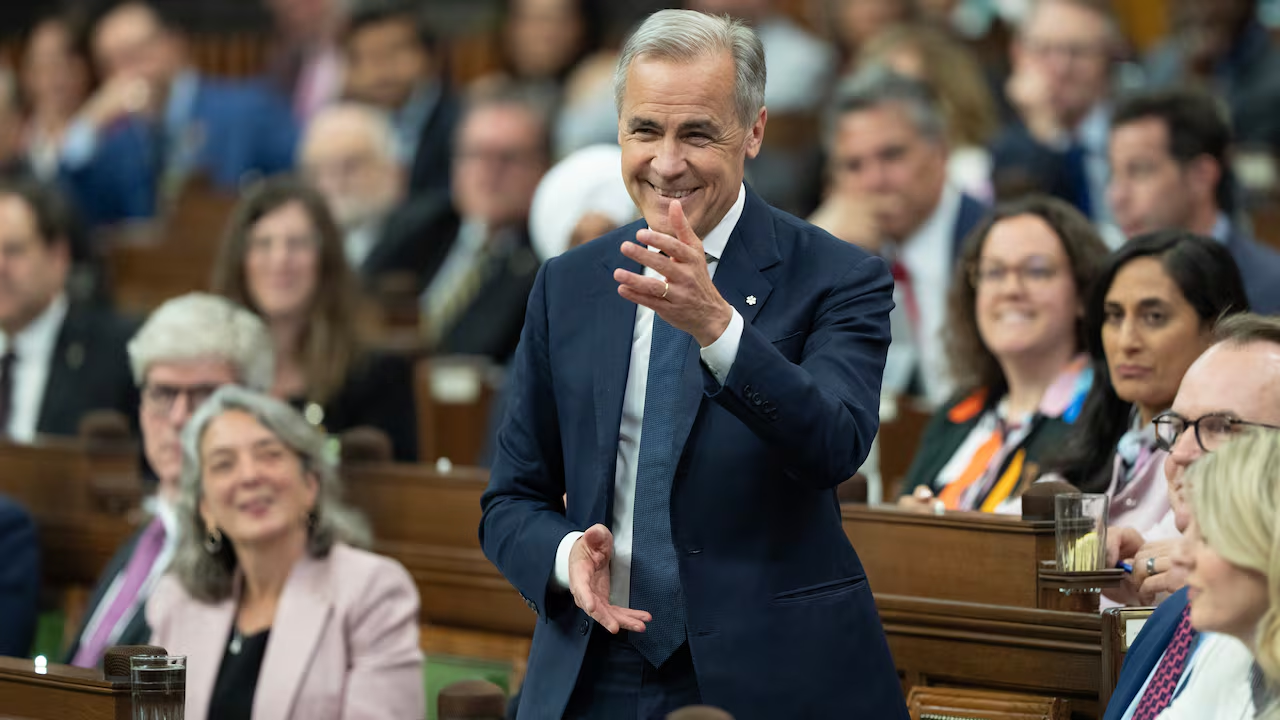
Carney Touts Wage Growth, Job Gains in Question Period as Opposition Raises Affordability Concerns
OTTAWA — Prime Minister Mark Carney defended the government’s economic record during Question Period on April 1, pointing to recent wage growth, job creation, and inflation trends as signs of improving conditions for Canadians.
Speaking in the House of Commons, Carney said Canada has created more than 80,000 jobs in recent months and argued that wages are rising faster than inflation. He added that unemployment is near multi-year lows and described affordability conditions as the strongest they have been in over a decade.
Carney also contrasted Canada’s performance with that of the United States, stating that the U.S. economy had recently lost jobs while Canada continued to add employment.
Latest Data Shows Mixed Economic Signals
Recent data from Statistics Canada indicates that employment levels in Canada have fluctuated in early 2026, with periods of both job gains and losses. Wage growth has remained in the range of approximately 4% to 5% year-over-year, while inflation has slowed to roughly 2% to 3%, resulting in modest real wage growth in recent months.
However, the national unemployment rate has edged higher compared to earlier lows, sitting above levels seen in parts of 2023.
Housing affordability continues to be a concern. Reports from institutions including Royal Bank of Canada have indicated that home ownership costs remain elevated relative to incomes, particularly in major urban markets.

U.S. Labour Market Continues to Expand
Data from the U.S. Bureau of Labor Statistics shows that the American labour market has continued to add jobs on a monthly basis, with consistent employment growth through late 2025 and into 2026.
Economists generally describe both the Canadian and U.S. economies as experiencing slower, but still positive, growth amid easing inflation.
Political Debate Centres on Interpretation of Data
Opposition parties have continued to challenge the government’s characterization of economic conditions, particularly on affordability and housing costs. While some indicators show improvement, critics argue that many Canadians continue to face high living costs and limited access to housing.
The government maintains that recent trends, including moderating inflation and rising wages, represent meaningful progress and signal a gradual improvement in household finances.
Ongoing Focus on Cost of Living
Affordability remains a central issue in federal political debate, with all parties expected to continue focusing on housing, wages, and cost-of-living pressures in the months ahead.