

The Canadianist | Blog
What “National Unity” Actually Means in 2026

If you travel across this country right now, talk to folks in coffee shops, community halls, or quiet living rooms, you quickly realize one thing: "national unity" is a phrase that means entirely different things depending on the postal code you’re standing in.
In 2026, the political temperature is running hot. In Alberta, frustration with federal energy policy and equalization formulas has reached a boiling point, with provincial debates and upcoming votes forcing hard conversations about autonomy. In Quebec, a distinct nationhood asserts itself with renewed confidence, refusing to ask permission to protect its language, culture, and governance. And across the Maritimes, people look at decades of economic promises that turned into patchwork fixes, wondering where they fit into Ottawa’s grand calculus.
Every one of these regions has a legitimate version of its own story. And none of them feel like they are being fully heard in the same room.
So what actually holds this country together? When the political noise gets deafening and common ground feels paper-thin, how do we keep from drifting apart?
That question is the entire reason I developed Canadianism: a grounded, practical philosophy built for everyday people who feel politically homeless, tired of partisanship, and deeply committed to seeing Canada succeed. You can explore more about this framework through our books and manifestos.
The Reality of Regional Grievances
Let’s be honest with each other. For too long, federal politics has treated national unity as a public relations exercise rather than a structural challenge.
Alberta feels like it is carrying the heavy economic machinery of the country on its back while being lectured by politicians thousands of miles away who treat resource development as an abstract debate rather than people's livelihoods. Quebec operates from a deep, unshakeable sense of cultural distinctiveness that central governments have historically tried to manage rather than genuinely respect. Meanwhile, Atlantic Canada has watched boom-and-bust cycles leave communities vulnerable, waiting for federal policies that truly understand maritime realities.
When regions feel misunderstood or dismissed, unity stops being a shared national project and starts feeling like an obligation imposed from above. People grow tired. They look at constant Ottawa bickering and wonder if anyone in power actually understands what life looks like on the ground.
So the real question is simple: what holds this together when common ground feels this thin?

The Five Pillars of Canadianism
The answer, for me, comes from the book Canadianism: A Calm Alternative for a Fractured Country. As Chapter 5 puts it: "These are not abstract ideals or marketing language. They are patterns of behaviour that have shaped Canada at its best, and that must be consciously maintained if the country is to remain stable and cohesive. These pillars are not optional. They work together. Remove one, and the others weaken."
Respect
Respect is the foundation of peace in a diverse society. It means treating others with dignity, patience, and fairness, even in disagreement. It means rejecting politics that rely on humiliation, dehumanization, or moral contempt. Respect does not require agreement. It requires restraint. In Canadianism, respect applies upward as well as outward. Institutions must respect citizens by being transparent, responsive, and honest. Leaders must respect the intelligence of the public by explaining trade-offs rather than obscuring them. A society that abandons respect becomes loud, but brittle.
In Alberta, respect means not reducing energy workers and their families to caricatures in a national argument. In Quebec, it means understanding that language, culture, and autonomy are not side issues but central realities. In the Maritimes, it means recognizing that long-standing economic frustration is not regional whining but lived experience. If respect disappears, every grievance hardens.
Collective Responsibility
Freedom works best when paired with responsibility. Canadians have long understood that individual success depends on shared systems, healthcare, infrastructure, education, public safety, and that those systems require contribution and maintenance. Rights are meaningful only when the conditions that support them are preserved. Collective responsibility does not erase individual ambition. It grounds it. It recognizes that liberty without obligation erodes trust, and that social cohesion depends on people doing more than demanding benefits. In Canadianism, responsibility is not enforced through fear, but sustained through shared expectation.
Applied to regional tension, this means the federation cannot survive as a running argument over who gives more and who gets less. Alberta’s contribution matters. Quebec’s social model and institutional confidence matter. The Maritimes’ needs for durable infrastructure, opportunity, and fair economic treatment matter. Collective responsibility asks each region to see the country as a shared project, not just a balance sheet.
Stability
Stability is not resistance to change. It is the condition that allows change to occur without chaos. Canadians value steady leadership, reliable institutions, and predictable rules. They understand that constant disruption benefits attention seekers more than citizens. Stability protects investment, planning, and social trust. In times of global volatility, stability becomes a strategic asset. Countries that govern calmly are better positioned to adapt than those that lurch from crisis to crisis. Canadianism rejects both reckless disruption and passive stagnation. It insists on deliberate progress.
For Alberta, stability means clear rules and credible timelines, not policy whiplash. For Quebec, it means a federation confident enough to accommodate difference without perpetual constitutional panic. For the Maritimes, it means moving beyond short-term rescue politics toward dependable long-term planning. Stability lowers the national temperature and gives people a reason to invest in staying.
Practical Common Sense
Canadianism is allergic to ideology for its own sake. It prioritizes what works in the real world over what sounds good in theory. Evidence matters. Experience matters. Outcomes matter more than intentions. Solutions must be designed within constitutional reality, fiscal constraint, and human behaviour. Practical common sense values cooperation over purity and compromise over spectacle. It accepts complexity without surrendering clarity. This pillar is what allows Canadianism to function as a governing philosophy rather than a belief system.
Regional unity in Canada will not come from slogans or one-size-fits-all formulas. Practical common sense means admitting that what works in downtown Montreal may not work in rural Nova Scotia or northern Alberta. It means building flexible solutions that fit the country we actually have. A mature federation adjusts without breaking.
Belonging
Belonging is what makes multiculturalism possible. Canada welcomes people from many backgrounds, but belonging requires shared civic participation. People must feel that they have a place, a stake, and a role in the country's future. Belonging is not automatic. It grows when expectations are clear, contributions are recognized, and institutions treat people fairly. It weakens when people feel excluded, dismissed, or reduced to categories. Canadianism offers belonging through participation, not ancestry. Anyone willing to live by the shared civic values of the country has a place in it.
This may be the hardest test of all in 2026. In Alberta, Quebec, and the Maritimes alike, people need to feel that they are not just being managed from afar. They need to feel seen, useful, and included in the country’s future. Belonging is what keeps frustration from becoming alienation.
As the book says: "Together, these five pillars form a civic identity strong enough to unite difference without erasing it."
What Comes Next?
National unity in 2026 isn't about forcing 41 million people to think the same way, vote the same way, or live the same way. That's not a country; that's an imposition.
True unity is about making sure Canada works well enough, fairly enough, and decently enough that people don't need to leave to find what they're looking for. It’s about recognizing that our differences are real, our history is complex, and our shared potential is still greater than our divisions.

We are at a crossroads. We can continue down the path of manufactured outrage and regional alienation, or we can choose a better path: one rooted in cooperation, decency, and mutual respect.
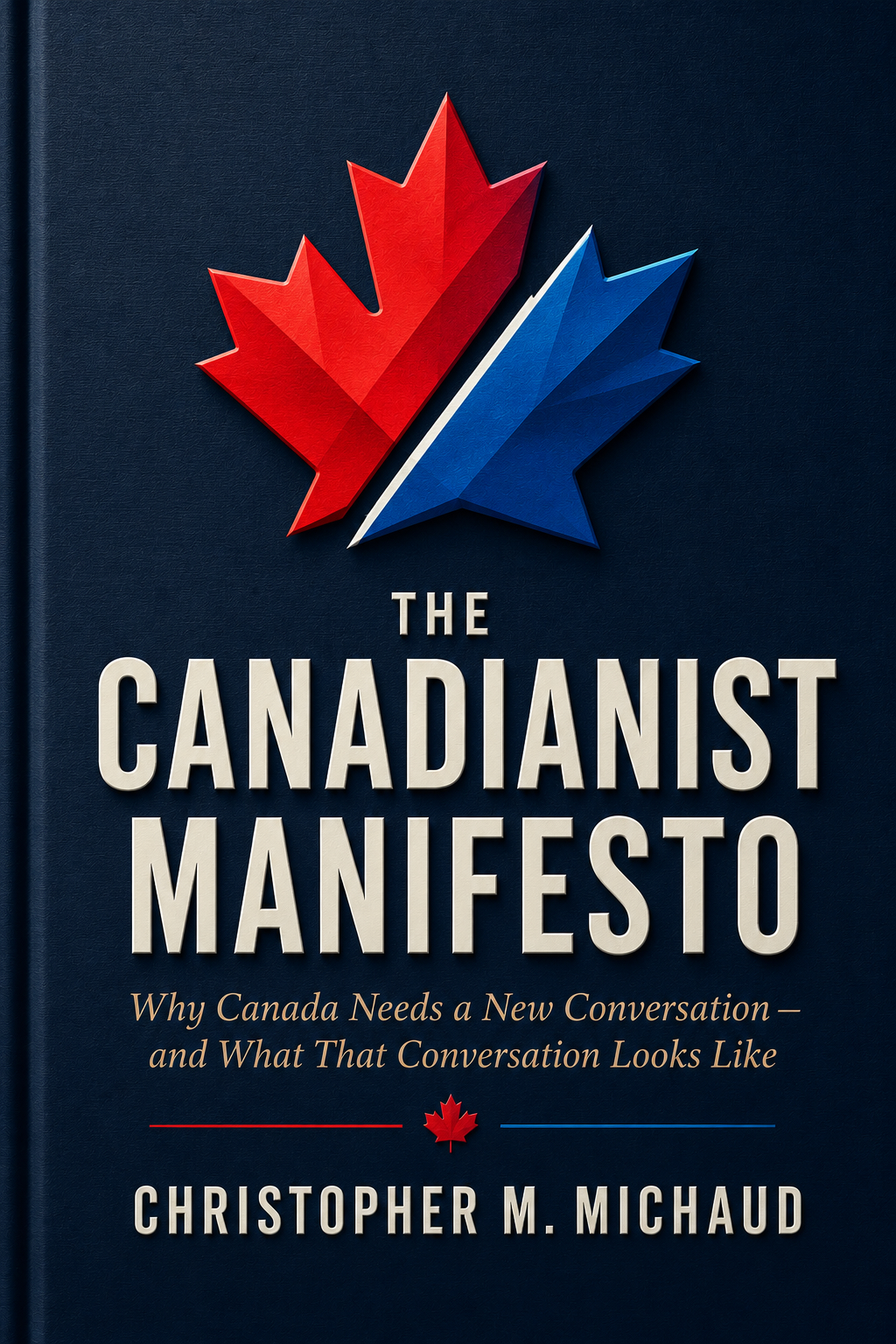
If you believe, as I do, that our best days as a nation are still ahead of us if we're willing to do the hard work of listening to one another, I invite you to learn more about our mission and read The Canadianist Manifesto.
Let's rebuild our foundation, strengthen the centre, and ensure every Canadian has the opportunity to experience the true promise of this remarkable country. Together.