The Canadianist | Blog
Before We Blame Canada, Remember How This Started

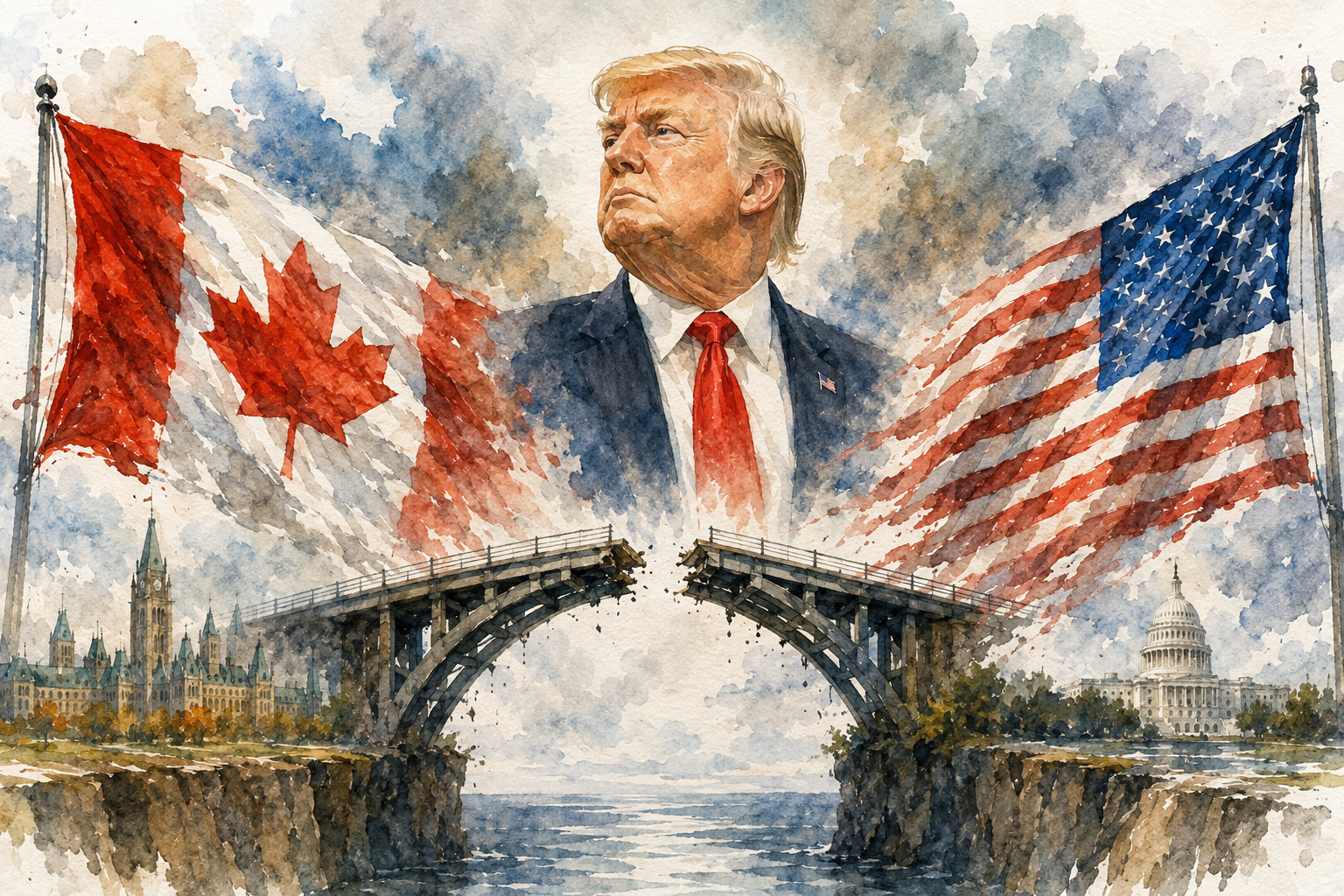
Canada has every reason to scrutinize Mark Carney over the collapse of the latest trade negotiations with the United States. He’s the Prime Minister. His government represents us at that table. Canadians deserve to know what was offered, what was demanded, what changed in the final hours and why he decided that walking away was preferable to signing.
Pierre Poilievre has an equally important role. He’s the Leader of the Opposition, and moments like this require an opposition that challenges the government without opposing simply for the sake of opposing. If Carney makes a mistake, expose it. If there’s a better option, present it. If the government makes the right decision, say that too. Poilievre deserves credit for supporting the decision not to accept the agreement as it stood.
Carney shouldn’t automatically be right because he’s the Prime Minister, and Poilievre shouldn’t automatically be wrong because he’s the Leader of the Opposition. Judge what they’re saying and doing on its merits.
But while Canadians argue about what happened at the negotiating table this week, we’re in danger of forgetting how we got to the table in the first place. We have remarkably short memories.
Go back to Donald Trump’s first presidency. Trump hated NAFTA. He called it a terrible deal and demanded that it be renegotiated. So we renegotiated it. In August 2018, the United States reached an agreement with Mexico first while negotiations with Canada remained unresolved. Trump then put enormous pressure on Canada to join the new arrangement, publicly threatening to proceed without us. Canada eventually agreed.
The resulting United States-Mexico-Canada Agreement was negotiated by Trump’s administration, signed by Trump and celebrated by Trump. He called it an incredible agreement.
Then Donald Trump became president again, and apparently the deal Donald Trump demanded, negotiated, signed and celebrated wasn’t good enough anymore.
A country is perfectly entitled to decide that an existing trade agreement no longer serves its interests. Circumstances change. Economies change. Governments change. If Washington believed there were problems with CUSMA, there was nothing stopping the United States from coming to Canada and saying so.
Instead, we got punched in the head.
Imagine two friends sitting on a couch watching a movie. One of them has a problem with the other. He could turn to his friend and say, “Hey, we’ve got a problem. We need to talk.” Instead, he punches him in the head and then says, “We’ve got a problem. We need to talk.”
The guy who got punched is sitting there wondering what the hell just happened. He’s angry. He’s offended. Maybe he gets up and walks away. Everything he does afterward can still be judged. If he reacts badly, that’s on him. If he makes the situation worse, he owns that too. But if you’re trying to understand why the two friends aren’t peacefully watching the movie anymore, you don’t start the story after the punch.
Canada didn’t throw the first punch in this trade war.
The original justification for Trump’s Canadian tariffs was the border, illegal migration and fentanyl trafficking. Canada was presented as part of an American national emergency. There was always a problem with that argument. Canada represented a tiny fraction of the fentanyl seized entering the United States compared with Mexico. Nevertheless, Canada responded.
Then the grievances expanded. Dairy. Supply management. Trade deficits. Steel. Aluminum. Autos. Canadian regulations. Canadian taxes. CUSMA itself. Trump repeatedly talked about Canada becoming America’s 51st state. He referred to Canada’s prime minister as a governor. He said the United States didn’t need Canadian cars, lumber, energy or much of anything else from us. He spoke openly about using economic force while discussing Canada.
Now we’re somewhere else again. Carney says the Americans introduced additional demands in the final hours of the latest negotiations. According to him, they wanted different treatment for Canadian automotive production, including restrictions affecting medium- and heavy-duty trucks. He says they wanted language restricting Canada’s ability to enter trade agreements with other countries. He says there were continuing American demands involving Canadian cultural and language protections.
Those are Carney’s claims. We should demand evidence for them, and Washington’s account deserves to be heard. But look at the trajectory. We started with fentanyl. Somehow we’ve arrived at whom Canada can trade with.
At some point, Canadians are entitled to ask a fairly basic question: what would actually satisfy the United States?
There’s another contradiction worth remembering. Trump has previously spoken positively about Canada making a deal with China. Now we’re being told by our prime minister that American negotiators wanted language restricting Canada’s ability to make agreements elsewhere. If Carney’s account is accurate, that’s not a minor negotiating detail. That’s a sovereignty question.
And it gets to the heart of what kind of relationship we’re actually trying to preserve.
Canada and the United States aren’t equals in economic size or military power. No one seriously pretends otherwise. The United States has enormous leverage over Canada because of the extraordinary integration of our economies and Canada’s dependence on the American market. That doesn’t make Canada subordinate to the United States.
A relationship between sovereign countries has to contain some degree of reciprocity. America will pursue its interests. Canada will pursue ours. Sometimes those interests conflict. Sometimes one side gets more than the other. Sometimes both compromise because maintaining the relationship has value. But if the definition of a successful relationship becomes one in which Washington determines the terms because Canada is smaller and more economically dependent, then we’re no longer talking about the relationship Canadians thought they had.
This is where Trump’s approach to tariffs matters. Earlier this year, the U.S. Supreme Court rejected the administration’s use of emergency economic powers for its sweeping tariff program. The administration didn’t abandon tariffs. It pursued other statutory authorities that could provide alternative routes for imposing them.
That doesn’t automatically make the new tariffs illegal. Different laws provide different presidential powers, and courts will decide the challenges that come before them. But it tells us something about policy. Tariffs aren’t merely an incidental response to one particular Canadian grievance. They’re a central instrument of this administration’s economic strategy.
We’ve watched tariffs announced, postponed, modified, exempted, reinstated and threatened again. We’ve watched deadlines arrive and move. We’ve watched negotiations appear close to completion before changing direction. That’s a problem for Canada that goes beyond whether Carney could have squeezed another percentage point out of this week’s negotiations.
A trade agreement has value because both parties can plan around it. Companies invest because they expect rules to remain reasonably predictable. Factories are built based on assumptions extending decades into the future. Supply chains cross borders because businesses believe they’ll still be able to cross them tomorrow.
Canada therefore has to ask something uncomfortable before making enormous permanent concessions to secure another agreement: what exactly are we buying? Ten years of stability? Three? One? Until the next grievance?
That’s not an argument for refusing to negotiate with Donald Trump. We have to negotiate with him. He’s the President of the United States, and the United States is overwhelmingly our most important trading partner. But Canada also needs the ability to say no.
That includes the possibility of waiting.
Waiting would hurt. A prolonged trade war could cost Canadian jobs, investment and enormous amounts of money. Governments might have to provide extraordinary support to affected workers and industries. We’ve faced extraordinary national economic emergencies before and spent extraordinary amounts getting through them.
If the alternative is making permanent concessions that compromise Canada’s long-term economic independence in exchange for an agreement we have little confidence will remain stable, waiting for the political environment in Washington to change has to remain an option. Otherwise, we’re not negotiating. We’re waiting to find out how much we’ll eventually agree to surrender.
None of this means Canada should become anti-American. The United States isn’t going anywhere. Neither are we. Our families cross the border. Our businesses are intertwined. Our militaries cooperate. Our cultures overlap. Americans remain our neighbours, friends and partners.
But something has changed, and trust is remarkably easy to damage and remarkably difficult to rebuild.
Think about a marriage after an affair. The couple may reconcile. They may stay together. They may eventually become happy again. But they don’t return to the relationship that existed the day before the affair. They can’t. One of them knows something now that they didn’t know before.
Canada knows something now too. We know that our economic dependence on the United States can be used as leverage against us by an American administration willing to use it. We can’t unknow that.
Whatever agreement eventually emerges from this confrontation, Canada should never again build its economic strategy around the assumption that Washington would never exploit that vulnerability. Diversifying our trade isn’t an insult to the United States. It’s insurance. Building domestic capacity isn’t anti-American. It’s prudent. Maintaining the ability to survive an American trade confrontation isn’t hostility toward our closest neighbour. It’s something a sovereign country should have been capable of doing all along.
So yes, hold Mark Carney accountable. Demand answers about what happened in those negotiating rooms. Expect Pierre Poilievre to challenge the government constructively, and give him credit when he does. Listen to Washington’s version of events. Take a good agreement if one becomes available. Walk away from one that isn’t.
But before Canadians divide ourselves into another argument over who screwed up the negotiations, remember why these negotiations are happening. Remember the fentanyl emergency and the border accusations. Remember the tariffs, “Governor” and the 51st state. Remember being told America doesn’t need what Canada sells. Remember the agreement we already renegotiated, who demanded it, who negotiated it, who signed it and who decided it wasn’t good enough anymore.
Canada is responsible for how we respond to this moment. We don’t have to accept responsibility for creating it.