
The Canadianist | Blog
The Political Choice Canadians Think They Have

By Christopher M. Michaud
Canadians often point to our political system as proof that we’re different from the United States.
Americans live with two dominant parties. Canadians have the Liberals, Conservatives, New Democrats, Greens, Bloc Québécois, the People’s Party, and several smaller parties.
At first glance, that looks like an abundance of political choice.
But having more parties doesn’t necessarily mean having more meaningful political choice.
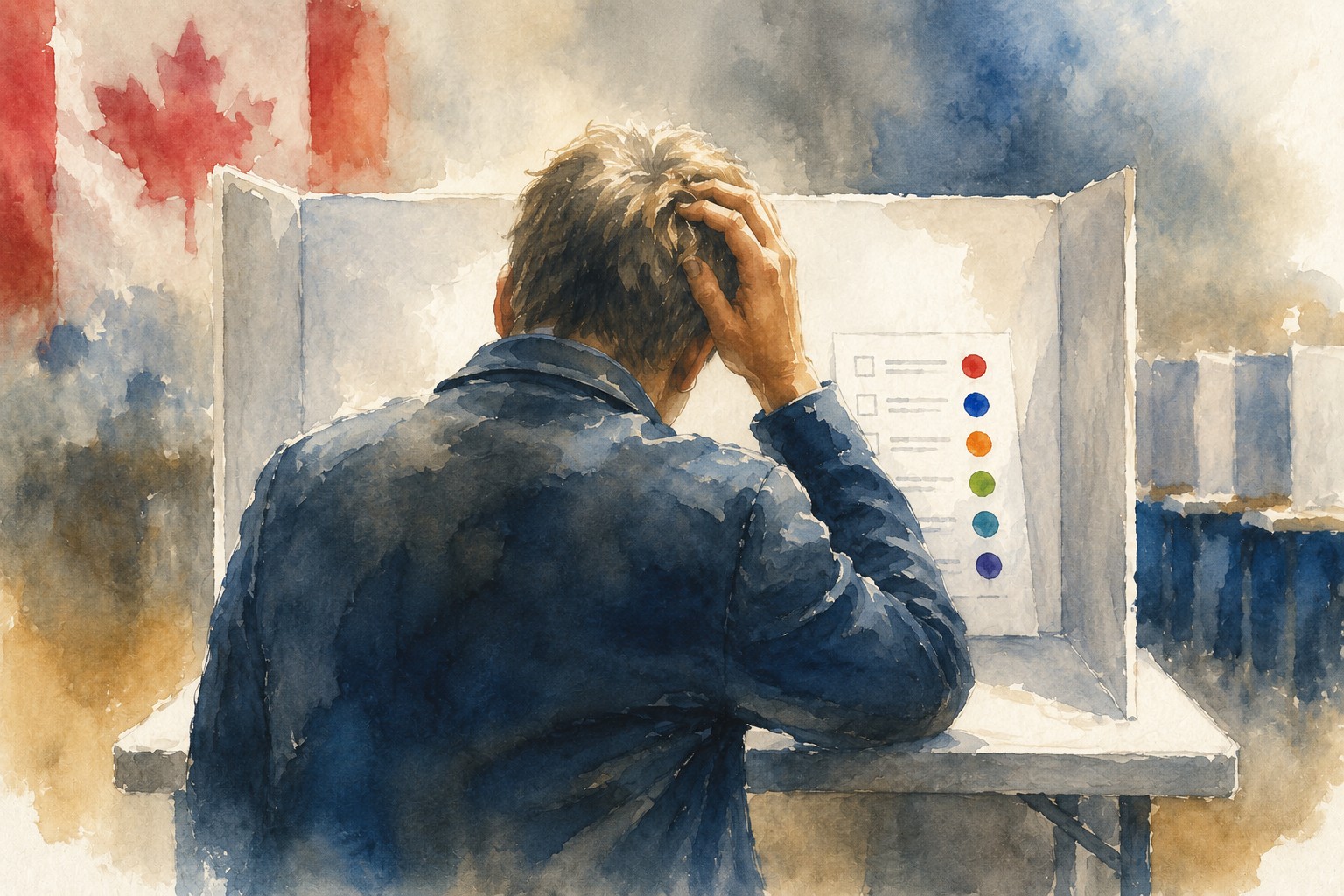
Listen to the conversations that happen during every federal election. They rarely begin with ideas. They begin with strategy.
Can they win?
Will they split the vote?
Is voting for a smaller party just helping someone else?
Those questions have become so common that many Canadians barely notice them anymore. Yet they reveal something about the way we’ve learned to think.
Instead of asking which party best represents our views, we’re often encouraged to predict what everyone else is going to do first.
When voters begin choosing based on viability instead of conviction, the number of parties on the ballot becomes less important than the number of parties people believe they can realistically support.
The political marketplace starts to feel much smaller than it appears.
That isn’t because Canadians lack political diversity. Quite the opposite.
Canadians hold an enormous range of opinions on taxes, immigration, healthcare, housing, climate policy, social issues, and the role of government. Most people don’t fit neatly inside a single ideological box. They agree with one party on some issues and another on others.
Yet election after election, many feel pressure to squeeze those views into one of a handful of established political brands.
It’s one reason so many people describe themselves as politically homeless.
They’re not necessarily looking for more political parties. They’re looking for a political home that reflects how they actually think.
Canada has more parties than the United States, but our electoral system still encourages strategic voting. Over time, that changes behaviour. People begin choosing the least objectionable option rather than the one they genuinely believe would govern best. Eventually, many stop expecting to be represented at all.
That’s a difficult habit for any democracy to develop.
The health of a democratic system isn’t measured by how many party names appear on a ballot. It’s measured by whether citizens feel free to vote honestly without believing they’ve thrown their vote away.
When enough people feel compelled to compromise before the first ballot is even counted, the issue runs deeper than campaign strategy.
The parties haven’t disappeared.
The confidence that people can vote for the one they genuinely believe in has.
That’s a conversation worth having, regardless of which party you support. It raises a broader question about whether Canada’s electoral system still reflects the country we’ve become, or whether it increasingly rewards strategic calculation over genuine representation. Those are themes explored throughout Democracy Renewed, which argues that Canada’s current electoral structure narrows the range of viable political choices and encourages strategic voting over sincere political expression.
Canadians deserve a political system where the first question isn’t, Can they win?
It should be, Who best represents what I believe?