


There’s a point where political messaging stops sounding like interpretation and starts sounding detached.
That line showed up during Question Period on or around April 1.
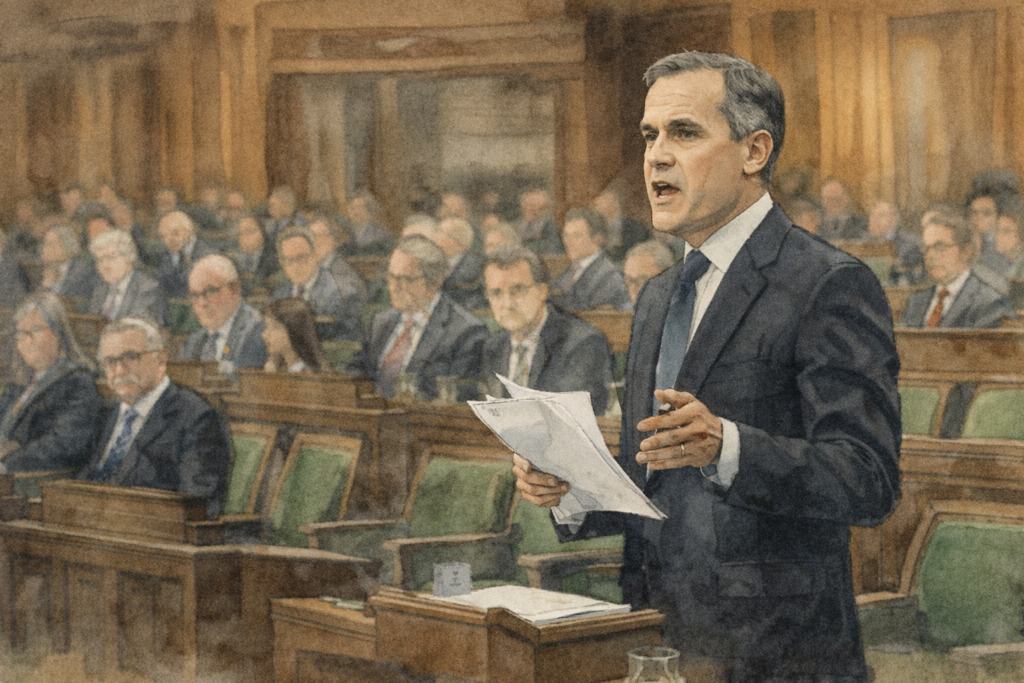
The Prime Minister stood in the House of Commons and described an economy moving in the right direction. Canada is creating jobs. Wages are rising faster than inflation. Unemployment is low. Affordability, he said, is the best it’s been in over a decade. He even contrasted Canada with the United States, suggesting their economy is losing jobs while ours continues to grow.
Taken at face value, it’s a confident picture.
It’s also one that doesn’t hold together.
The claim about the United States losing jobs isn’t supported by current labour data. The U.S. economy has been adding jobs steadily. That’s not a matter of political framing, it’s a matter of record.
The statement that wages have outpaced inflation every single month doesn’t stand up either. There have been extended periods in recent years where inflation ran ahead of wages. Recent gains don’t change that history, and they don’t justify presenting it as a consistent trend.
Unemployment is not at a multi-year low. It has moved higher from earlier levels, not lower.

And affordability.
Describing affordability as the best it’s been in over a decade runs directly against widely reported conditions. Housing costs remain elevated, and rent continues to take up a significant share of income. Those pressures are not theoretical, they are part of everyday life.
Taken individually, some of these statements draw on partial truths. Put together, they form a picture that feels complete but doesn’t reflect the whole.
That’s where the issue lands.
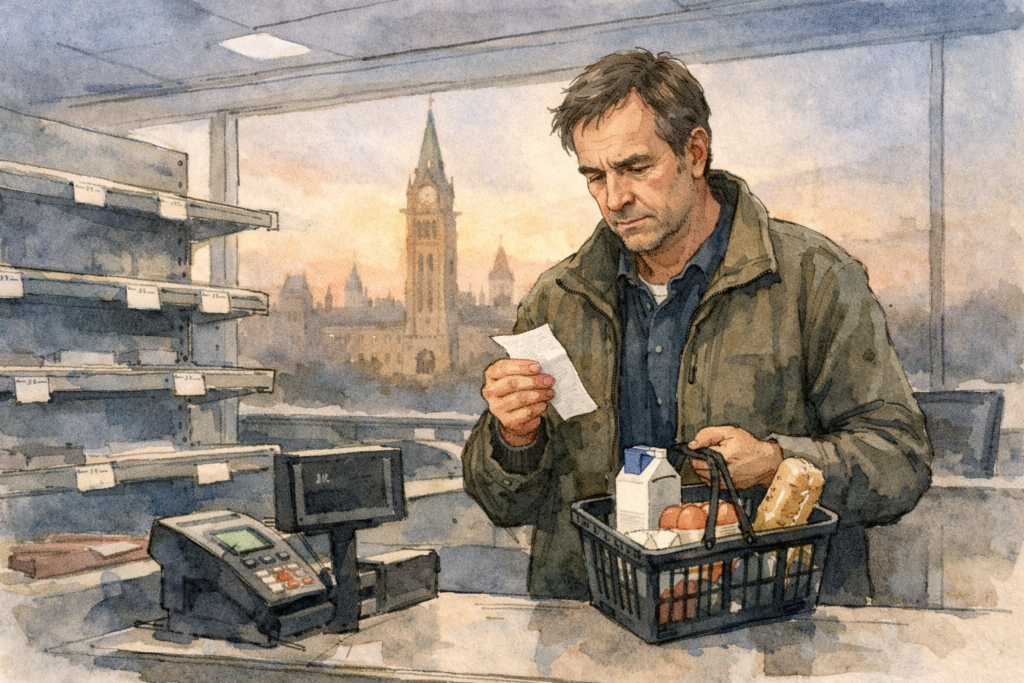
Canadians don’t experience the economy through aggregate data. They experience it through routine decisions, especially at the grocery store, where prices are immediate and unavoidable.
Which raises a simple question.
Mr. Prime Minister, when was the last time you went to the grocery store and did your own groceries?
Not a visit or a walk-through, but a regular shop, standing in the aisle, making choices based on price.
Because that’s where affordability shows up. Not in reports, but in behaviour. Items get put back. Quantities change. Brands are swapped. Trips are spaced out. These are small adjustments, repeated constantly.
They don’t match the description offered in the House.
I don’t approach this from a fixed partisan position. If anything, I tend to sit slightly left of centre and have, at times, found common ground with the direction this government has taken.
That’s what makes this moment stand out.
Listening to those remarks, it felt less like a difference in perspective and more like a disconnect from the room itself.
Not politically, but practically.
When the gap between what’s being said and what people are experiencing becomes that wide, it stops being about ideology and becomes a question of credibility.
It also raises a broader structural issue.
Under a first-past-the-post system, a government can hold full authority without reflecting a majority of voters. That concentration of power allows narratives like this to be presented and sustained, even when they don’t align with lived experience.
That’s why electoral reform remains a relevant discussion. It’s not theoretical. It’s about ensuring that what is said in the House more closely reflects the country outside it.
Because when that alignment breaks down, moments like this follow.
And when they happen on April 1, they invite a reaction that shouldn’t be part of the conversation at all.
Whether what’s being said is meant to be taken seriously.