The Canadianist | Blog
The End of the Duopoly

Lately I’ve been hearing the same criticism from the Conservative side of Canadian politics. The line is familiar: the Liberals may have changed leaders, but it’s still the same party, the same people, the same government.
There’s some truth in that. The Liberal Party has been in power for a long time, and changing the leader doesn’t suddenly make the organization new. Political parties develop habits, cultures, and ways of operating that don’t disappear overnight.
But what strikes me as strange about this criticism is who it’s coming from.
The Conservatives speak as if they represent something fundamentally new. Yet when you look at their leadership, many of the same figures have been part of the federal political system for decades.
In other words, one side has been running the government for years, and the other side has been running against it for just as long. Neither one looks particularly new.
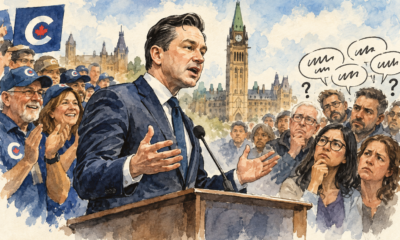
Pierre Poilievre has been a Member of Parliament for roughly twenty years. He served in Stephen Harper’s government and has spent most of his adult life inside the system he now criticizes. If longevity in politics is the measure of whether something has grown stale, that standard has to apply on both sides.
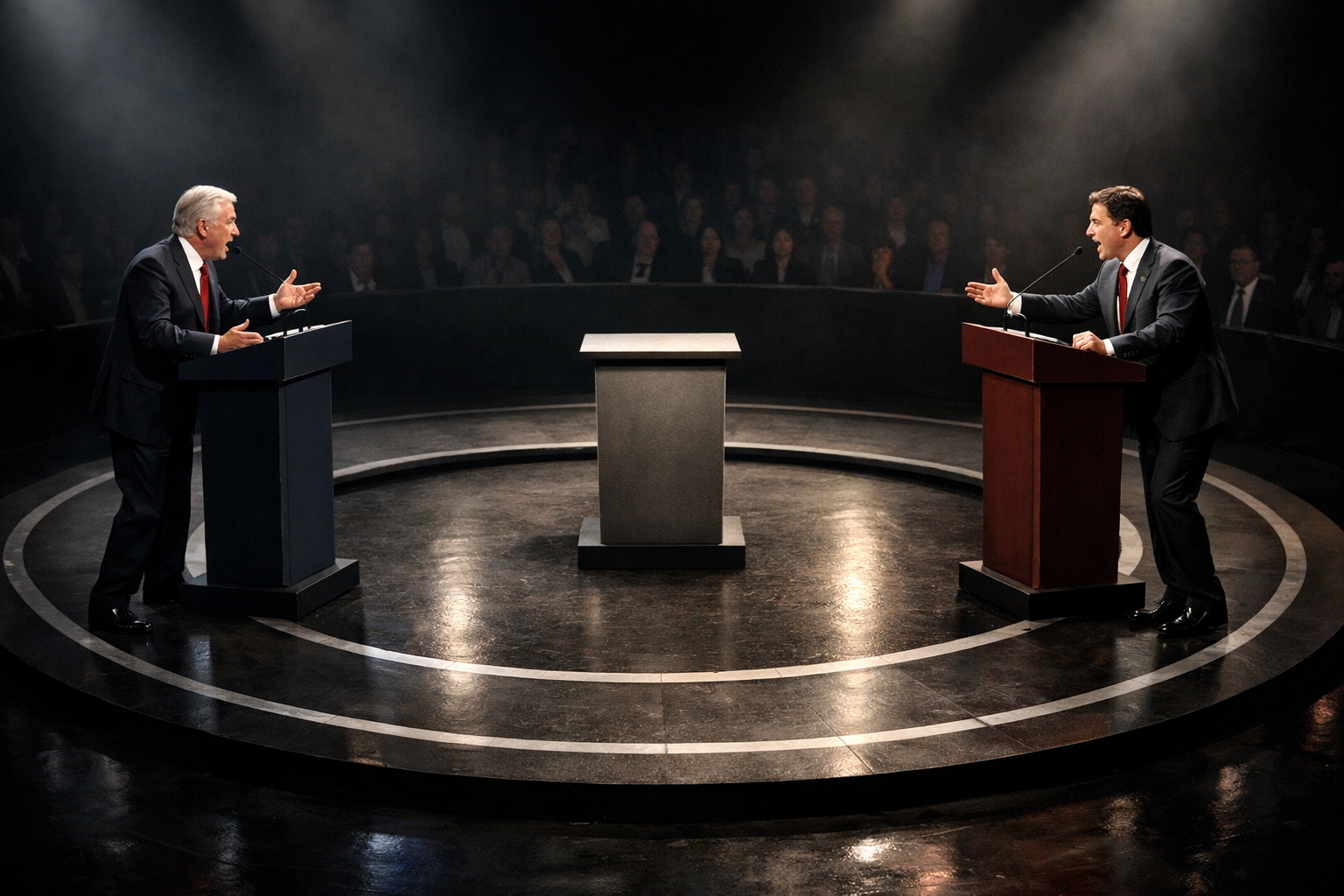
For several election cycles now, Canadians have been presented with essentially the same choice. The country moves back and forth between two large parties, each claiming to be the solution to the problems created by the other. Liberals blame Conservatives. Conservatives blame Liberals. The pattern repeats itself.
From the outside, it increasingly resembles a political duopoly.
Both parties are deeply entrenched. Both are organized primarily around defeating the other. And over time, voters begin to feel as though they’re watching the same arguments play out again and again.
The Conservative leadership race a few years ago made that dynamic clear. The party had an opportunity to bring in someone who might have reset its direction. Jean Charest represented that possibility. Instead, the party chose a long-time insider.
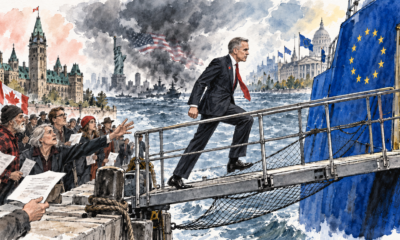
More recently, we saw Pierre Poilievre travel to Europe for meetings and speaking engagements in London and Berlin. Opposition leaders often meet international counterparts, so the trip itself wasn’t unusual. What stood out was the presentation. The tone suggested someone positioning himself almost as a prime minister in waiting.
Moments like that can start to look like political theatre. The choreography is polished, the messaging carefully prepared, but it often feels disconnected from the real work of governing.
At the same time, the political messaging has shifted noticeably with the polls. For months the Conservatives were demanding an immediate election. More recently the language has changed to emphasize stability. Voters notice when those changes coincide with movement in the numbers.
All of this feeds a broader frustration many Canadians feel with the current system. Politics begins to look less like leadership and more like a permanent campaign.
That’s the context in which the United Canadian Centrists were created.
The goal of the UCC is not to replace one dominant party with another. Canada already has two parties that are very good at fighting each other. What the country lacks is a stabilizing force in the political centre that can hold both sides accountable.
In practical terms, that means building a caucus large enough to hold the balance of power in Parliament.
Think of it as a jury sitting in the middle of the chamber.
When neither side can simply impose its will, the incentives change. Governments have to negotiate. Opposition parties have to engage with policy instead of slogans. The focus shifts from winning the next news cycle to actually solving problems.
Canada doesn’t need another political tribe.
What it needs is a centre strong enough to force both sides to deliver results.
That’s how the duopoly finally ends.