Opinion
When a Lead Becomes Something Else
There’s a number in the latest Nanos tracking that matters: the Liberals are at 47.6 percent. That’s not a normal lead—it’s the kind of number that changes how the whole system behaves.

There’s a number in the latest Nanos tracking that matters: the Liberals are at 47.6 percent. That’s not a normal lead—it’s the kind of number that changes how the whole system behaves.
The Conservatives sit at 31. The NDP has collapsed to 11. On leadership, Mark Carney’s gap on Pierre Poilievre is the kind that doesn’t close on its own.
You can call that momentum. You can call it a strong government. But step back and you’re left with a different question: what happens when the gap gets this wide?
In a healthy system, a lead like this doesn’t stick. Opposition parties adjust, voters shift, balance comes back. This isn’t that. Eleven percent for the NDP isn’t a dip—it’s a collapse. Whatever space that party used to own, it’s gone. The Conservatives have a base, but they’re not expanding it. Thirty-one percent keeps you in the game. It doesn’t close a gap like this.
So the voters in between start getting pulled in one direction. That’s where the real change happens—not in speeches, not in policy announcements, but in the slow narrowing of choices.
When one party drifts toward fifty percent, it doesn’t just win elections. It absorbs the middle. It becomes the default option. And that changes how governments act. With less pressure from across the aisle, there’s less need to defend decisions, less need to adjust course. Policy moves faster, but not always better. It shows up over time: fewer compromises, fewer corrections, fewer moments where something gets stopped because it didn’t hold up.
That’s the part worth worrying about. Not because it’s the Liberals. Because it’d look the same if it were anyone else.
A system needs friction to work. It needs competing ideas strong enough to push back. Right now, that pushback isn’t there. A gap this wide shapes perception before the campaign even starts—it tells voters who’s already ahead, and that has a way of settling things before they’re decided. Some people move toward the front-runner. Others tune out. Either way, the field narrows. Once it narrows enough, elections start to feel like confirmations. The result looks predictable. The campaign becomes a formality.
Canada doesn’t have a two-party system on paper. But it can start to behave like one—and if one side dominates long enough, it can feel like something even narrower than that.
Here’s what gets lost in that narrowing: the practical middle. Not the mushy middle, not the split-the-difference middle, but the part of the electorate that looks at a problem and asks what actually works. These are voters who don’t need ideology to tell them that housing costs too much, that trade relationships need protecting, that a country with Canada’s resources and talent shouldn’t be having this much trouble getting out of its own way. They’re not looking for a fight between left and right. They’re looking for someone who takes the country seriously.
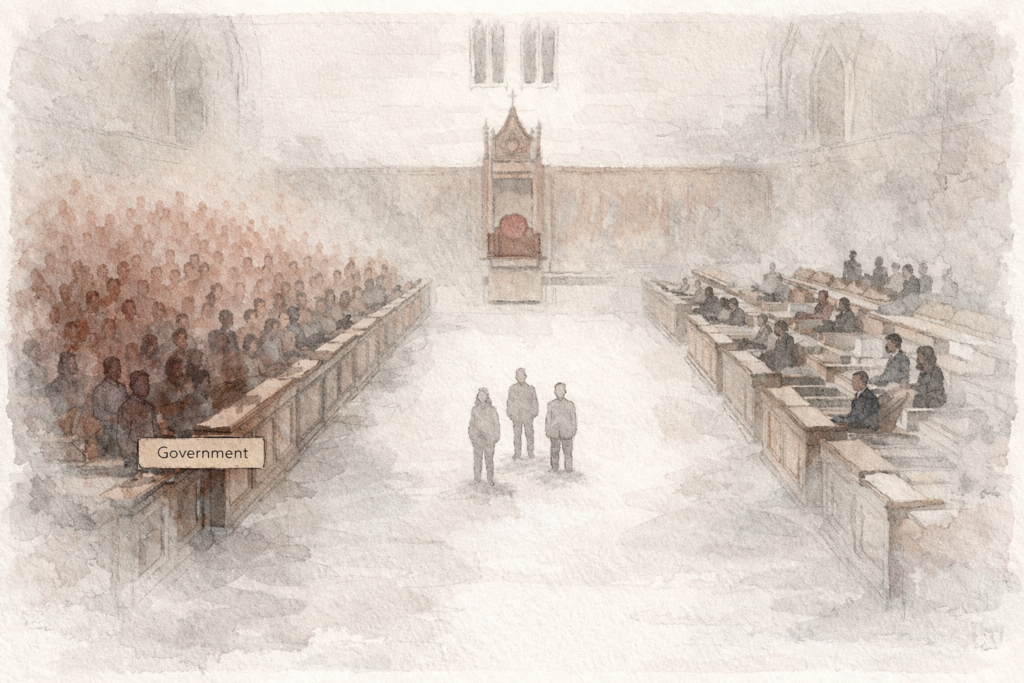
That voter exists in enormous numbers. The polling reflects it—when nearly half the country consolidates behind one party, it’s not because everyone suddenly agrees on everything. It’s because the alternatives haven’t made a credible case. The centre hasn’t held, not because the ideas aren’t there, but because there’s been no vehicle for them.
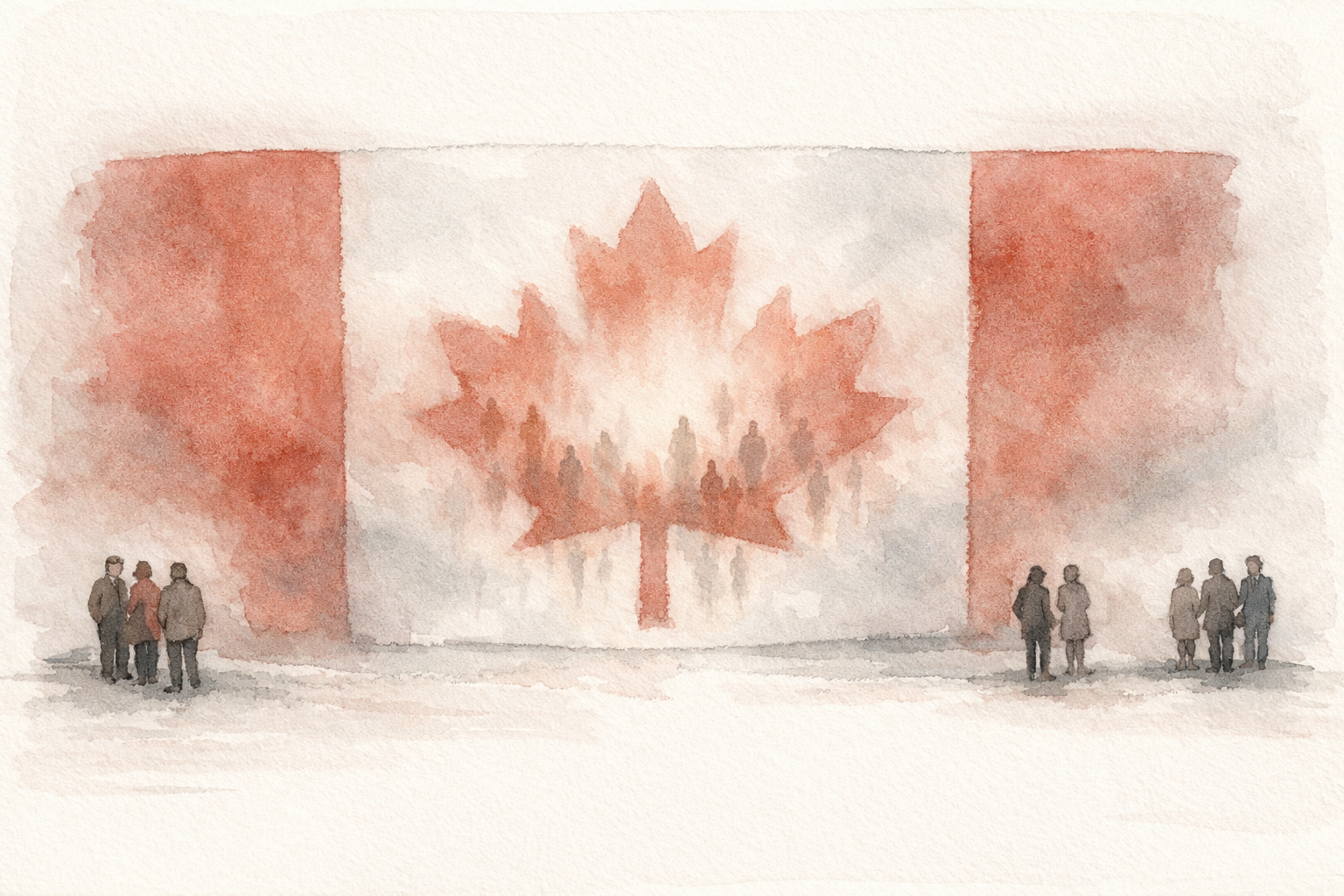
Canadianism—the practical conviction that this country’s future should be built on what works, not what wins arguments—doesn’t fit neatly into either of the two remaining poles. It isn’t nostalgic conservatism and it isn’t managed progressivism. It’s the belief that Canada has the resources, the talent, and the institutional foundation to do things right, if the politics stop getting in the way.
That’s not a slogan. It’s a governing philosophy. And it’s one the current configuration of Canadian politics has no room for.
The answer isn’t to swing everything the other way. Replacing one dominant party with another just changes who benefits from the structure. What’s needed is a centre strong enough to matter—not as a protest, not as a spoiler, but as a force that governments actually have to deal with. A credible centre changes the math. It pulls debate toward practical outcomes instead of partisan positioning. It gives the voters already living in that space somewhere to go.
A split parliament slows things down in the right places. It forces decisions to be tested before they’re passed, not after they fail. That’s not dysfunction. That’s how balance is supposed to work—and it’s how a country gets policy that actually holds up over time.
These numbers aren’t just about who’s up and who’s down. They’re a snapshot of where the system is leaning. Right now, it’s leaning hard. The question isn’t whether Canada needs a strong government. It does. The question is whether strength and accountability have to be mutually exclusive. They don’t—but only if there’s a centre with enough conviction to say so.
Right now, that voice is missing. And the gap it’s left behind is bigger than any polling number shows.