
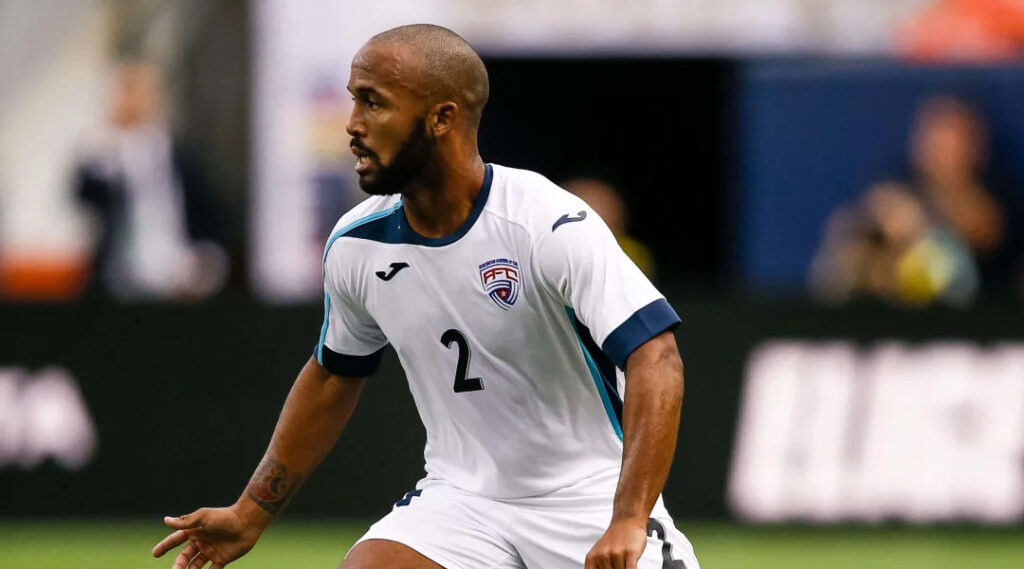
He came to Toronto wearing the colours of Cuba’s national football team. Before the night was over, Andy Baquero had made a decision that would change his life.
He came to Toronto wearing the colours of Cuba’s national football team. Before the night was over, Andy Baquero had made a decision that would change his life.
The Canadianist Exclusive | Journeys
There are some stories you go looking for, and there are others that quite literally get into your car. That’s how I met Andy Baquero.
We started talking during the ordinary course of my day. Soccer came up. Cuba came up. Canada came up. Somewhere along the way, I realized the man sitting beside me had a remarkable story.
Andy grew up in Havana and remembers his childhood as a happy one. He played outside with his friends and tried several sports before figuring out which one belonged to him. Baseball was one of them, and someone close to Andy who’d gone further in the sport warned him about the realities of pursuing it seriously. Andy eventually gravitated toward soccer. By eight years old, he was playing organized football, beginning a progression that would eventually take him all the way to representing Cuba internationally.
On September 7, 2019, that journey brought 25-year-old Andy Baquero to Toronto. Cuba was playing Canada at BMO Field. Andy walked onto the field representing his country. He wouldn’t leave Canada with his team.
Andy says the decision came after the game. He was scared and didn’t trust the people around him enough to tell them what he was planning. There was one teammate he did trust, Alejandro. Andy told him he was leaving and would come back for him the following day. Alejandro knew better. “I’m not gonna wait for you tomorrow,” Andy remembers him saying. “I’m leaving tonight with you.”
Alejandro already had a plan. He knew which stairs they needed to take, which floor they needed to reach and how they might get out of the hotel. There was another complication. Andy says members of the Cuban national team had their phones collected every night at 10 p.m. Someone would go from room to room, take the phones and return them the next day. Alejandro wanted his phone before they left. Andy waited, unsure whether his friend was coming back with a phone or whether someone was about to learn what they were planning. Alejandro returned, and they started moving.
There was Cuban security around the hotel, including the elevators and lobby. The two men headed for the stairs and eventually reached an emergency exit. Then something happened that, years later, Andy can tell with a little humour. They couldn’t open the door.
The doors Andy knew in Cuba worked differently. Faced with a Canadian emergency exit in the middle of their escape, neither man understood that they simply had to push it open. There was no going back upstairs. Andy leaned against the door and it opened. They looked at each other and ran.
Andy says they’d already decided that if someone tried to stop them, they’d fight if necessary and keep moving. They ran until they reached his cousin, who was waiting roughly 600 or 700 metres from the hotel with the car doors open. “It was like a movie,” Andy told me. They jumped in and yelled for the doors to be closed and the car to move.
His cousin’s husband had himself left Cuba after opposing the government. When he saw Andy and Alejandro arrive, his first reaction wasn’t simply relief. He wanted to know where everyone else was. “He wanted the full team,” Andy recalled.
They drove from Mississauga to Burlington and began a new life.
Success in Cuba hadn’t meant financial security. Andy told me his salary had been about eight dollars, half of which he gave to his family. He found other ways to survive. When football took him outside Cuba, he’d buy inexpensive goods and bring them home to resell. Clothes, cigars, soap, shampoo and whatever else people needed became part of his informal business. He jokes that Cuba became his Walmart.
Leaving also meant leaving his family, and before making the decision, Andy says there was one person whose blessing he needed. His mother.
“I’m going to do this. Are you okay?”
She knew what his decision would mean. “It’s gonna be hard,” Andy remembers her telling him. “I’m gonna suffer, we’re gonna miss you, but we’re gonna be strong for you because you need to make your dream come true.”
That was enough. Andy says he’s never regretted leaving. Not even when the life waiting for him in Canada became much harder than he’d imagined.
Andy had been an international footballer. In Canada, he needed to pay the rent, so he went to work in construction. It was November, during his first Canadian winter. The physical work was difficult, but the greater problem was what the job was taking him away from. Soccer had defined much of his life, and suddenly he barely had the energy to play.
He was living in Burlington and working in Mississauga. He remembers getting up at 4:30 in the morning, taking the GO train to Mississauga, working until 7 p.m. and travelling home. By the time he arrived, he didn’t want to train or go to the gym. Some nights he didn’t even want to take a shower. He wanted to sleep, get up the next morning and do it all over again. He lost his conditioning and missed the game. Andy describes that period, particularly 2020, as probably his hardest time in Canada.
Soccer eventually started opening doors again. People Andy met through the game helped him train, and one connection led to another. An opportunity emerged in Halifax, only to be complicated by COVID and uncertainty over whether the league would even play. Eventually another connection took him to Winnipeg, where Andy tried out for Valour FC.
Initially, there wasn’t an international roster spot available for him, and he returned to Toronto. The club subsequently sought special permission for Andy to be considered a domestic player. The league agreed. Three days later, Andy received a contract and a flight back to Winnipeg. In June 2021, less than two years after running out of that hotel, Andy Baquero signed a professional football contract in Canada. “Andy Baquero was happy again,” he told me. “Back in the game.”
There was another side of Andy I discovered while preparing for our conversation. He makes music. When I mentioned it, his face changed. “I’m a happy man,” he said. Music had been part of his life before Canada, and soccer again helped him build connections here. He met DJs, club owners and people in radio. Music gave him another way to share part of the culture he’d brought with him, and he’s since received recognition in Canada for it.
I asked Andy when Canada stopped being the country he’d escaped to and became home. I expected him to think about it. He didn’t.
“Not even three days in the country.”
Shortly after arriving, Andy went somewhere he could receive donated clothing. His cousin told her coworkers what had happened, and people who’d never met him started sending clothes and food. “Not even in the national team I received this type of stuff,” he said. He already felt at home.
When I asked what he misses about Cuba, his answer was equally immediate. “Family. That’s all.”
There’s a painful part of that story. Andy says his mother lost her job two days after he escaped. Today, she’s in Canada. Andy got her a visa and she now lives with him. “Canada gave me so much opportunity,” he said, “to create the life I think I deserve to have in Cuba.” That, he told me, is why he calls Canada home.
Near the end of our conversation, I asked Andy what he would say if he could somehow go back to that hotel in 2019 and speak to the frightened 25-year-old standing on the other side of everything that was about to happen.
“You got this,” he said.
“You took the right decision at the right time and in the right country.”
The Podcast: Hear Andy Baquero tell his story in his own words. The full Journeys conversation is coming later this week on The Canadianist Podcast, wherever you get your podcasts.











Leave a Comment
Your email address will not be published. Required fields are marked with *