


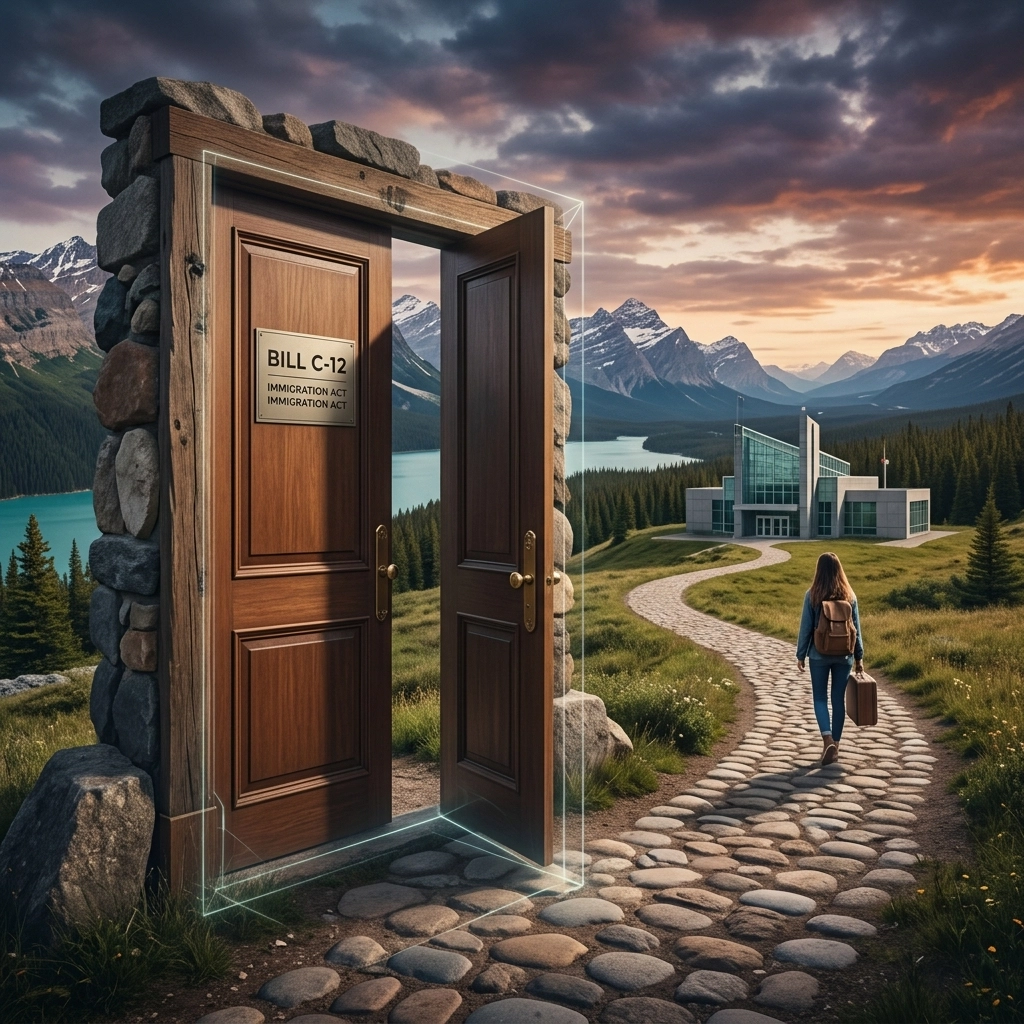
A seismic shift is brewing in the heart of Ottawa! On March 26, 2026, the legislative landscape of this country changed forever. Bill C-12, the Strengthening Canada’s Immigration System and Borders Act, has officially received Royal Assent. For decades, Canada has been defined by its "open door" reputation, a beacon of welcome in a turbulent world. But as of today, that door is swinging on much heavier hinges.
From our perspective in the Shadow Cabinet of immigration analysis, this isn't just a minor administrative tweak. It is a fundamental rewiring of the Canadian dream! We are witnessing a pivot from a rights-based processing system to an executive-led "Fortress Canada" model. The stakes have never been higher for newcomers, stakeholders, and the very identity of our nation.
Connect with us at The Canadianist as we dive deep into the mechanics of this transformation!
The Ticking Clock: The End of Infinite Asylum Windows
The most immediate and visceral change involves the new "clocks" placed on asylum seekers. For years, the system operated with a degree of flexibility that critics called "lax" and advocates called "humane." Those days are over!
Bill C-12 introduces two brutal deadlines that will redefine eligibility:
- The One-Year Rule: If you have been in Canada for more than 365 days and haven't filed your claim, you are officially out of time. Your case will no longer be referred to the Immigration and Refugee Board (IRB). This applies to anyone whose first entry was after June 2020.
- The 14-Day Rule: For those entering between official ports of entry, the "irregular" arrivals, the window is even tighter. You have exactly two weeks to make your claim. Miss it, and the system shuts you out.
This is a high-velocity approach to border management! The government argues this will clear the backlogs that have plagued the IRB for years. But we must ask: Does efficiency justify the risk of sending vulnerable people back into danger? The Pre-Removal Risk Assessment (PRRA) remains as a safety net, but it is a much narrower ledge than a full IRB hearing.


The "Kill Switch": En Masse Visa Cancellations
Perhaps the most controversial power hidden within Bill C-12 is the new "Kill Switch." Under the banner of "public interest," the Minister now holds the authority to cancel, suspend, or change immigration documents en masse!
We aren't just talking about individual fraud cases here. We are talking about the power to pause entire streams of applications or revoke thousands of visas at the stroke of a pen. Whether it is a temporary resident visa, a study permit, or even a work permit, no document is safe from a "public interest" pivot.
Why this matters now:
- National Security: The government can act instantly if a security threat is identified within a specific group.
- Public Health: Rapid responses to global health crises are now hardcoded into the law.
- System Overload: If the housing or healthcare systems hit a breaking point, the government now has the legislative "brake" it previously lacked.
This is a massive expansion of executive discretion! While it offers the flexibility to respond to "black swan" events, it also creates a climate of uncertainty for those planning their lives in Canada. Is your permit a promise, or just a temporary privilege?
Stay tuned to our Latest News for real-time updates on how these powers are being exercised!
Integrity vs. Exclusion: The Shadow Cabinet Analysis
Is Bill C-12 a genuine move toward system integrity, or is it a reactive "Fortress Canada" pivot? The reality is likely somewhere in the middle. We are seeing a government that has realized that public support for high immigration levels is tied directly to the perception of control.
When the public feels the borders are porous or the system is being "gamed," support for the entire Canadian project wavers. Bill C-12 is a calculated attempt to reclaim that narrative! By implementing strict deadlines and expanded cancellation powers, the IRCC is trying to signal that the "adults are back in the room."
However, from an analytical standpoint, this risks creating a massive "legal minefield." We anticipate a wave of constitutional challenges. Can you legally deny a refugee hearing based solely on a calendar date? Does "public interest" override the procedural fairness owed to a visa holder? The courts are about to become the newest front in the immigration debate!


The Economic Alignment: Matching Growth to Capacity
We cannot talk about Bill C-12 without talking about the broader context of 2026. Canada is facing a housing mismatch that has dominated the headlines for months. The "Shadow Cabinet" view is clear: Immigration must be aligned with infrastructure.
The new powers to terminate processing of submitted applications suggest that the government is moving toward a "just-in-time" labor model. If we have too many students and not enough builders, they want the power to pivot, fast! This is a departure from the traditional "first-come, first-served" logic of Canadian immigration.
We believe that border security must be matched with robust, efficient processing. Exclusion is a blunt tool; precision is a surgical one. True system integrity doesn't just come from saying "no"; it comes from saying "yes" to the right people at the right time with the right support!
Something Big Is on the Horizon!
As we navigate this new era of "Fortress Canada," there is a lot more to uncover. We are currently preparing a comprehensive deep dive into how these laws will impact specific provincial labor markets. The friction between federal mandates and provincial capacity is reaching a boiling point!
Don't miss a single update in this fast-moving story. Connect with us! Join our community of policy wonks and newcomers alike.
- Sign up for the newsletter: Join the Movement
- Listen to the analysis: The Canadianist Podcast
- Meet the team behind the data: Our Experts


A Balanced Direction for 2026 and Beyond
The passing of Bill C-12 marks the end of an era. The "Open Door" hasn't been slammed shut, but it has certainly been fitted with a sophisticated security system.
The goal for the future must be a system that balances humanitarian obligations with national interests. We need a Canada that is secure but not closed: efficient but not heartless. The "Fortress Canada" pivot might win points in the polls today, but the long-term health of our economy depends on being an attractive destination for the world’s best talent.
We are watching these developments closely! As the first visa cancellations under the new "public interest" clause are announced, we will be here to break down what it means for you, your business, and your community.
Something big is brewing in the policy labs of Ottawa, and we are just getting started! Keep your eyes on the horizon. The journey of defining the "New Canadianism" is just beginning!

Want to learn more about the future of our nation? Download our framework for practical growth: The Case for Canadianism.