


The long-standing debate over Canada’s commitment to its allies reached a definitive conclusion last week. On March 26, 2026, the federal government officially confirmed that Canada has met the North Atlantic Treaty Organization’s 2% of GDP spending target. For decades, this figure was a distant aspiration, often treated by successive administrations as a suggestion rather than a requirement. However, a dramatic acceleration in defense investment over the last ten months has fundamentally shifted our national posture. We are no longer the laggard in the room. With approximately $60 billion annually now flowing into the defense and security portfolio, Canada has signalized to the world that it is prepared to pay the entry fee for the modern geopolitical area.
While the crossing of this threshold is being celebrated in Ottawa and Brussels, it is essential to view this milestone with a sense of sober realism. Achieving the 2% target is a significant diplomatic victory, but in practical terms, it is merely the completion of a renovation on a house that has been neglected for fifty years. The money is finally present, but the capabilities, the personnel, and the strategic infrastructure are still catching up. We must resist the urge to view this number as a finish line. Instead, we must recognize it as the necessary foundation upon which a modern, functional, and independent Canadian military can finally be built.
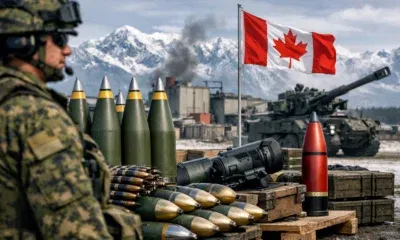

The urgency behind this spending surge was driven by a deteriorating global security environment that made our previous underinvestment a liability. For years, Canada relied on the geography of three oceans and the protective umbrella of our southern neighbor to justify a lean defense budget. That luxury has expired. The Arctic is no longer a frozen barrier but a contested frontier. Cyber warfare has blurred the lines between the front lines and the home front. Our allies, particularly those in Europe who have faced the immediate reality of renewed continental conflict, grew weary of a partner that enjoyed the benefits of collective security without sharing the burden. The move to 2% was a necessary act of diplomatic repair to ensure Canada retains its seat at the tables where global decisions are made.
However, a critical analysis of our current military state reveals that writing the cheques is the easiest part of the process. The hardest part is transforming capital into operational readiness. Despite the influx of cash, the Canadian Armed Forces continue to face a staggering personnel crisis. We remain short approximately 15,000 soldiers, sailors, and aviators. A high-tech fleet of frigates or a squadron of fifth-generation fighter jets is of little use if there are not enough trained professionals to operate and maintain them. The 2% milestone buys the hardware, but it does not automatically fix the culture of recruitment and retention that has hindered our military for a generation.

Furthermore, the state of our current equipment remains a significant hurdle. Reports indicate that nearly half of our primary platforms are currently non-operational or in need of significant overhaul. When we talk about 2% of GDP, we are often talking about procurement cycles that take a decade to bear fruit. The milestone we reached last week represents a commitment to future strength, but it does not solve the immediate "readiness gap" that leaves our current forces overstretched. To build a sustainable military, we must ensure that the increased budget is paired with a streamlined procurement process that actually delivers equipment to the field before it becomes obsolete. This requires a fundamental rethink of how the Department of National Defence interacts with industry.
Looking ahead, the fiscal reality of defense is only going to become more demanding. Even as we celebrate reaching the 2% mark, the goalposts are already moving. NATO members are now discussing a transition toward a 5% GDP target by 2035 to meet the challenges of a multi-polar world and the rapid integration of artificial intelligence and autonomous systems into warfare. For Canada, moving from 2% to 5% would represent a seismic shift in our national budget, potentially consuming up to a quarter of all federal spending. This is a trade-off that the Canadian public has not yet fully reckoned with. It will require a mature national conversation about what we are willing to sacrifice in other areas to maintain our sovereignty and our international commitments.


A sustainable path forward requires more than just meeting a percentage; it requires a "Canada First" approach to defense sustainability. This means investing in a domestic industrial base that can sustain our forces without total reliance on foreign supply chains. When we build ships in Halifax and Vancouver or armored vehicles in Ontario, we are not just spending on defense; we are investing in high-tech manufacturing and skilled labor that stays within our borders. This is the essence of the framework we have advocated for in our broader research, such as The Case for Canadianism. Defence spending should be viewed as an integral part of our national economic strategy, not just an external obligation to a treaty.
Arctic sovereignty must also be the centerpiece of our long-term planning. The recently announced $40 billion plan for Northern defense is a start, but it must be executed with a focus on permanent presence rather than occasional patrols. As the Northwest Passage becomes more navigable, Canada must have the surveillance, the ice-breaking capacity, and the rapid-response infrastructure to assert our laws and protect our environment. This is not about aggression; it is about stewardship. If we do not project authority in our own North, others will eventually fill that vacuum. The 2% target provides the funds for these Arctic capabilities, but the strategic will must come from a sustained national policy that transcends election cycles.

Ultimately, the reason everyone is talking about the 2% milestone is that it represents a psychological break from our past. It is an admission that the "end of history" was an illusion and that peace requires a credible deterrent. But as we move forward, we must be careful not to let the number become the mission. A military is not a spreadsheet; it is a living institution made of people, equipment, and a clear sense of purpose. We have laid the foundation by securing the necessary funding. Now, the real work begins in building a military that is not just well-funded, but capable, resilient, and distinctly Canadian.
We encourage our readers to stay informed on these developments by visiting our latest news section or engaging with our community through The Canadianist Podcast. The path to 2% was long, but the path to 2035 will be even more consequential for the future of our federation. We must ensure that this newfound fiscal commitment is matched by a strategic vision that places Canada's interests and security at the forefront of the global stage. The foundation is set; it is time to build.