
The Canadianist | Blog
Poilievre’s Biggest Weakness May Be What Keeps Him Leader

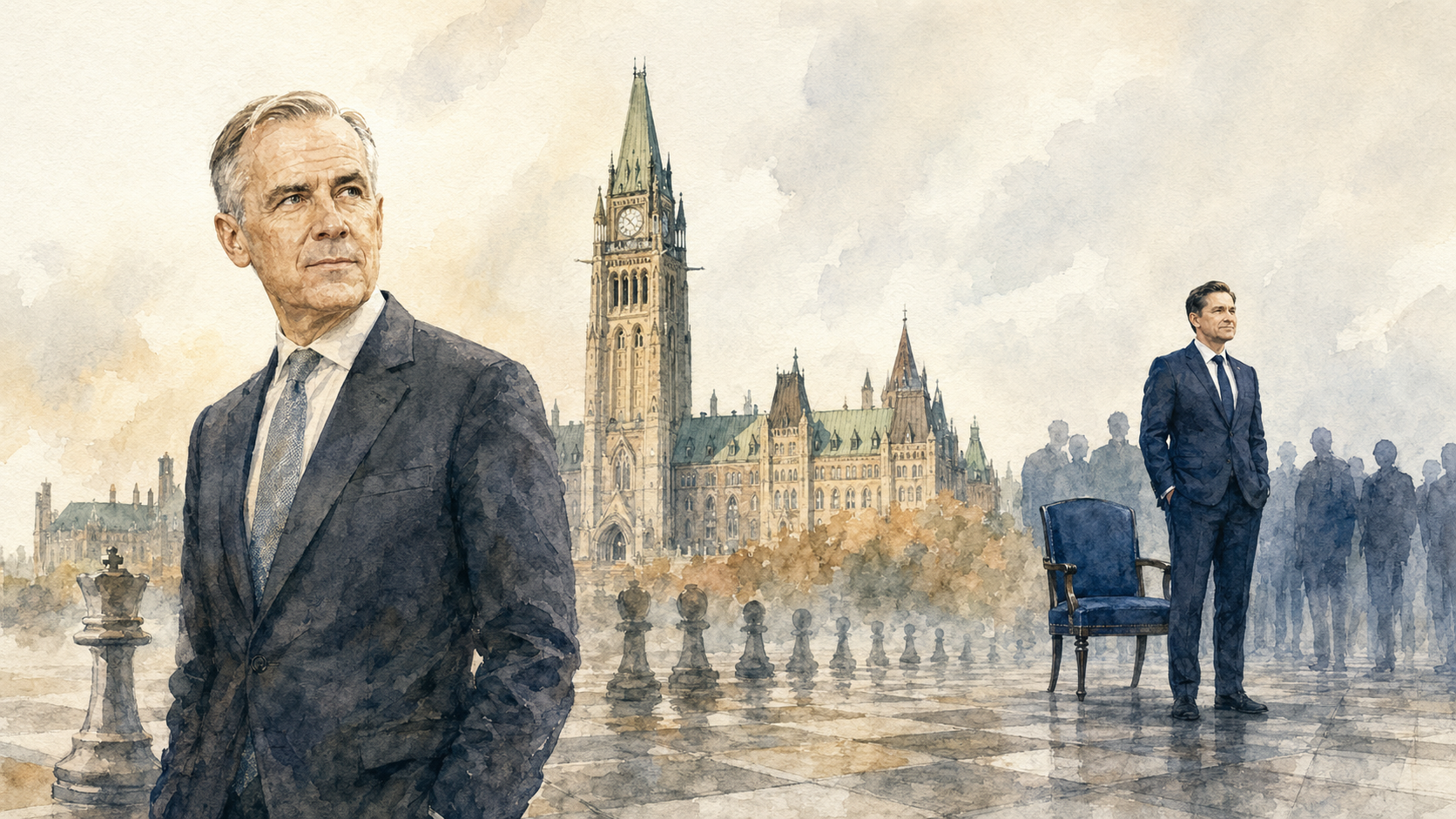
Conservatives don’t need to believe Pierre Poilievre can defeat Mark Carney today. They only need to remain unconvinced that somebody else could do better.
There’s a strange bit of political logic buried inside the latest polling on Pierre Poilievre’s future. The worse his position against Mark Carney appears, the more secure his leadership may become.
A new Nanos Research poll commissioned by CTV News asked Canadians which Conservative politician would have a chance of defeating Carney. The most common answer, at 33 per cent, was none of them. Former prime minister Stephen Harper led the individual names with 16 per cent, followed closely by Poilievre at 15 per cent.
When a retired former prime minister tops the list, the party doesn’t exactly have a succession plan. It has a nostalgia department.
The poll doesn’t show that Poilievre is in a strong position. Quite the opposite. It shows a Conservative Party struggling to identify anyone Canadians presently see as a convincing alternative to Carney. But that creates a problem for those who believe changing the leader would improve the party’s prospects.
Conservatives aren’t choosing between Poilievre and Carney. They’re choosing between Poilievre and whoever would replace him. Until somebody can demonstrate that they would perform better, removing the current leader becomes an enormous gamble with no obvious payoff.
Poilievre also received 87.4 per cent support in the Conservative Party’s mandatory leadership review in January. That wasn’t a reluctant vote of confidence or a narrow escape. It was an overwhelming endorsement from the people most directly responsible for deciding his future.
His position inside the party and his position with the broader electorate are two very different things. He remains popular with Conservative members and voters while continuing to face considerable resistance outside that base. That’s an electoral problem, but it isn’t necessarily an internal leadership problem. At least not yet.
The Conservatives also have time. Under Canada’s fixed-date election law, the next federal election is currently scheduled for October 15, 2029. An election can always be called earlier, but Carney now governs with a majority and has little reason to hurry back to the polls.
That gives Conservatives more than three years to watch what happens.
Carney’s present strength may continue, but political conditions don’t remain frozen. Governments make decisions, accumulate disappointments and eventually own the problems they were elected to solve. The economy may improve or worsen. Trade tensions may ease or become more disruptive. Housing, affordability and immigration will continue testing the government’s ability to turn announcements into results.
Poilievre doesn’t have to defeat the version of Carney Canadians see today. He has to compete against the version standing before voters when the next election is called.
Launching a Conservative leadership race now would offer no guarantee of producing a stronger candidate. It would reopen internal divisions, consume months of attention and force potential successors to define themselves against Poilievre while the Liberals carried on governing. The party could spend a year replacing him only to discover that the new leader faces the same problem, or performs even worse.
There’s also no agreement on what kind of replacement Conservatives would want. Some believe Poilievre must soften his style and broaden his appeal. Others think the party needs to be more aggressive. Some want a more conventional economic conservative, while others believe the future lies in the populist coalition Poilievre has already assembled.
A leadership race wouldn’t automatically resolve those tensions. It might advertise them.
None of this means Poilievre can comfortably wait until 2029 and assume circumstances will eventually move in his favour. Time is an opportunity, not a strategy. His support among Conservatives is already established. His challenge is convincing Canadians who don’t identify with the party, particularly those who may agree with him on affordability, government performance or institutional reform but remain uncomfortable with his tone or political approach.
If his numbers remain stalled, Conservative MPs will eventually begin thinking about their own seats. That’s when leadership pressure becomes serious. Parties tolerate weak national polling for a while. They become much less patient when caucus members believe the leader is putting their political careers at risk.
The calculation would also change quickly if a credible Conservative began consistently outperforming Poilievre against Carney. Leadership challenges gain momentum when dissatisfaction acquires a name. So far, it hasn’t.
The Nanos poll should still worry Poilievre. Only 15 per cent of Canadians selected the sitting Conservative leader as someone with a chance of defeating Carney. That’s hardly a ringing endorsement for a man who has led the party since 2022 and came within reach of government in 2025.
But the same poll offers his critics nowhere obvious to go.
Poilievre’s numbers may be getting worse, but Conservatives won’t replace him simply because he’s struggling against Carney. They’ll replace him when they believe somebody else can win.
Right now, the polls aren’t showing them that person. And with the next scheduled election more than three years away, there’s no reason for the party to panic itself into a leadership race merely for the sake of appearing to do something.
Pierre Poilievre may not look like the man most likely to defeat Mark Carney today. For now, he still looks like the Conservative most likely to be given the chance.