
The Canadianist | Blog
Canadian Politics: A Multi-Party System Caught Between Two Magnetic Poles

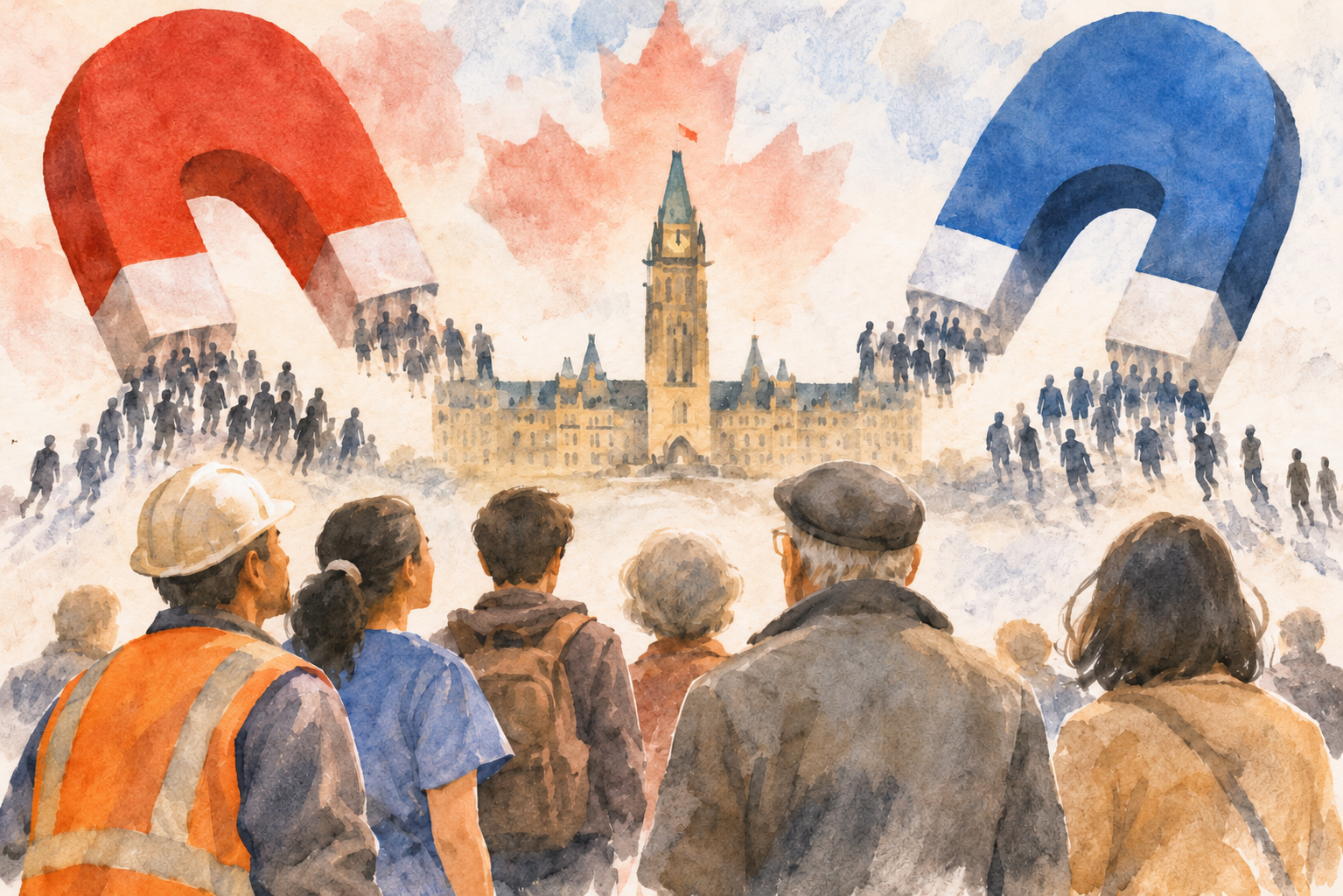
The frustration Canadians feel is with the system: the rules, and the people operating within them.
For quite some time, I’ve listened to everyday Canadians talk about our country. Underneath almost every conversation sat the same quiet complaint: people vote, and they don’t see themselves in what comes out the other end.
I didn’t come to this as a politician. In fact, I came to it the way most Canadians do, by paying attention, forming opinions and showing up to vote. For years, I felt like that was enough.
However, something eventually started to bother me. Not one election, not one result, but a pattern that emerged. The same arguments repeating, the same problems always returning. Governments changed, and nothing seemed to fundamentally shift.
I decided to start talking to people, thousands of them, not in panel discussions or party meetings, but in the kind of conversations that don’t make the news: the nurse from the Philippines working a double shift, to the engineer from Iran rebuilding a career; the guy in Alberta who felt like Ottawa had forgotten his province existed, to the kid born here who couldn’t afford to rent in the city his parents bought a house in for a fraction of what it costs today.
What I heard wasn’t anger, and it wasn’t apathy. It was the distance between Canadians and the institutions meant to represent them.
When Canadians talk about “the system,” they don’t just mean the rules. They mean the people operating within them too, and the habits each has built in the other. Our rules reward division, and too many of the people working within them have learned to deliver it. Most people who run for office, staff constituency offices and keep our public service running are serious people trying to do right by this country, in every party. Still, a system that pays for division will keep getting it. Fixing it means addressing both the mechanism and the culture of the people who operate it.
A country that grew faster than its systems
Canada’s population has doubled during the lifetimes of millions of Canadians, from about 20 million in the mid-1960s to an estimated 41.8 million today. Our cities, our economy, our demographics and the way we talk to each other have all changed. Many of our systems and institutions were built for a smaller country, and they haven’t kept up with the one we’ve become.
Canada isn’t a two-party country. Five parties hold seats in the House of Commons, and more appear on ballots across the country. Our politics, however, behave like a magnet. Scatter iron filings on a sheet of paper over a bar magnet, and they don’t stay where they fall. They’re pulled to the two poles, and the middle empties out. Canadians are pulled the same way, toward one side or the other, until people who agree on far more than they realize start seeing each other mainly through their differences.
Starting with what holds us together
The United Canadian Centrist Party starts where any lasting fix must: with what holds us together as a people.
Canada is one of the most diverse countries in the world, and that diversity is a genuine strength. Multiculturalism describes who we are. On its own, though, it doesn’t explain how we live together, how our institutions should behave, or what we owe one another. For generations, Canada relied on a strong but mostly unspoken civic culture of restraint, fairness and cooperation. It was assumed rather than articulated, and when our systems came under pressure, the absence of a clearly defined shared identity became visible.
That’s what Canadianism is. It doesn’t ask anyone to give up who they are, where they come from or what they believe. It asks us to share how we take part in a common civic life. It rests on the Five Pillars of Canadianism: Respect, Collective Responsibility, Stability, Practical Common Sense and Belonging. They describe how Canadians have always been known to behave, but they’ve rarely been put into words. Canadianism offers belonging through participation, not ancestry. It gives multiculturalism a civic core.
That’s what holds the centre when the poles are pulling. People who share a civic foundation can disagree hard and still see each other as neighbours rather than opponents.
Fixing the mechanism
Our electoral system makes that pull stronger. First-past-the-post works exactly as designed. Votes are counted honestly, and winners win fairly under the rules. Those rules, however, were written for a different Canada. When only a first-place finish counts, every other vote starts to feel wasted, and people are drawn toward one of the two parties most likely to win, whether or not either one reflects what they believe.
Look at two recent snapshots. In April 2025, the Liberals won 169 seats with 43.8 per cent of the vote, three seats short of a majority. The Conservatives won 144 seats with 41.3 per cent. This month, 338Canada’s projection shows 47 per cent of the vote translating into 245 of 343 seats, more than seven in ten. A few points of the popular vote separate a minority Parliament from a commanding majority. Any party could end up on either side of that arithmetic.
Together, the two largest parties took about 85 per cent of the vote in 2025. For many Canadians, that wasn’t a choice between two parties they believed in. It was a choice about which outcome they could live with. When enough people vote against something rather than for something, Parliament stops being a true picture of the country.
There’s a second gap, and it’s one most Canadians never hear about: Canadians are far less represented in Parliament than they used to be. In 1968, 264 MPs represented about 20.7 million people, roughly one MP for every 78,000 Canadians. Today, 343 MPs represent about 41.8 million, roughly one for every 122,000. Parliament simply hasn’t grown with the country.
The United Canadian Centrist Party would introduce legislation to add 50 seats to Parliament.
These wouldn’t simply be 50 more MPs tied to new lines on a map, which would only make the existing problem bigger. They’re national seats, and their purpose is to soften the distortion that can turn less than half the vote into a commanding majority. They’d bring the House of Commons to 393, and each MP would represent roughly 106,000 Canadians, still more than in 1968, but much better than today.
That’s the heart of the Michaud Method, the party’s answer to both gaps, and it’s deliberately simple. Every riding stays exactly as it is. No community loses its local MP. You vote the same way, on the same day, on the same ballot.
The ballot, however, now asks two questions. The first is the one Canadians already answer: who do you want as your local MP? The second is new and just as simple: which party do you want to govern the country?
The answers to that second question fill the 50 national seats. Any party that earns at least 2 per cent of the national vote shares in them. Once seated, all 393 MPs have equal standing.
The winner still wins. The party that earns the most support still forms government. Question one is for your community. Question two is for your country.
Today, whether a vote matters can come down to an imaginary line drawn on a map. Live on one side of the street, and your vote might decide the riding. Live on the other, and it might not count toward electing anyone. The Michaud Method ensures that, no matter what, every vote makes it to Ottawa, regardless of where you happen to live. Someone in a safe riding, or in a race the polls decided weeks before election night, still has a reason to get off the couch and vote, because their answer to the second question still counts toward who governs the country.
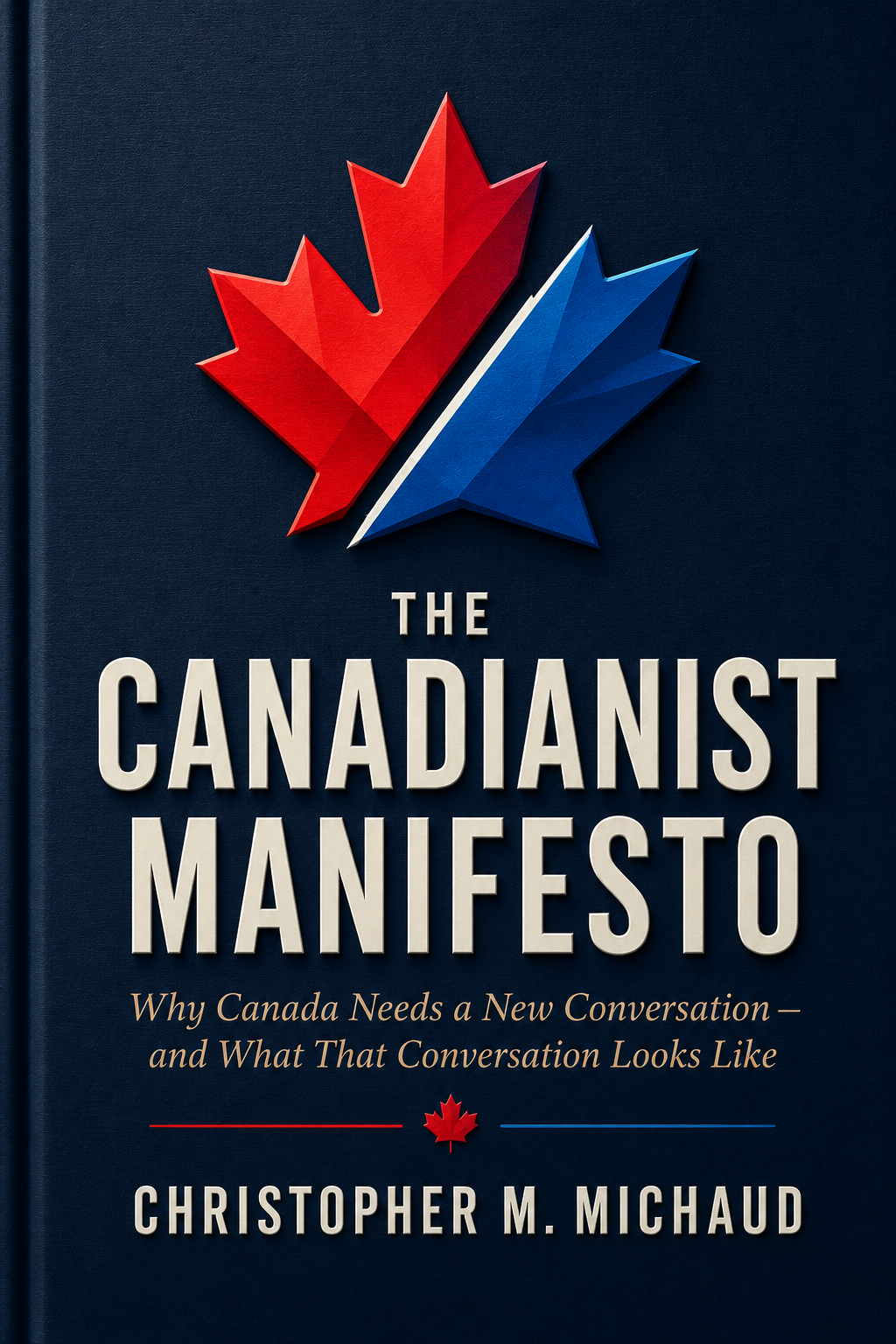
The Michaud Method has many other advantages, set out in the Democracy Renewed section of The Canadianist Manifesto, and I’ll be discussing some of them in this space in later work.
Restoring the promise
For much of Canada’s modern history, there was an understood agreement between the country and its citizens. It was never written down, but most Canadians knew it instinctively: work hard, contribute to your community and play by the rules, and Canada would give you a foundation on which to build a life. That promise hasn’t disappeared, but it has become harder to see. Young Canadians are delaying milestones previous generations took for granted, and many parents quietly wonder whether their children will have the same opportunities they did.
The third piece is the New Canadian Covenant: restoring the emotional contract between Canadians and their country. Canadians need to know that if they work hard and contribute, they can build a life here. If Canada is going to ask its citizens to invest in its future, it has a responsibility to create the conditions for them to succeed, and to communicate that to them. In return, citizens should understand what their country asks of them.
What changes
Each piece builds on the one before it. Canadianism gives Canadians common ground that doesn’t depend on which pole they lean toward. The Michaud Method gives that common ground a Parliament that looks like the country that elected it, where fewer votes go to waste and every party has a reason to speak to all of Canada. The New Canadian Covenant gives Canadians who feel like observers a reason to participate again, because the promise runs both ways.
Together, they add up to national unity, a stronger democracy and a stronger country.
Canada’s institutions remain among the strongest in the world. The question for anyone who cares about public life is whether the system still fits the country it serves. Canada has outgrown it, and modernizing it is one of the most constructive things this generation can do.
This is the first of several articles. Over the next few weeks, I’ll be writing more about each of these ideas, and our vision will become crystal clear. My hope is that, for anyone who feels politically homeless, it offers a place to call home, and a reason to join us.
If you work in public life and you’ve felt this too, from any party or no party at all, I’d welcome the conversation.
To be Canadian is a status. To be a Canadianist is a commitment.
Christopher M. Michaud is the founder and leader of the United Canadian Centrist Party. uccparty.ca
Join us and be heard.