
The Canadianist | Blog
Can Canada Make Life Affordable When the World Is Getting More Expensive?

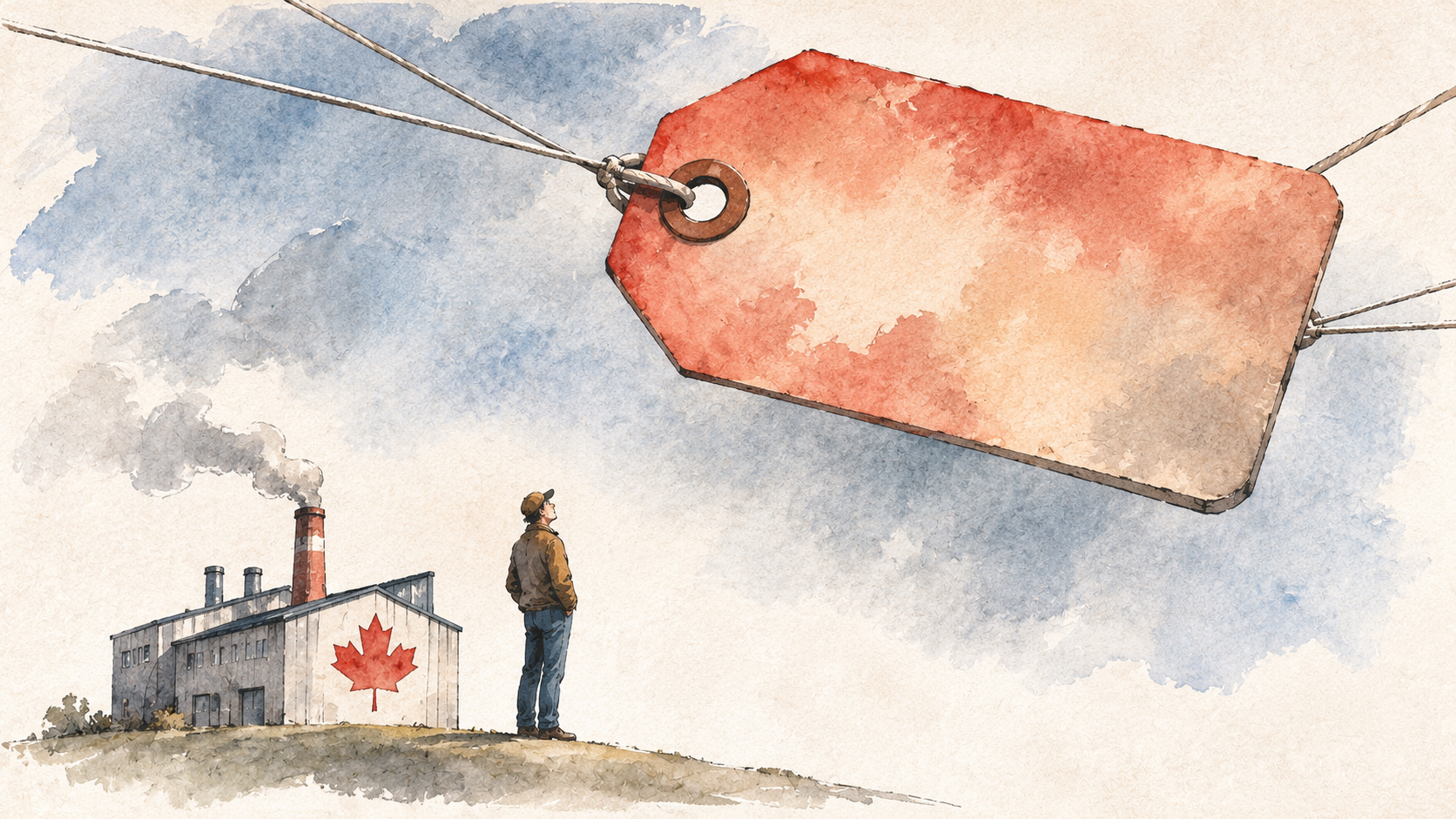
As the global trading order grows less predictable, Canada may need to rethink what it makes, what it buys abroad and how much of its economic future it actually holds.
We’re being promised affordability at exactly the moment the international system that kept goods cheap for decades may be coming apart.
Prime Minister Carney has been telling us for more than a year that we have to distinguish between what we can control and what we can’t. His ministers have repeated it in the House, and in his address to the country last spring he put it plainly: we can’t control the disruption coming from our neighbours, but we can control what happens here. Fair enough. But how much of the problem is actually within our control? And if the global economic order keeps deteriorating, won’t that share keep shrinking?
Pierre Poilievre and the Conservatives have made affordability their central issue, arguing that the right domestic policies will bring down the cost of living. The government points to its own economic plan and promises of relief. Both are asking Canadians to believe the fix is in Ottawa’s hands. Neither admits how much of it isn’t.
I’ve been thinking about this since listening to geopolitical strategist Peter Zeihan on the future of global trade. His argument, put simply, is that the cheap goods we associate with globalization rested on American power. The U.S. Navy kept shipping lanes open, commerce stayed predictable, and countries could make things wherever it was cheapest. Supply chains stretched across oceans, prices fell, and whole industries reorganized around the assumption that goods would always arrive. Canada did very well out of that arrangement. Zeihan believes it’s breaking down, and that the next decade could bring disruptions the world isn’t ready for.
You don’t have to buy all of his predictions. Trade has survived wars, recessions and a pandemic before. But if he’s even partly right, the affordability debate we’re having in this country is missing its biggest variable.
When the World Sets the Price
Take food. Canada is an agricultural powerhouse, and yet a good harvest doesn’t guarantee affordable groceries. The price on the shelf also carries the cost of fuel, fertilizer, equipment, processing, packaging and shipping, and many of those are set on world markets. When energy spikes overseas or a shipping route turns dangerous, Canadian shoppers pay for it eventually.
The same goes for appliances, electronics, building materials, vehicles and most of what fills a household. For decades the rule was simple: make it wherever it’s cheapest, and consumers win. Often they did. But a product made overseas for a fraction of the Canadian cost stops looking like a bargain once you add tariffs, freight, insurance, currency swings and the risk that it doesn’t show up at all. And there’s a cost nobody puts on the sticker, which is finding out that something essential simply isn’t available when you need it.
What Could We Bring Home?
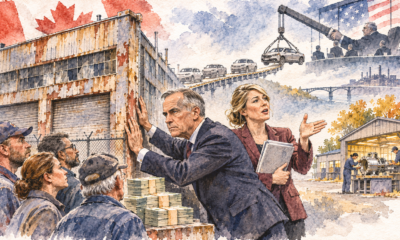
We’re already in a trade war with the United States. Washington imposed 50 per cent tariffs on about US$20 billion in Canadian goods in August, Ottawa retaliated, and while talks have resumed there’s still no deal. The government’s answer has been to find new trading partners, which is sensible as far as it goes. But if the whole system is becoming less dependable, swapping one foreign supplier for another doesn’t buy as much protection as it seems.
Here’s where it gets harder. How much of what we consume could actually be made here? Not everything, which would be neither realistic nor sensible. But in some industries we already have most of what’s needed. We have the raw materials and the energy, and we have the workers and the engineers. What’s been missing is a reason to use them here instead of shipping them out.
Fertilizer is a good place to start, because it shows the problem isn’t always a lack of resources. Canada is the world’s largest producer of potash, and we’ve got the natural gas that nitrogen fertilizer is made from. Wood products and building materials deserve the same look, and so does food processing. We have a long habit of shipping out logs and lumber and buying back the cabinets and furniture made from them. Some of those arrangements make economic sense. Not all of them do.
The economics have shifted, too. Canada’s population has roughly doubled in my lifetime, so we’re a far bigger home market than when many of our industrial assumptions took shape. Automation has changed the arithmetic as well, making smaller production runs viable in industries that once needed enormous volume to compete.
Autos are the obvious test. We already build vehicles and parts, and we have the steel, aluminum, energy and critical minerals. Could a Canadian-designed car, built mainly for Canadians, make commercial sense? The parts industry has already shown it can be done in prototype with Project Arrow, its all-Canadian concept vehicle. Doing it at scale is another matter, given the electronics, capital and volume a modern vehicle demands. But a Canadian car wouldn’t need to be built entirely from Canadian parts to be a real gain in what we can make ourselves.
The Limits of Self-Sufficiency
Semiconductors show how far interdependence goes. Taiwan leads in advanced chip fabrication, the United States in design, the Netherlands in lithography machines, Japan and South Korea in materials and equipment. Not one of them can make a leading-edge chip from start to finish on its own. Canada isn’t going to rebuild that network inside its borders, and it shouldn’t try.
So the real work is sorting out which capabilities we can reasonably build here and which imports we’ll always need, then cutting our exposure on the things we can’t make. A Canadian appliance maker might still import circuit boards. A Canadian food processor might still buy specialized machinery from overseas. But making more of the finished product here would still give us more say over our own supply, and put more Canadians to work doing it.
There’s no such thing as complete independence in a modern economy. There are only degrees of dependence, and some of those degrees are choices we’ve made.
The Cost of Greater Control
None of this makes things cheaper overnight. Canadian wages, construction costs, regulation and smaller production volumes can make domestic manufacturing more expensive than importing, and consumers could pay more while new industries find their feet. In a country already struggling with affordability, that’s a real concern, and anyone proposing this should say so plainly.
But price isn’t the only measure of value. A Canadian manufacturer employs Canadians and spends its money here. Just as important, it keeps the capacity to produce in the country. That capacity is worth something when supply chains seize up. It doesn’t mean every factory will succeed, and governments have poured plenty of money into industries that never stood on their own. The job is to tell the difference between industries that can become competitive and those that would need public support forever.
For decades we asked where something could be made most cheaply. We may now need to ask where it can be made most reliably, and whether keeping that capability at home delivers value the shelf price doesn’t show.
How Much Control Are We Losing?
Ottawa has real levers, from the tax code to trade negotiations. What it can’t do is set the world price of oil, guarantee safe shipping lanes or stop a war on the other side of the planet from showing up in Canadian grocery bills. If Zeihan is right, those outside pressures are only going to grow.
Say Ottawa saves a household a few hundred dollars a year, and global disruptions add more than that to the same family’s groceries and heating bill. The savings are real, and the family is still worse off. That’s what worries me about the affordability promises we’re hearing. The measures may be perfectly sound. The trouble is that the ground they’re built on is shifting faster than our politics admits.
And there’s one obvious place where Ottawa and the provinces have far more control than they’ve used, which is trade inside our own country. Ottawa has moved to strip out federal barriers to trade between provinces, but many provincial ones remain, and they still add cost to goods that never leave Canada. It’s hard to argue we’re doing everything we can about prices we can’t control while we’re still tolerating costs we could remove ourselves.
Canada can’t wall itself off from the world, and it wouldn’t do us any good to try. We need trade, reliable partners and access to things we can’t make efficiently. But we should be asking whether our current level of dependence still fits the world we’re heading into.
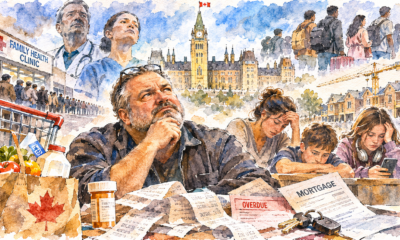
For most Canadians, affordability isn’t an abstract debate. It’s what’s left after the rent or mortgage, the groceries, the gas and the bills. Whether a price increase started in Ottawa, Washington, the Persian Gulf or somewhere along a shipping lane makes no difference when the bill arrives.
Our leaders are asking us to believe they can make life more affordable. I’d like to know how much of that they can actually deliver, how much depends on forces beyond their reach, and whether they’re doing enough to keep that balance from tipping further against us.
Because if we can only control what we can control, shouldn’t we be working a lot harder to control more of what we can?