

Description
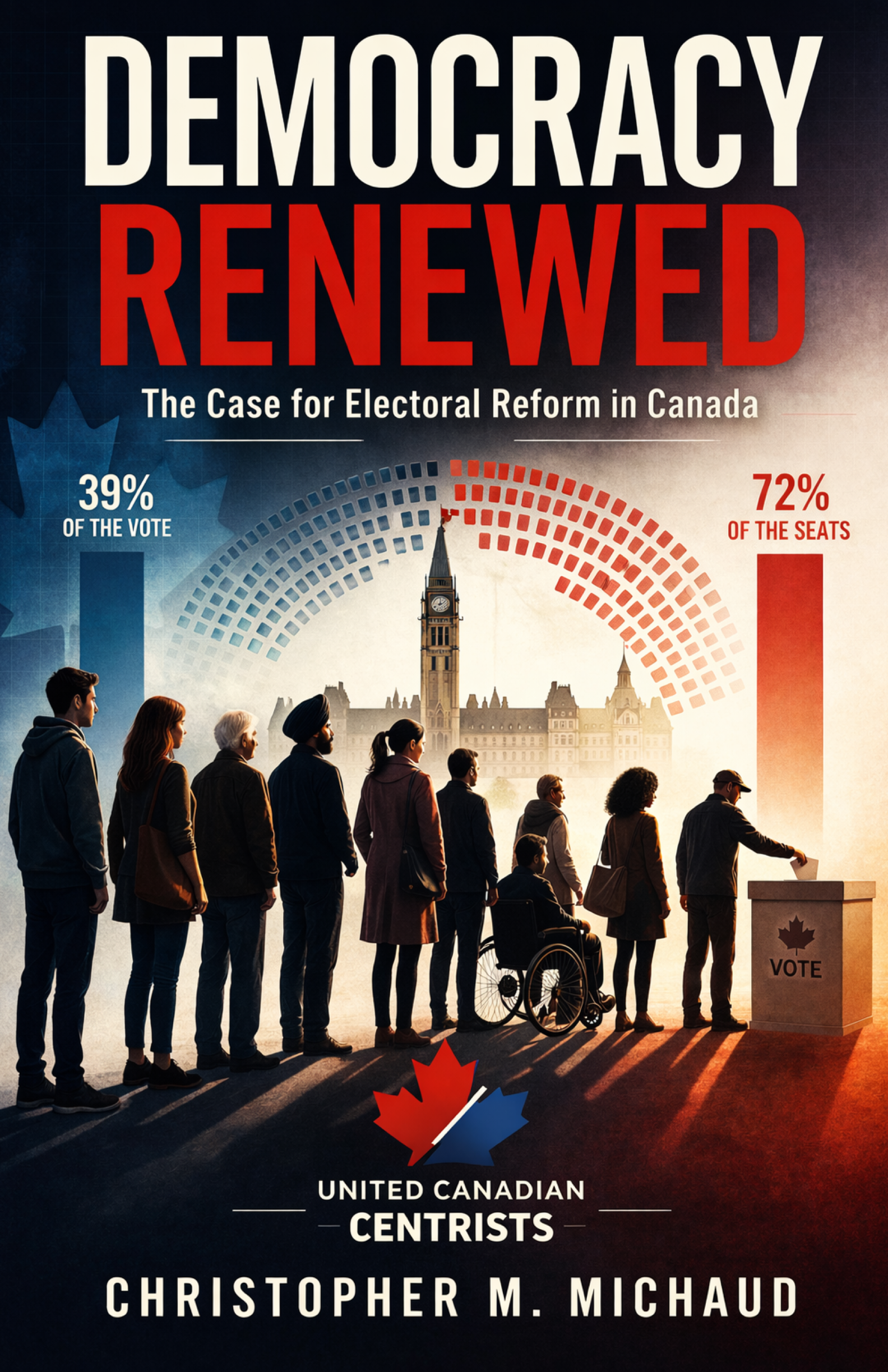
This book examines a quiet but powerful flaw at the heart of Canada’s democracy: the gap between how people vote and how power is actually distributed.
Under Canada’s current first-past-the-post system, elections are often decided by pluralities, not majorities. In riding after riding, a candidate can win with 30–40% of the vote while most voters chose someone else. The result is a system where millions of votes have little to no impact on representation, regional divisions appear sharper than they truly are, and governments can form without majority support.
Rather than treating these outcomes as isolated quirks, this book argues they are structural features—with real consequences for participation, unity, and trust in democratic institutions.
The book then explores a practical path forward through Mixed-Member Proportional representation (MMP). It explains, in clear terms, how a dual-vote system preserves local representation while ensuring that overall seat totals reflect how people actually voted. Crucially, it addresses a common concern: even though individual riding results may still produce plurality winners, the second (party) vote ensures that those “lost” votes continue to shape the final composition of Parliament.
This is not a call for a perfect system—because none exists. It is a case for a better one.
Grounded in real examples and focused on outcomes rather than ideology, this book makes the case that Canada can move closer to a democracy where more voters see themselves reflected, fewer votes are effectively discarded, and the results better match the will of the people.
Reviews
There are no reviews yet.