
National | Housing
Housing Starts: The $86M Regent Park Experiment

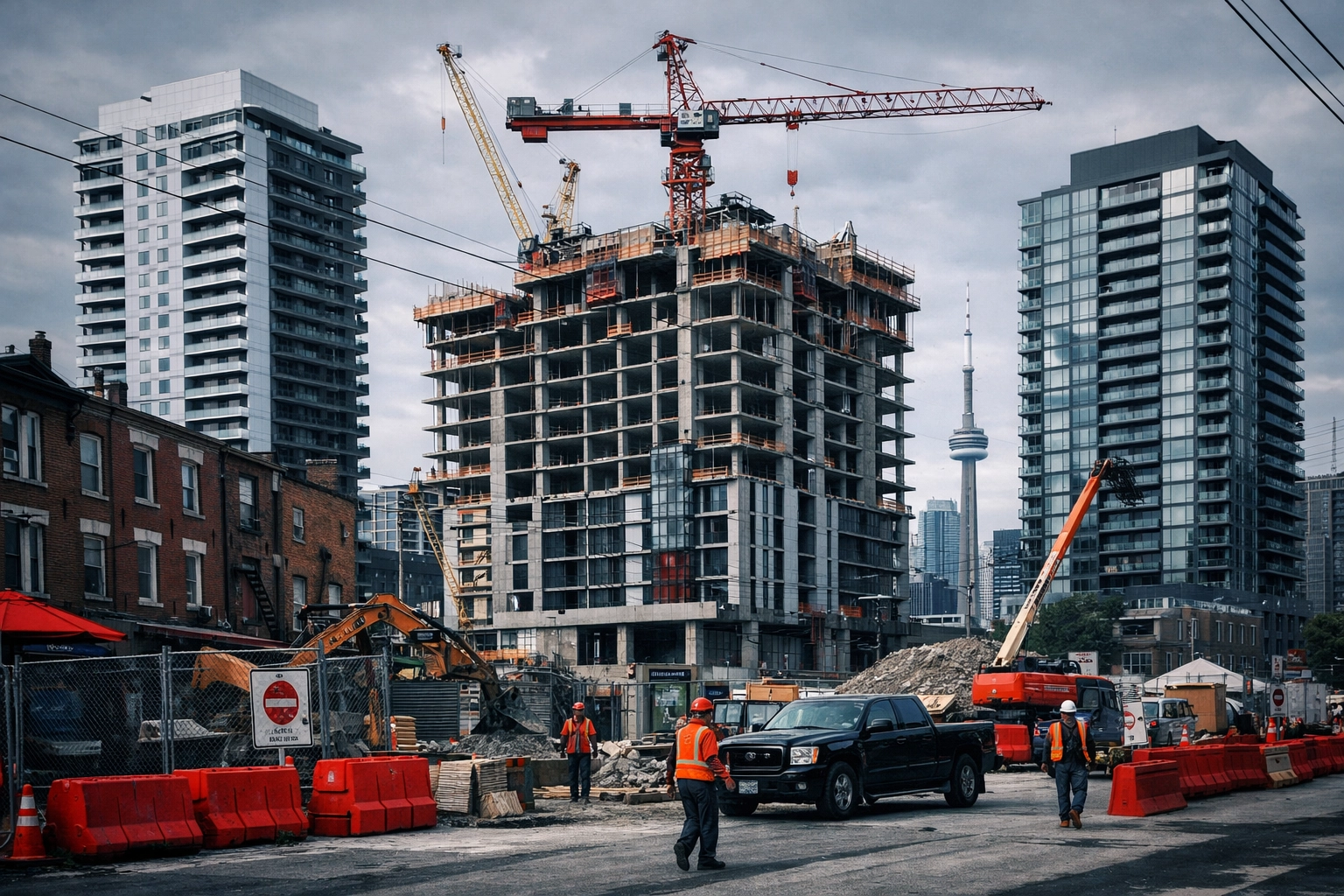
TORONTO : The federal government has announced a new $86 million investment aimed at expanding affordable housing within Toronto’s Regent Park, a move that comes as national housing starts face a period of significant volatility. The funding, earmarked for the construction of 271 new affordable rental units, marks a critical continuation of one of North America’s largest urban revitalization projects.
The announcement was made early Friday by federal officials alongside representatives from the Canada Mortgage and Housing Corporation (CMHC). The investment is part of the broader "Build Canada Homes" initiative, a multi-billion dollar strategy intended to stimulate residential construction amid a national supply crisis. For Regent Park, a community that has been under active redevelopment since 2005, the new units represent a push toward completing the final phases of its transition from a traditional social housing complex into a high-density, mixed-income neighborhood.
The Breakdown of the $86 Million Investment
The $86 million allocation is structured as a mix of low-interest loans and direct capital grants. According to the federal briefing, the 271 units will be integrated into a larger multi-use residential tower. These units are designated as "affordable rentals," meaning they will be offered at rates significantly below the current average market rent in the Greater Toronto Area.
Under the terms of the funding agreement, the affordability of these units must be maintained for a minimum of 40 years. This long-term commitment is designed to insulate low-income residents from the rapid appreciation of Toronto’s real estate market. The project also includes energy-efficient design requirements, aligning with federal climate goals to reduce the carbon footprint of new high-density developments.

The Mixed-Income Model: A National Blueprint?
The centerpiece of the Regent Park experiment is the mixed-income model. Unlike the mid-20th-century approach to social housing, which often concentrated low-income households in isolated blocks, the current redevelopment strategy intersperses rent-geared-to-income (RGI) units, affordable rentals, and market-rate condominiums within the same city blocks.
Proponents of this model argue that it fosters social cohesion and prevents the "ghettoization" that plagued previous public housing projects. By bringing higher-income residents into the area, the redevelopment has attracted retail infrastructure, community centers, and improved transit links that benefit all residents regardless of their income level.
"The goal of Regent Park has always been to remove the invisible walls that separated this community from the rest of Toronto," said a municipal urban planning consultant during a recent panel on the neighborhood's progress. "The $86 million investment is a test of whether this model can remain financially viable as construction costs continue to rise."
However, the model is not without its critics. Some housing advocates point out that while thousands of new market-rate units have been added, the net increase in social housing units has been relatively modest. They argue that for Regent Park to be a true national blueprint, the ratio of affordable units must be significantly higher to address the growing waitlists for social housing in Ontario.
The Macroeconomic Reality: A Momentum Stall
The timing of the $86 million announcement is significant. It comes just days after the CMHC reported a 3.5% slide in national housing starts. Despite record-level government spending and numerous legislative attempts to "unlock" land for development, the actual pace of new construction is failing to keep up with federal targets.
Economic analysts suggest that government subsidies are currently fighting an uphill battle against macroeconomic headwinds. High interest rates, though beginning to stabilize, have kept borrowing costs high for developers. Furthermore, a persistent shortage of skilled labor in the construction sector has led to project delays and increased labor costs.
This "momentum stall" is a primary concern for the economy at large. As Canadian household debt hits record highs, the ability of the average citizen to afford market-rate housing has diminished, placing even greater pressure on the rental market and government-subsidized projects like those in Regent Park.

Infrastructure and the Urban Strain
The influx of 271 new units into Regent Park also raises questions about urban infrastructure. While the neighborhood has seen the addition of the Pam McConnell Aquatic Centre and new parklands, the sheer density of the area is testing the limits of local services.
Education and healthcare remain two of the most pressured sectors. As the federal government navigates its current immigration targets, the demand for local school spots and community health clinics has skyrocketed. The "mixed-income" success of a neighborhood is often measured not just by the buildings themselves, but by the ability of the surrounding infrastructure to support a diverse population.
The federal government’s focus on Regent Park suggests a preference for "intensification": building up rather than out. While this helps address the shortage in major hubs, it contrasts with the shifting demographic trends where many newcomers are seeking housing in mid-sized suburban cities to avoid the high costs of Toronto.
Comparing the Federal Approach
The Regent Park investment is one of several major projects under the "Build Canada Homes" banner. Similar investments have been seen in Vancouver and Montreal, yet the Regent Park model is unique due to its long-term partnership with private developers like Daniels Corporation.
In this public-private partnership (P3) model, the government provides the land and initial funding, while private developers manage the construction and sell market-rate units to subsidize the overall project cost. The $86 million from the federal government serves as the "gap funding" necessary to ensure the affordable portion of the project remains feasible for the developer.
Critics of this approach suggest that relying on market sales to fund affordable housing makes the entire system vulnerable to real estate market corrections. If market-rate condo sales slow down: as they have in early 2026: the delivery of the social housing components can be delayed.

The Road Ahead for Regent Park
As of March 2026, the Regent Park redevelopment is entering its final phases. The success of this $86 million experiment will likely be judged by two metrics: the speed of completion and the quality of life for the residents moving into the new units.
If the 271 units can be delivered on time and within the allocated budget, it will provide the federal government with a much-needed success story amid the current housing starts slump. However, if construction delays persist, it may force a re-evaluation of how federal funds are distributed: moving away from massive urban redevelopments toward smaller, faster modular housing projects.
For now, the cranes over Regent Park remain a symbol of the government’s commitment to high-density, integrated living. Whether this "experiment" can be scaled across the country remains to be seen, especially as other provinces and municipalities grapple with their own unique regulatory and economic hurdles.
For more updates on national housing policy and economic trends, you can follow our coverage in the latest news section or explore our deep dives into politics.
Project Fact Sheet: Regent Park Phase 4/5 Expansion
- Total Federal Funding: $86 Million
- Number of Affordable Units: 271
- Total New Units in Tower: 540 (estimated)
- Affordability Duration: 40 Years
- Expected Completion: Q4 2028
- Target Demographic: Low-to-moderate income families and seniors
The development is expected to break ground in late summer 2026, pending final municipal permit approvals. As part of the community benefits agreement, the project is also expected to provide local employment opportunities for Regent Park residents during the construction phase.