

Economy
Canada’s Labour Market Stumbles as Economy Loses 84,000 Jobs in February

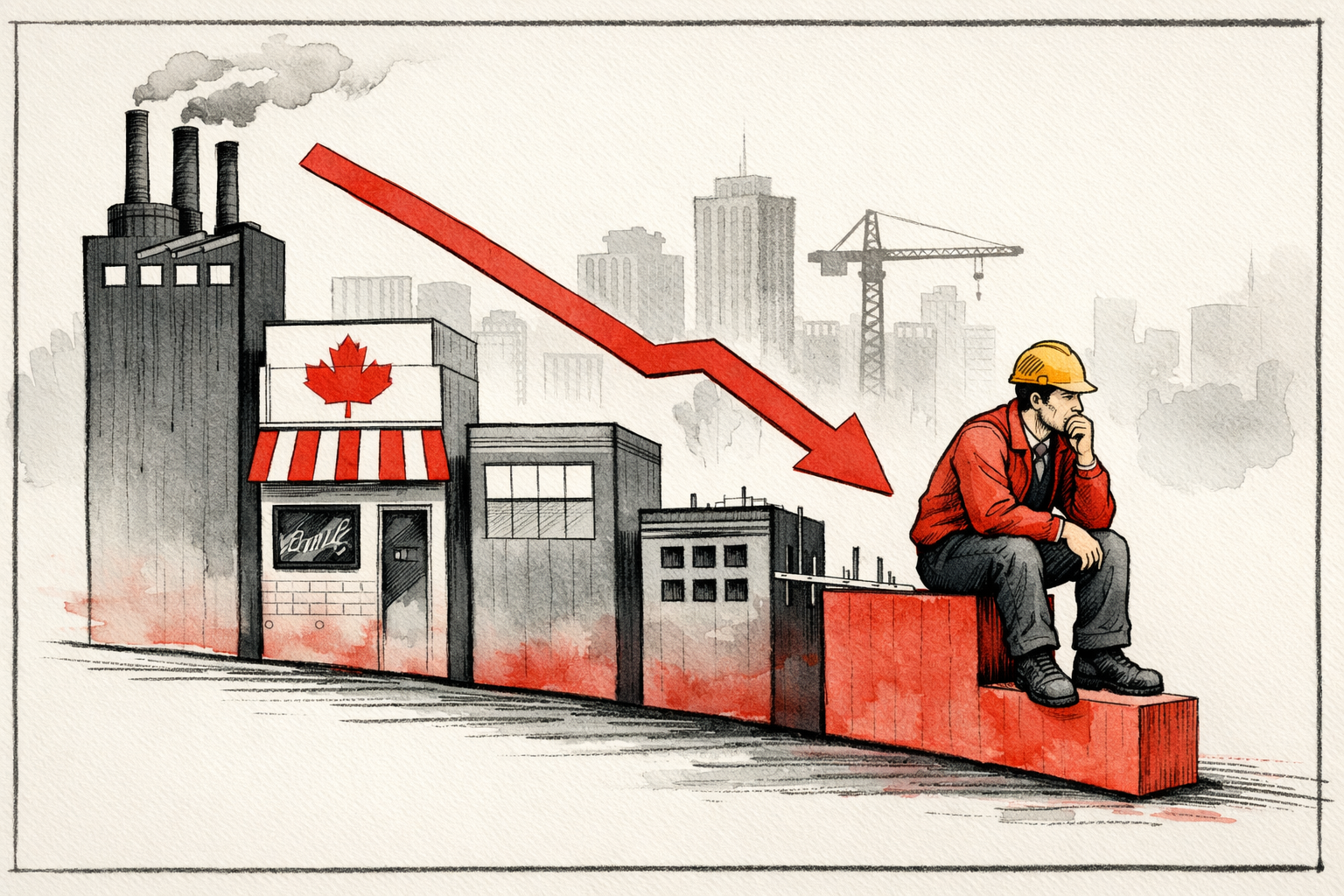
Canada’s labour market took a sharp step backward in February, with the country losing approximately 84,000 jobs, according to the latest Labour Force Survey from Statistics Canada. The unexpected decline pushed the national unemployment rate up to 6.7 percent, rising from 6.5 percent in January, and marked one of the most significant monthly job losses seen outside of the pandemic period.
The report signals a sudden shift in the tone of Canada’s labour market. Economists had widely expected modest job growth for the month. Instead, employment fell by 83,900 positions, while the employment rate declined to 60.6 percent, continuing a downward trend that has now persisted for two consecutive months.
The composition of the job losses is particularly notable. Full-time employment dropped by 108,000 positions, a decline that far outweighed a modest increase in part-time work. Even more concerning, the majority of the losses occurred in the private sector, where employment fell by roughly 73,000 jobs. Public-sector employment and self-employment remained largely unchanged.
When full-time private-sector jobs begin to disappear, economists typically view it as a sign that employers are becoming more cautious about hiring and investment.
The decline was spread across multiple sectors of the economy. Service-producing industries lost about 56,000 jobs, while goods-producing industries lost roughly 28,000. Among the hardest-hit areas were wholesale and retail trade, which lost approximately 18,000 positions, followed by other services, down about 14,000.

Canada’s construction sector shed around 12,000 jobs, while manufacturing employment declined by roughly 9,200 positions. The breadth of these losses suggests the slowdown was not limited to a single industry but reflects broader pressures within the economy.
Some demographic groups were affected more heavily than others. Youth employment declined sharply, with 47,000 jobs lost among workers aged 15 to 24. As a result, the youth unemployment rate climbed to 14.1 percent, highlighting the continuing difficulty young Canadians face when entering the workforce during periods of economic uncertainty.
Regional results also varied significantly. Quebec recorded one of the largest monthly employment declines, losing about 57,000 jobs. In Ontario, employment was largely unchanged after a significant drop in January, though the province’s unemployment rate still rose to 7.6 percent as more people entered the labour market in search of work.
Despite the employment losses, wage growth remains relatively strong. Average hourly wages for employees rose 3.9 percent compared with a year earlier, while permanent employees saw wage growth reach 4.2 percent, the fastest pace since late 2024.
For policymakers, this creates a complicated picture. A weakening labour market often suggests economic slowing that could justify interest rate relief. However, continued wage growth can keep inflation pressures alive, limiting how aggressively the Bank of Canada might respond.
While monthly employment figures can fluctuate, the February report follows earlier weakness in January. Together, the first two months of 2026 have seen more than 100,000 jobs disappear from Canada’s labour market, raising new questions about the strength of the country’s economic momentum as the year begins.
Whether February proves to be a temporary setback or the beginning of a broader slowdown will likely become clearer in the months ahead. For now, the numbers point to a labour market that has lost some of the resilience it showed in previous years.