Opinion
The Blame Game Won’t Fix What’s Actually Broken
Canada’s economy is under pressure, and a new Fraser Institute analysis is pointing fingers at federal policy. But while the frustration is real, the story isn’t as simple as one government to blame. This piece takes a clear look at what’s actually happening beneath the headlines, and why the answers aren’t coming from where most people are looking.

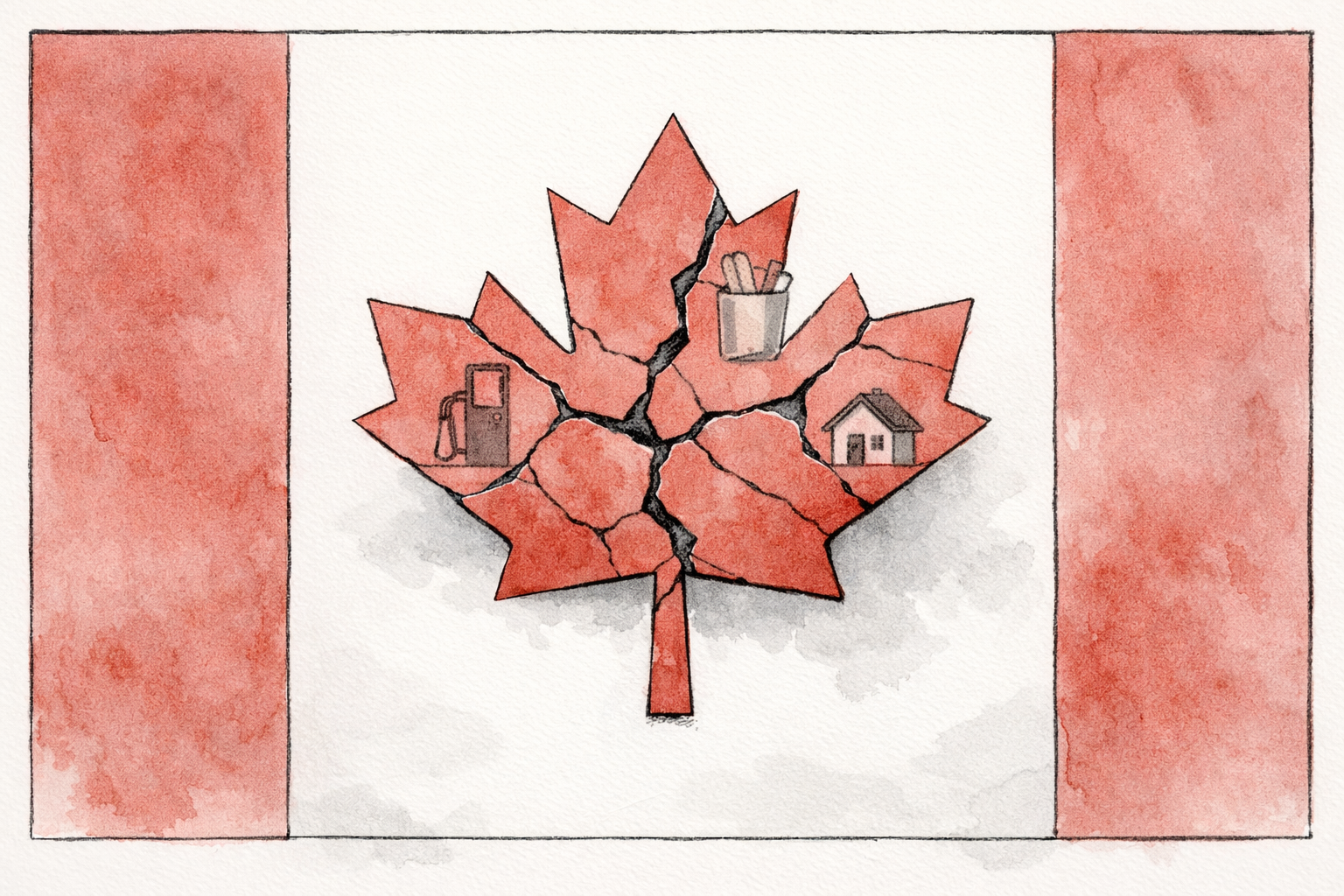
Canada’s economy is under pressure, and a new Fraser Institute analysis is pointing fingers at federal policy. But while the frustration is real, the story isn’t as simple as one government to blame. This piece takes a clear look at what’s actually happening beneath the headlines, and why the answers aren’t coming from where most people are looking.
There’s a new piece making the rounds from the Fraser Institute, and if you read the headlines, the conclusion is simple enough. Canada is falling behind, and the Liberals are to blame.
That’s the takeaway. Clean. Direct. Politically useful.
But like most things right now, it’s not that simple.
A recent commentary from the Fraser Institute lays out that argument in full, pointing to federal policy over the past decade as the main driver of Canada’s economic slowdown. (Read the full analysis here: https://www.fraserinstitute.org/commentary/understanding-magnitude-canadas-economic-decline)
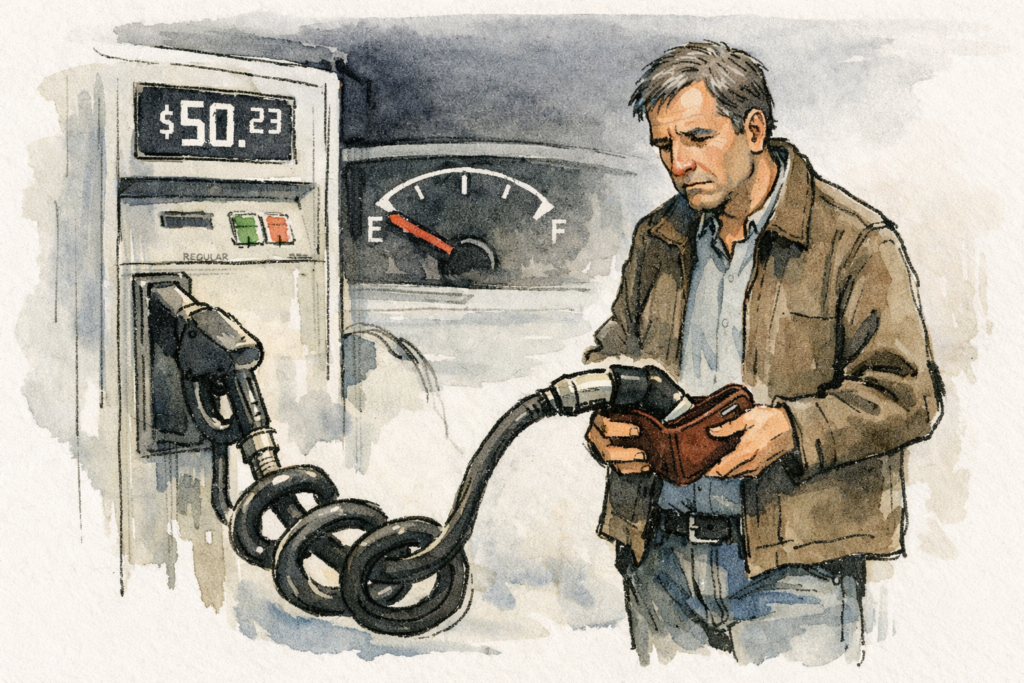
Let’s start with what they’re getting right, because there is something real underneath all of this. Canadians are feeling squeezed. You don’t need a study to tell you that. You see it at the grocery store, you feel it at the gas pump, and if you’re working, you’re probably wondering why it feels like you’re running harder just to stay in the same place.
On paper, the economy is still growing. But when you break it down per person, it’s a different story. That’s where the concern is. Growth isn’t keeping up with population, and that means, on average, people are falling behind. Statistics Canada has been showing that trend clearly. So no, this isn’t invented. Something is off.
Where the Fraser Institute takes that reality and turns it into a conclusion is where things start to drift.
Their argument is that government policy over the past decade, spending, deficits, regulation, has weakened the economy and held back investment. And yes, those things matter. You can’t run deficits forever without consequences, and you can’t pile on complexity and expect businesses to invest freely.
But here’s the problem. They’re acting like this all started ten years ago.
It didn’t.
Canada has had a productivity problem for a long time. Long before the current government, we were already seeing weaker business investment, slower growth per worker, and an economy leaning more and more on housing and consumption instead of production. That didn’t just appear overnight.
Then COVID hit, and every country in the world opened the spending taps. Canada wasn’t unique there. Inflation followed, again, not unique. Interest rates went up everywhere. And now we’re on the other side of it, trying to sort out what’s temporary and what’s structural.
At the same time, Canada made a choice to grow its population quickly. That brings long-term benefits, but in the short term, it puts pressure on everything. Housing, services, infrastructure, and yes, the numbers. When the population grows faster than the economy can keep up, the per-person math looks worse, even if total output is rising.
None of that fits neatly into a political slogan.
And that’s the issue.
Because what we’re getting right now, from all sides, is a rush to assign blame instead of a serious effort to understand what’s actually going on. One side says it’s all government policy. The other says it’s all global conditions. The truth sits somewhere in the middle, and nobody seems particularly interested in staying there.
Meanwhile, people are just trying to get through the week.
This is where the conversation needs to change. Not into another round of “your side did this” and “our side would fix it,” but into something more grounded. What actually drives growth in this country? Why has productivity lagged for so long? Why does it feel harder now to get ahead than it did a generation ago?
Those are harder questions. They don’t fit into a headline. They don’t win a quick argument online.
But they’re the ones that matter.
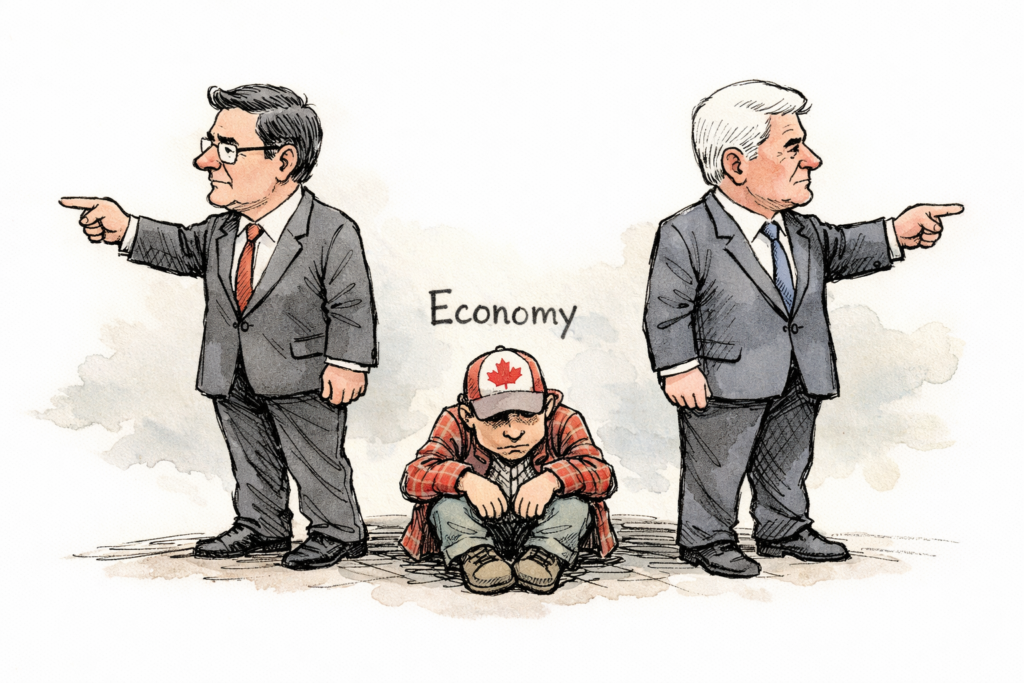
Because if we keep treating this like a political football, we’re going to miss the point entirely. The problem didn’t start with one government, and it’s not going to be fixed by simply replacing one with another.
Canada isn’t broken. But something in the system isn’t working the way it used to.
And until we’re honest about that, no report, no talking point, and no election slogan is going to change where this is heading.
In the next piece, I’ll walk through what the Liberals have done, what the Conservatives are proposing, and what a real alternative could look like.