
Opinion
Where Is the Leadership in These By-Elections?
A quiet contrast is emerging in Canada’s April 13 by-elections, local campaigns are working as expected, but the signal from national leadership feels less clear, raising questions about what showing up really means in modern politics.

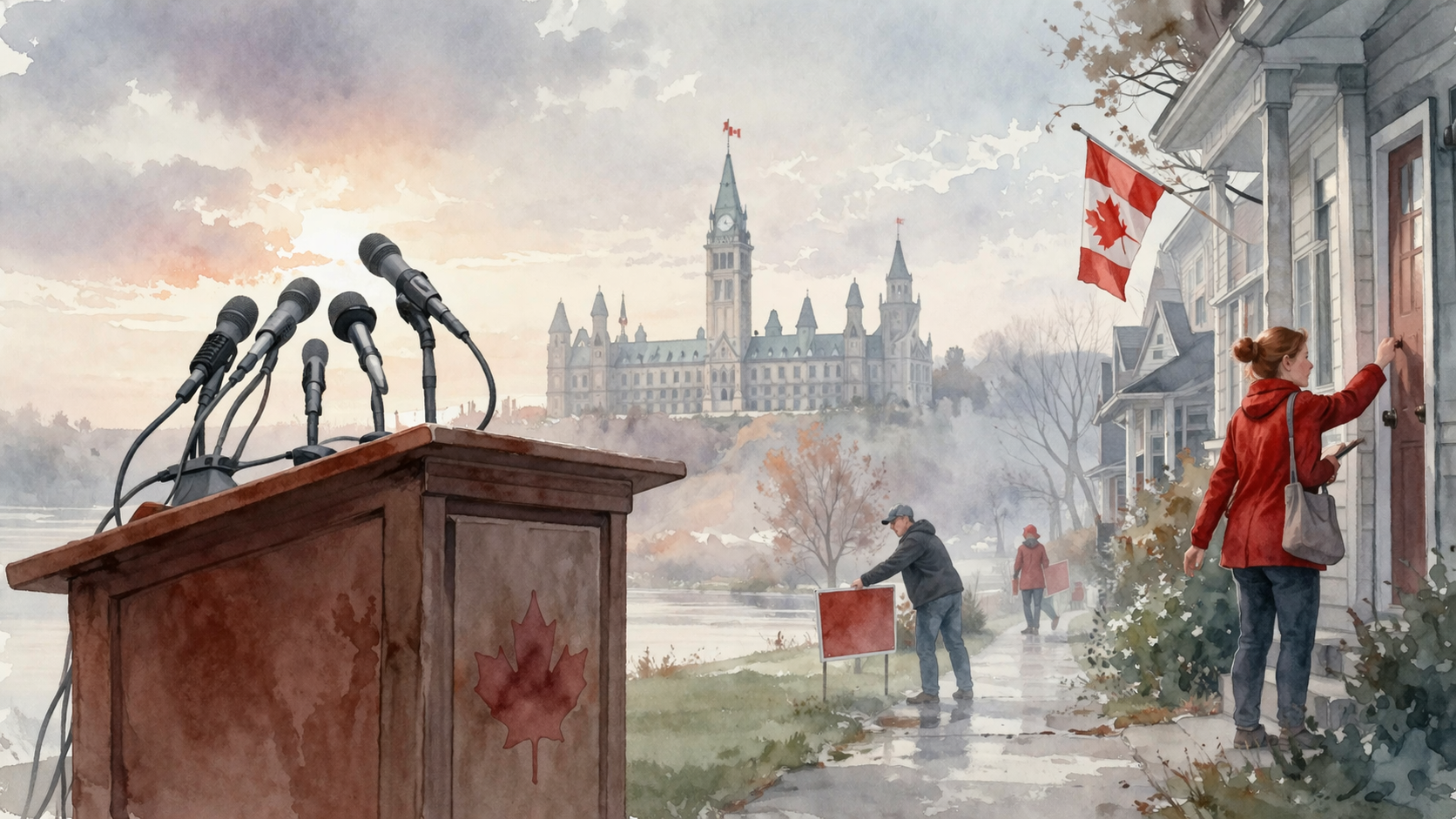
A quiet contrast is emerging in Canada’s April 13 by-elections, local campaigns are working as expected, but the signal from national leadership feels less clear, raising questions about what showing up really means in modern politics.
There’s something slightly out of sync in the lead-up to Canada’s April 13 by-elections, and it isn’t happening at the riding level.
On the ground, everything looks familiar. Candidates are knocking on doors, volunteers are putting in long hours, and local campaigns are doing what they’ve always done, grinding it out one conversation at a time. That part of the system still works. It still feels like democracy in its most tangible form, neighbour to neighbour, vote to vote.
What’s different is the tone from the top.
Pierre Poilievre has been noticeably restrained in publicly promoting his party’s candidates. Not absent, not disengaged entirely, but quieter than what we’ve come to expect from a federal leader during active by-election campaigns.
By contrast, Mark Carney has taken the more traditional route, appearing alongside candidates and making his party’s presence visible in these races. It’s the kind of approach Canadians instinctively recognize, the leader shows up, reinforces the message, and signals that the stakes matter beyond the local map.
It’s tempting to frame that contrast as a simple question of leadership. One engaged, one less so. One present, one holding back.
But that’s where it’s worth slowing down.
There are, broadly speaking, two ways to approach moments like this.

The first is the classic model, the leader as amplifier. Show up everywhere you can. Stand beside your candidates. Turn each by-election into a national story, even if it isn’t one. That approach projects confidence. It tells voters that the party is unified, that the leader stands behind the people asking for their support, and that every seat matters.
For candidates on the ground, that kind of visibility isn’t abstract. It’s currency. It’s something they can point to when they’re on a doorstep, something that reinforces the idea that they’re part of a larger, cohesive effort.
The second model is quieter, more calculated. The leader picks their moments. Visibility is used selectively, not automatically. Decisions are shaped by internal polling, by risk assessment, by whether stepping in helps or hurts the broader national strategy.
From the outside, that can look like disengagement. Sometimes it is. Other times, it’s a deliberate choice to protect political capital rather than spend it in races that may not move the larger narrative.
Neither model is inherently right or wrong. Both have logic behind them. And in truth, most modern campaigns operate somewhere between the two.
But what’s unfolding right now sits in that tension, and that’s what makes it noticeable.
Because underneath the strategy, there’s a more fundamental question that doesn’t get asked often enough.
What does a national leader actually owe the candidates carrying their banner?
Those candidates aren’t symbols. They’re not data points on a spreadsheet or names in a polling memo. They’re people standing in front of voters, making the case in real time, in real communities, often with limited resources and no guarantee of success.
When the national presence behind them feels muted, it doesn’t just read as strategy. It can feel like distance.
And in today’s political climate, perception carries weight.
Canadian politics has been drifting toward a leader-centric model for years. Campaigns are built around personalities. Messaging is tightly managed. Local races increasingly feel like extensions of a national brand rather than independent contests rooted in the character of their communities.
That shift has consequences.
When everything flows through the leader, the leader’s presence, or absence, becomes amplified. A visit matters more. A mention matters more. And a lack of either doesn’t go unnoticed.
What we’re seeing in these by-elections is a small but revealing example of that dynamic.
The campaigns themselves haven’t changed. The mechanics are still there. But the connective tissue between the national level and the local effort feels thinner, or at least less visible.
That creates a kind of ambiguity.
If leadership is defined by showing up, then restraint looks like a gap. If leadership is defined by discipline and message control, then restraint can be interpreted as strategy.
The problem is that voters are left to interpret which version they’re seeing, often without enough information to do so with confidence.
And that uncertainty isn’t just about these races.
It speaks to something broader in how Canadian politics now operates. We’ve built a system where leaders dominate the narrative, where their presence shapes perception, and where local candidates are, more often than not, evaluated through that national lens.
But when that presence becomes inconsistent, or selectively applied, it exposes the limits of that model.
It raises a quiet but important question. If politics is going to remain this leader-driven, then what does leadership actually look like when it matters most?
Is it constant visibility, reinforcing every campaign and every candidate? Or is it selective engagement, where the leader steps in only when the conditions are right?
There isn’t a clean answer. And maybe that’s the point.
Because what these by-elections are revealing isn’t a failure of any one leader, or a flaw in any one party’s approach. It’s a system that has become so centralized around leadership that even small shifts in tone or presence feel significant.
The ground game is still there. The voters are still there. The candidates are still doing the work.
But the signal from the top, or the lack of it, is being felt more than it used to be.
And that, more than the results on April 13, is what’s worth paying attention to.