
The Canadianist | Blog
The Long Game Still Requires Public Trust

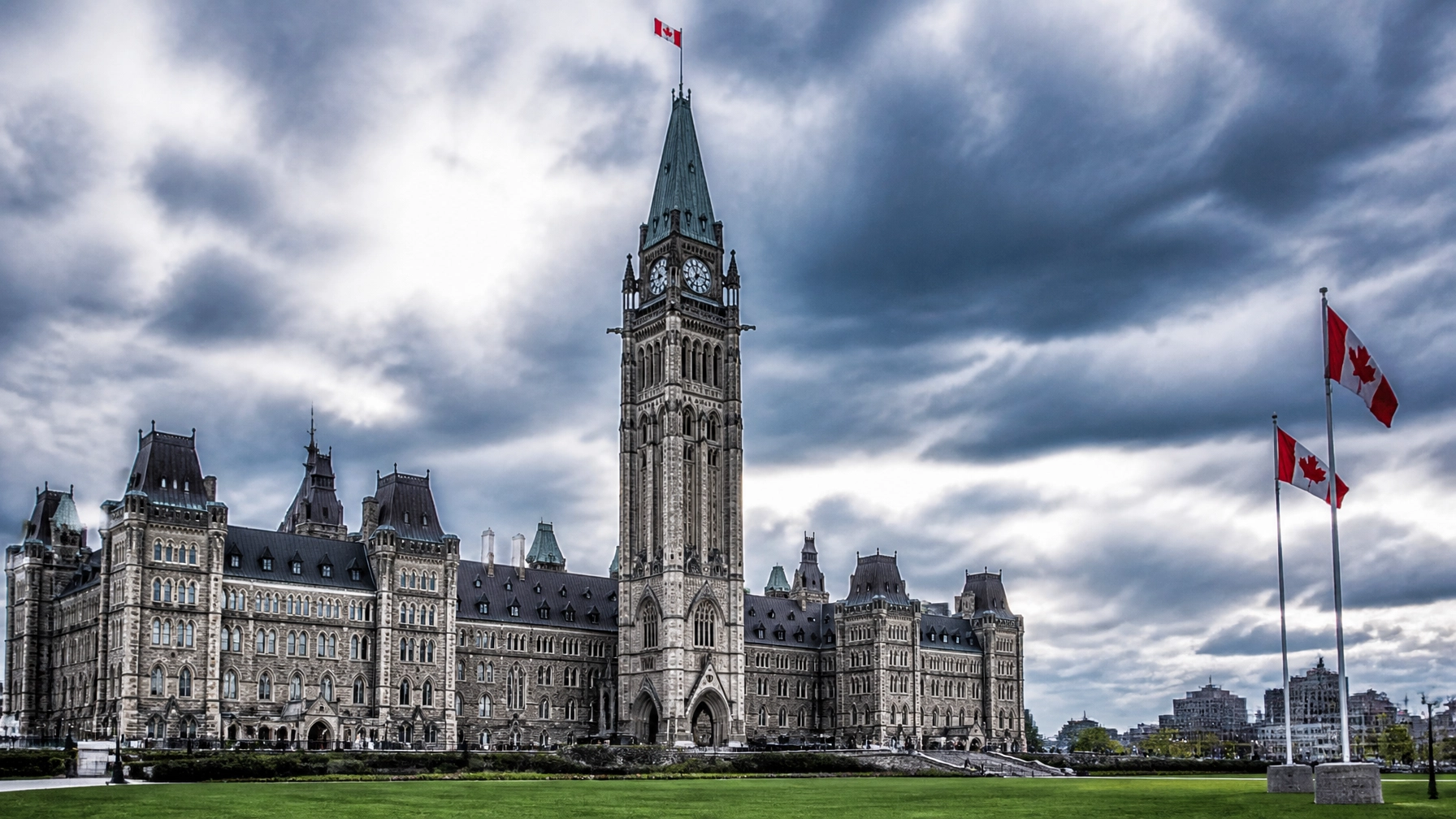
A Facebook post caught my attention today because it argued that Mark Carney should be judged by what his government is building, not simply by what it is saying. It pointed to investments in infrastructure, defence, manufacturing, trade, housing and supply chains as evidence of a government pursuing a long-term nation-building agenda.
There is an argument there worth considering, even if we are not yet prepared to accept its conclusion.
Many of the problems facing Canada today became substantially worse during Justin Trudeau’s decade in office. He was the prime minister, so his government owns its record. But housing shortages, weak productivity, inadequate infrastructure, regional alienation, military neglect and an economy overly dependent on the United States did not suddenly appear in 2015. Their roots reach back through governments of different political stripes and across at least four decades.
That matters because these failures were not caused by one ideology, one leader or one election. They accumulated within a political system that continually rewards the short game.
The Short Game Wins Elections

Governments operate on an electoral clock. They want programs that can be announced today, photographed tomorrow and promoted before the next campaign. The benefits must be visible quickly, while the costs are preferably left for someone else to explain.
The difficult decisions are different. Rebuilding military capacity takes years. Developing new trade relationships takes years. Expanding ports, railways and energy infrastructure takes years. Increasing domestic manufacturing capacity takes years. Reforming institutions can take even longer.
These projects create costs, disruption and controversy immediately, while their benefits may not become visible until another government is in office. That makes them politically dangerous.
This has always been part of my argument about why Canada arrived at this moment. We did not stop planning for the future because nobody understood the problems. We stopped because the political rewards increasingly favoured governments that managed the present and postponed the future.
It is therefore possible that some of the frustration surrounding Carney is the political cost of attempting to play the long game. People are looking for relief now. They want housing now, lower costs now, better healthcare now and economic security now. Announcements about ports, defence production, trade diversification and critical minerals do not immediately solve the problems confronting a family at the grocery store or a young Canadian trying to afford an apartment.
That does not prove Carney is right. It does, however, raise a fair question: are we witnessing another government avoiding today’s problems, or are we seeing the uncomfortable early stages of investments that previous governments were unwilling to make?
Canadians Deserve More Than Reassurance

The problem for Carney is that his government is making it unnecessarily difficult for Canadians to answer that question.
If a government asks the public to accept short-term uncertainty in exchange for long-term national progress, trust becomes essential. People need to understand what is being done, why it is being done, what it will cost and how success will eventually be measured.
Carney has not consistently provided that level of clarity. The controversy surrounding the Gordie Howe International Bridge is a clear example.
Carney previously left Canadians with the understanding that Canada would recover the cost of financing the bridge before sharing toll revenue with the United States. The subsequently released agreement in principle says Canada and the United States will share net toll revenue equally for 15 years. The text also says it does not replace the original 2012 crossing agreement, while leaving the legal, financial and administrative implementation arrangements to be finalized.
Those provisions have produced legitimate questions about when Canada recovers its costs and how the two agreements are supposed to operate together. Carney acknowledged that he should have been clearer.
That should have led to greater scrutiny and a more complete explanation. Instead, Liberal members of the House of Commons government operations committee blocked proposed hearings that would have examined the arrangement and called witnesses.
This does not prove the agreement is bad. It proves Canadians have unanswered questions and that Parliament was denied an opportunity to pursue them.
The issue then becomes larger than one bridge. Canadians are left choosing which political side they believe. The government says the agreement protects Canada’s interests. The opposition says Canada surrendered valuable revenue to secure the bridge’s opening. Without full scrutiny, the public is asked to select a narrative instead of being given enough evidence to reach an informed conclusion.
Trust Cannot Be Demanded

Public trust in Canadian institutions has been deteriorating for years. That loss of trust is not exclusively the fault of the present government, nor can it be attributed entirely to angry or unreasonable citizens.
Governments have helped create it.
Every unclear explanation, withheld detail, closed process and blocked investigation reinforces the belief that Canadians are not being told the whole story. Even when the underlying decision may be defensible, the manner in which it is handled gives suspicion room to grow.
If public trust has fallen to 50 per cent and we need to restore it to 100, government cannot operate at the old standard of disclosure. It must offer 150 per cent transparency.
That means explaining more than it once had to explain. It means welcoming scrutiny that may be uncomfortable. It means allowing parliamentary committees to test government claims. It means releasing the evidence, acknowledging trade-offs and trusting Canadians with the complexity of major decisions.
Transparency is not an inconvenience standing in the way of nation-building. It is what gives nation-building legitimacy.
Where Democratic Renewal Meets the Canadian Covenant

This is Where two of the foundational provisions I have proposed, Democratic Renewal and the New Canadian Covenant, meet.
Democratic Renewal concerns the machinery of trust. It asks who participates in national decisions, how power is distributed, whether Parliament can meaningfully scrutinize the government and whether one party should be able to drive the national agenda with limited participation from everyone else.
The New Canadian Covenant concerns the relationship of trust. It asks what Canadians should be able to expect from their government and what government owes the people whose authority it exercises.
A healthier Parliament, with more voices and more hands on the national project, would not make long-term planning impossible. It would make that planning more credible. Decisions examined and debated by a broader Parliament would be harder to dismiss as the private agenda of one leader or one party. More scrutiny would expose weak ideas, improve defensible ones and give more Canadians a stake in the result.
Mark Carney may be pursuing the long game. If he is, the political resistance he faces may help explain why previous governments so often avoided it.
But the longer the game, the greater the obligation to be transparent. Canadians cannot be expected to support a destination when they are prevented from seeing the map.
Whether the bridge agreement is ultimately proven wise or foolish is only part of the question. The deeper issue is whether Canadians can trust the process by which that decision was made, explained and examined.
Right now, the government is not rebuilding that trust. It is making the job harder for everyone.