Quebec
Trump’s 50% Tariff Threat Dominates Premiers’ Meeting as Provinces Split on Canada’s Response

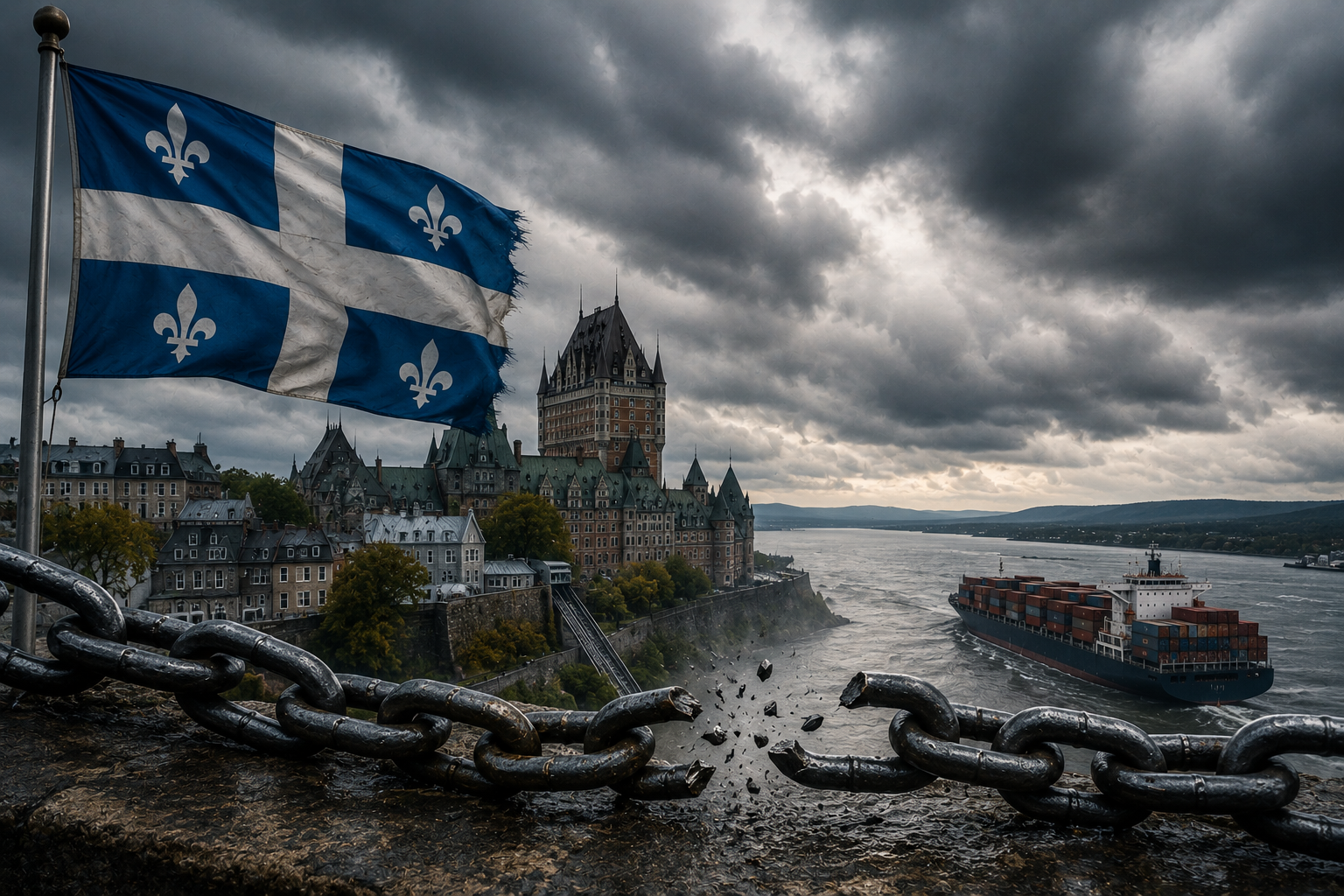
Canada’s premiers arrived in Charlottetown this week expecting to discuss a broad range of economic and intergovernmental issues. Instead, Donald Trump’s latest tariff threat quickly became the defining issue of the Council of the Federation meeting, exposing differences in how provincial leaders believe Canada should respond.
Trump’s announcement that the United States intends to impose 50 per cent tariffs on a wide range of Canadian exports within 30 days reshaped the agenda almost immediately, forcing premiers to focus on the potential economic consequences and the federal government’s negotiating strategy.
While several premiers urged Ottawa to adopt a more confrontational approach, Quebec took a notably different position.
Ontario Premier Doug Ford renewed his call for Canada to respond aggressively, arguing the country should “go on the offensive” and use its position as an energy and resource exporter to strengthen its negotiating hand. British Columbia Premier David Eby also supported a firmer response, joining Ford in calling for Canada to demonstrate that further tariffs would carry consequences for American industries.
Quebec Economy Minister Christine Fréchette, speaking on behalf of Premier François Legault’s government during the meeting, urged a more measured approach.
Fréchette argued that escalating the dispute through stronger retaliatory measures would not improve Canada’s position at the negotiating table. Instead, she said Quebec’s priority is to avoid additional escalation while working toward what she described as a stable framework that would provide businesses with greater certainty.
Her position also differed from several other provinces on specific policy options.
While some premiers have suggested using Canada’s energy exports as leverage against Washington, Fréchette rejected that approach. She also ruled out immediately restoring American alcohol products to Quebec’s Société des alcools du Québec (SAQ) stores, despite earlier comments that had left the possibility open.
At the same time, Fréchette made clear there is one issue Quebec will not negotiate.
She described the province’s supply management system for dairy as “non-negotiable” in any future discussions with the United States, reaffirming a longstanding position that remains politically significant across much of rural Quebec.
The comments come as Ottawa continues to pursue negotiations with Washington rather than announcing new retaliatory tariffs of its own. Fréchette expressed hope that Canada and the United States could reach interim arrangements before the scheduled 2027 review of the Canada-United States-Mexico Agreement (CUSMA), reducing uncertainty for exporters while broader negotiations continue.
The stakes are particularly high for Quebec, whose economy is heavily exposed to American markets through aluminum production, aerospace manufacturing, forestry products and dairy agriculture.
For Ontario, the threat carries significant implications for the automotive, steel and advanced manufacturing sectors that rely on integrated North American supply chains.
The differing approaches among premiers underscore the difficult balance facing governments across the country. Some argue that matching American pressure with strong countermeasures is necessary to protect Canada’s long-term bargaining position. Others contend that limiting escalation offers the best chance of preserving access to Canada’s largest export market.
With the next federal election only weeks away and uncertainty surrounding future Canada-U.S. trade relations continuing to grow, Trump’s tariff threat has moved to the centre of the national political debate, leaving both Ottawa and the provinces under increasing pressure to demonstrate how they intend to protect Canadian jobs, investment and economic stability.