
The Canadianist Exclusive: Journeys
She Came to Canada With Almost Nothing. She Built the Canadian Dream. Now She Wonders Who Can Afford It.
She remembers the cardboard.
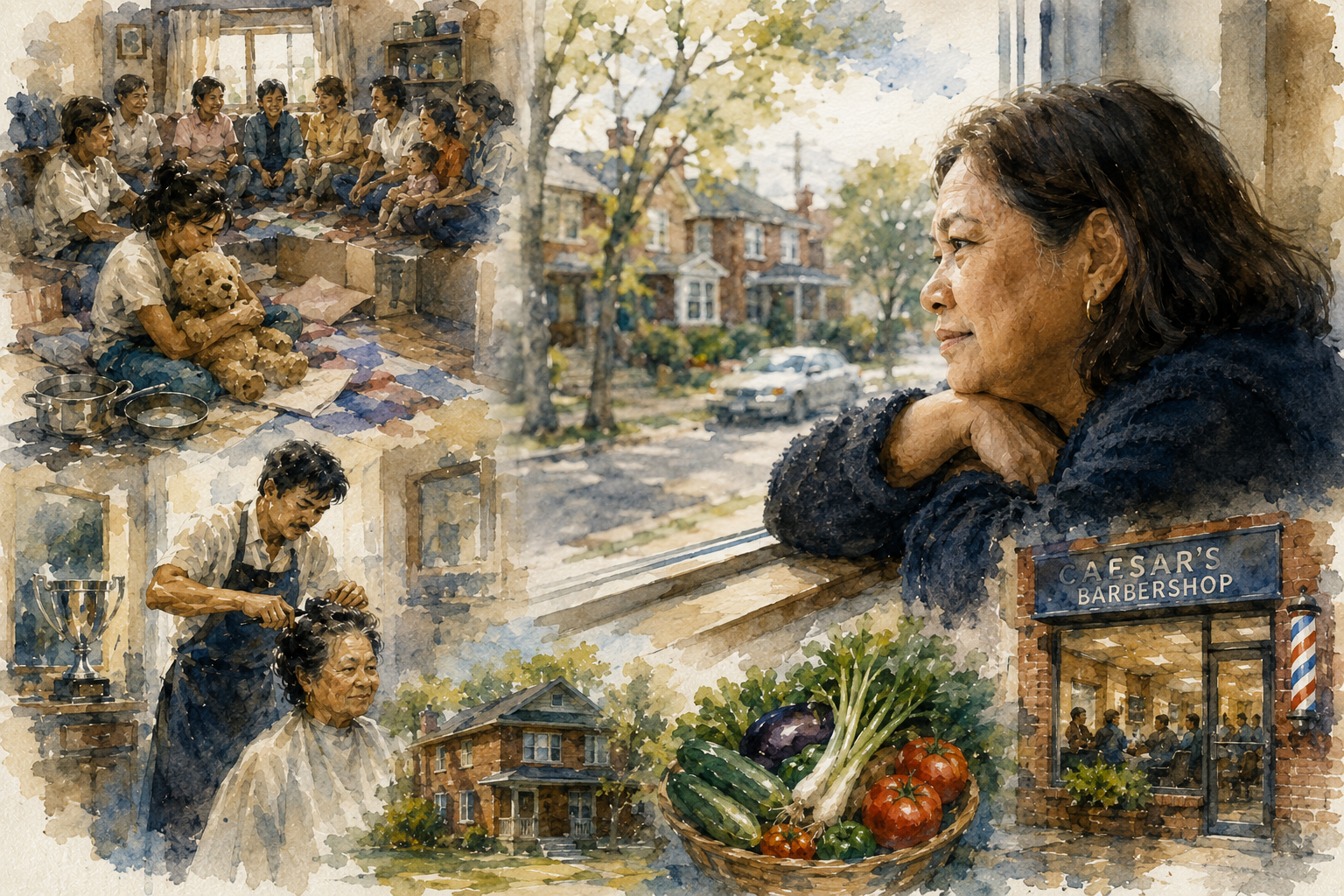
When she first came to Canada, there wasn’t much money and there certainly wasn’t much room. At one point, roughly ten members of her extended family were sharing a small apartment. People slept wherever they could. Family arrived, found their footing, moved out and made room for whoever came next.

The Canadianist Exclusive | Journeys
She remembers the cardboard.
When she first came to Canada, there wasn’t much money and there certainly wasn’t much room. At one point, roughly ten members of her extended family were sharing a small apartment. People slept wherever they could. Family arrived, found their footing, moved out and made room for whoever came next.
When she eventually moved into another place, there still wasn’t much to put in it. “I take a teddy bear as a pillow to sleep on,” she told me. She described opening a cardboard box on the floor, putting a comforter over it and sleeping there. An aunt gave her pots, pans and plates. “I’m telling you exactly how it is,” she said.
I believed her. I met her during an ordinary drive through Toronto and was supposed to be taking her from one place to another. Instead, she took me through almost 40 years of Canadian life.
Her husband, Caesar, was a barber, and apparently a very good one. When he came to Canada, his skills didn’t immediately translate into a chair and a clientele. At one of his first shops, she remembers him sweeping and mopping floors. Eventually they let him cut hair, and customers started asking for him. According to his wife, some of the other barbers weren’t particularly happy about it. After a few months, he was gone.
Caesar found another shop on Eglinton and started working on percentage. As his clientele grew, he negotiated a larger share of what he earned because he knew what his work was worth. There was even a hairstyling competition during those early years. She told me Caesar represented Canada and finished second, using her mother, who was around 60 years old, as his model.
It’s one of those wonderfully strange little details that gets lost when we reduce immigration stories to statistics: a newly arrived barber representing Canada in a competition, standing beside his trophy after styling his mother-in-law’s hair.
Meanwhile, his wife saved. They weren’t making extraordinary money. They were doing what generations of Canadians had been told would work: earn what you can, save what you can, buy something when you can afford it and pay it off.
In 1994, they bought the house where she still lives today. She remembers the price at somewhere around $230,000 to $240,000. They took a 25-year mortgage and paid it off in 15.
Caesar eventually bought the barbershop where he still works. She remembers paying about $40,000 for the business. For decades, he cut hair while they built their life around the income it produced. Their children grew up, their daughters built careers and families of their own, grandchildren arrived, and the house remained home.
So did Caesar’s barbershop, although almost everything around it changed.
She remembers commercial rent at roughly $1,400 a month years ago. Today, she says the shop costs around $4,000 a month. “How many hair you think you can cut for that price?” she asked.
It’s a fair question when she sees competing barbershops advertising haircuts for $10, $15 or $20. Caesar can’t work for those prices and maintain the business he’s spent decades building. Rent still has to be paid, along with hydro and all the other bills that arrive whether the chairs are full or empty.
After decades in the trade, he’s competing against an economy that has changed the price of almost everything. His wife sees the same thing at home. She remembers hydro bills around $100 and now talks about paying more than $200. She remembers buying a decent piece of steak for five or six dollars. Now she sees a piece about the size of her palm for $17.
I asked whether the price of food had changed the way she shops. It has. She knows which stores have the things she wants and which ones have the prices she’s willing to pay. She’ll go to Metro for lamb, watches Walmart and other flyers, and questions whether a Costco membership still makes sense when competing stores put many of the same products on sale without charging an annual fee. She buys a whole chicken rather than paying the price for a couple of chicken breasts.
She also grows food. Cucumbers, spinach, peppers, eggplant, tomatoes and green onions come out of her garden. Some of the tomatoes go into the freezer for later. None of this sounded like someone complaining. She was describing how she lives, and the same woman who once slept on cardboard and used a teddy bear as a pillow still knows how to stretch a dollar. What has changed is how far that dollar stretches.
Her neighbourhood tells another part of the story. She’s been in the same house since 1994, and as we drove she started describing the people who had lived around her when she arrived. She went from house to house remembering neighbours who had died, others who had moved away, homes that had been sold and homes that had been renovated. “All of them gone,” she said.
She’s still there, and more than three decades in the same house gives someone a particular way of measuring time. Governments come and go, but she remembers the people who used to live next door, the businesses that disappeared, how long it used to take to get to Niagara Falls, what the hydro bill used to be, what a piece of meat used to cost and what people once paid for a house.
Now she watches her children confront a housing market very different from the one she entered. One of her daughters has already experienced that struggle. She described attempts to buy more affordable homes farther away, problems discovered with foundations, houses being sold again and the difficulty of finding something affordable closer to the family.
The woman who bought a Toronto-area home in the 1990s and paid off a 25-year mortgage in 15 years now watches the next generation navigate a market where the same path is considerably harder to follow.
Her family came to Canada with very little and crowded together until they could afford something better. They borrowed pots and pans and slept on cardboard. Caesar swept floors until someone finally gave him a chair, and once they did, he proved he belonged in it. They saved enough to buy a house, paid off the mortgage, bought a small business, raised their children and watched those children raise children of their own.
After all those years, Caesar is still cutting hair and his wife is still in the house they bought in 1994. The rent at the shop is now around $4,000 a month, a small piece of steak can cost $17, hydro has doubled by her recollection, and the kind of house they managed to buy has moved beyond the reach of many families following behind them.
Near the end of the drive, she guided me through Scarborough streets she knew far better than my GPS. She told me where to turn, which road to take and which route would avoid the worst traffic. She’d been navigating these roads for decades.
Eventually we arrived. She got out of the car and went on with her day, and I was left thinking about the cardboard on the floor of that almost empty apartment, the teddy bear being used as a pillow and the family that started there.
They believed that if they worked hard enough, Canada would give them somewhere to go from there.
It did.