

National | Housing
Development Charges Matter: Why Municipal Fees Are Secretly Driving Housing Affordability in Canada Down


For decades, the Canadian housing debate has centered on interest rates, foreign buyers, and the scarcity of land. Yet, while the national conversation focuses on these visible levers, a quieter and more insidious force has been driving the cost of shelter into the stratosphere. Development charges: the fees levied by municipalities on new construction to fund everything from sewers to community centers: have evolved from modest recovery costs into a massive, regressive tax on the next generation of Canadian homeowners. What was once a technicality in a municipal budget is now a primary driver of the national economy.
In major urban centers, these charges have decoupled from the reality of inflation. In Toronto, for example, development charges for a single-detached home have surged nearly 600 percent in just over a decade. In 2011, a builder might have paid roughly $14,000 to the city to break ground; by 2025, that figure is slated to hit nearly $138,000. When combined with provincial taxes and federal HST, the government’s take on a new home often exceeds the cost of the actual materials used to build it. This is no longer about "growth paying for growth." It has become a system where the newest and often least wealthy residents are subsidizing the infrastructure for everyone else, effectively being taxed for the privilege of entering a market that is already stacked against them.
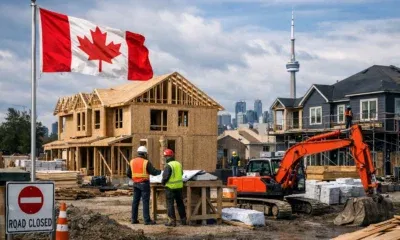
The logic behind these fees is rooted in a fiscal trap that binds Canadian municipalities. Unlike the federal government, which enjoys broad taxing powers and the ability to run deficits, cities are legally required to balance their budgets and are largely restricted to property taxes and user fees. For a local politician, raising property taxes on existing residents is a quick path to electoral defeat. Conversely, raising development charges is politically painless. Existing homeowners do not pay them; only the "future" residents do: people who often do not yet live in the ward or have a vote in the local politics of the area. This has created a moral hazard where the cost of city-building is shifted entirely onto the shoulders of the newcomer.
This fiscal silos approach is directly undermining the federal government’s stated goals for housing supply. The Canada Mortgage and Housing Corporation (CMHC) estimates that we need to build upwards of 480,000 units annually to restore any semblance of affordability. Yet, at the very moment the federal government is pushing for more density and faster builds, municipalities are raising the financial barriers to entry. In regions like Vaughan or parts of British Columbia, development charges can approach $200,000 per unit. For many developers, these costs act as a hard ceiling. If the cost of land, labor, materials, and municipal fees exceeds the projected sale price that the local market can support, the project is simply cancelled. We are seeing a wave of unviable projects across the Toronto area, not because of a lack of will, but because the math no longer works.

The impact of these fees extends beyond the initial purchase price. Because development charges are typically paid upfront by the builder, they are rolled into the total cost of the project and financed through high-interest construction loans. By the time a unit reaches a buyer, the initial $100,000 fee has gathered interest and overhead, potentially adding $150,000 or more to the final sticker price. For a first-time buyer, this is often the difference between qualifying for a mortgage and being forced back into an overheated rental market. It is a self-defeating cycle. As charges rise, fewer projects are built; as fewer projects are built, the city receives less revenue than anticipated, leading them to raise charges even further on the remaining projects to cover the shortfall.
We must also confront the "growth pays for growth" mantra that has dominated municipal planning for thirty years. While it sounds equitable in theory, in practice it treats a new apartment building like a private luxury rather than a piece of essential national infrastructure. When a city builds a new library or a water treatment plant, that facility benefits the entire community for fifty years. Demanding that the people moving in this year pay for the entire capital cost upfront is not just unfair; it is economically illiterate. It treats housing as a cost to be managed rather than an asset to be cultivated.

The solution requires a fundamental rethink of how we fund Canadian cities. If the federal government is serious about its housing targets, it cannot continue to hand over billions in infrastructure transfers without strings attached. We need a "Grand Bargain" where federal and provincial funding for transit and sewers is directly tied to the reduction or elimination of development charges on high-density housing. If a municipality wants federal dollars for a new subway line, it should be required to waive fees for the thousands of homes that will be built along that line. The cost of infrastructure should be spread across the broader tax base or financed through long-term municipal bonds, rather than being front-loaded onto the price of a starter home.
Furthermore, we need systemic reform in how we view the role of the "new resident." Currently, our tax system penalizes mobility and renewal. A senior living in a five-bedroom home they purchased in 1975 pays a property tax rate based on an assessment that often lags behind market reality, while a young family buying a two-bedroom condo is hit with a six-figure development levy on day one. To bridge this gap, provinces should consider moving toward a model where infrastructure is funded through a small, broad-based increment on property taxes or through land value capture. This would ensure that those who benefit from rising property values: incumbent homeowners: share in the cost of the infrastructure that supports those values.

The current trajectory is unsustainable. We are witnessing a collision between municipal fiscal desperation and a national housing crisis. As figures like Mark Carney have noted, the current structure of fees and delays is a primary bottleneck to the Canadian dream. We cannot build our way out of this crisis if the very act of building is treated as a piggy bank for municipal treasuries. It is time for a rational, authoritative shift in policy that recognizes housing for what it is: a fundamental right and a national priority, not a convenient source of local revenue.
If we continue to allow municipal fees to climb unchecked, we are essentially placing a "closed" sign on our most productive cities. We are telling a generation of workers, immigrants, and young families that they are not welcome unless they can pay a six-figure entry fee. For a country that prides itself on openness and economic dynamism, this is a failure of imagination and a failure of leadership. The math of the status quo simply does not add up, and the longer we wait to reform the way we fund our cities, the deeper the housing deficit will grow. It is time to move beyond slogans and address the hidden line items that are pricing Canadians out of their own future.

True reform will not be easy. It will require the federal government to step into the jurisdictional minefield of municipal affairs and demand accountability for how every dollar of infrastructure funding is spent. It will require provinces to update the legislative frameworks that govern what cities can and cannot tax. Most importantly, it will require a shift in the public consciousness to understand that a tax on developers is, in reality, a tax on the person who eventually lives in the home. By bringing these hidden costs into the light, we can begin to dismantle the barriers that have made the Canadian housing market an arena of exclusion rather than an engine of opportunity.
Connect with us at HOUSING to stay informed on the latest policy shifts affecting the market. For more in-depth analysis of the broader forces at play, explore our coverage on the Canadian economy and the future of Toronto's urban development. The path to affordability is complex, but it begins with a clear-eyed look at the costs we have chosen to ignore.