
Ontario
Ford Urges Ottawa to Match U.S. Tariffs Dollar-for-Dollar as Premiers Gather for Trade Talks

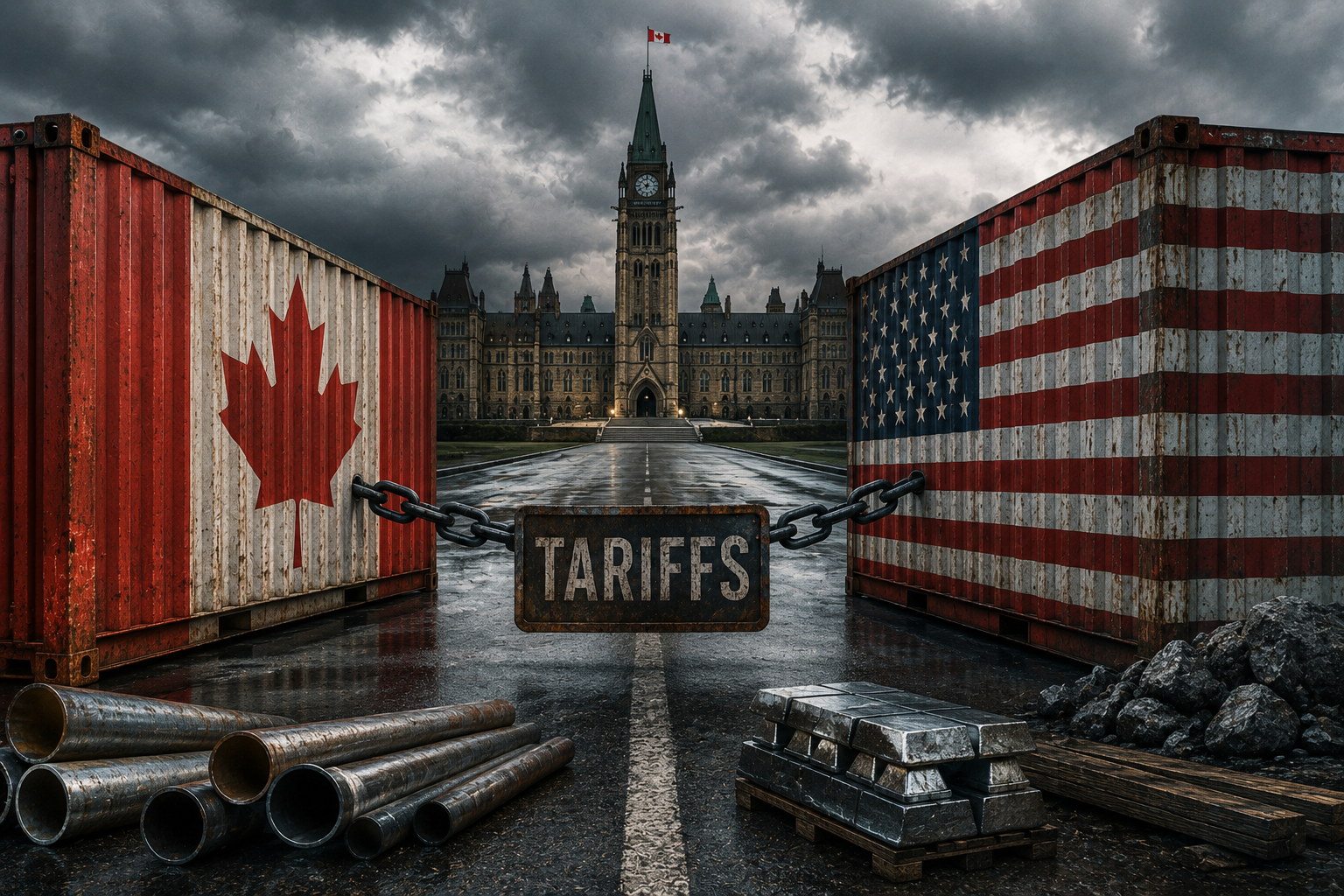
Ontario Premier Doug Ford is renewing his call for a tougher Canadian response to the latest round of U.S. tariffs, urging Ottawa to impose dollar-for-dollar retaliatory measures as Canada’s premiers prepare to meet in Prince Edward Island to discuss the growing trade dispute.
Ford has argued that Canada cannot afford to respond cautiously while new American tariffs threaten key sectors of the Canadian economy. Speaking ahead of the premiers’ meeting, he said provinces would not “roll over” in the face of escalating trade pressure and called on the federal government to match U.S. actions with equivalent countermeasures.
The latest comments continue a consistent position Ford has taken throughout the current trade dispute. He has repeatedly urged the federal government to adopt a more aggressive strategy, particularly in response to tariffs affecting Ontario’s steel, aluminum and automotive industries.
Ford has argued that Canada possesses significant leverage through its exports of energy, critical minerals and manufactured goods, and that Ottawa should be prepared to use those advantages if negotiations fail to produce results.
The premier’s position contrasts with the approach favoured by Prime Minister Mark Carney, whose government has continued to emphasize negotiations while leaving open the possibility of additional trade measures if talks prove unsuccessful.
The difference reflects an ongoing federal-provincial dynamic. While trade policy falls under federal jurisdiction, Ontario has a direct economic stake in the outcome because of its concentration of manufacturing jobs tied to exports to the United States.
The automotive industry remains particularly vulnerable to disruptions in cross-border trade, while steel and aluminum producers continue to monitor the potential impact of higher costs and reduced market access.
As the premiers gather this week, trade policy is expected to dominate discussions alongside broader concerns about economic competitiveness and Canada’s relationship with its largest trading partner.
Municipal governments are also preparing for potential economic consequences.
Toronto Mayor Olivia Chow announced that the city’s economic action team has been reconvened to respond to the latest developments. The group was originally established when the trade dispute first emerged and is tasked with implementing a ten-point strategy aimed at reducing the impact of tariffs on Toronto businesses, workers and supply chains.
The city’s plan includes supporting local procurement, helping businesses diversify export markets, and coordinating with provincial and federal governments on economic response measures.
For Ontario, the stakes extend well beyond political messaging.
The province’s economy remains deeply integrated with the United States through manufacturing supply chains that have developed over decades. Even temporary disruptions can affect investment decisions, production schedules and employment across sectors ranging from automotive manufacturing to metal fabrication and transportation.
Whether Ottawa ultimately adopts Ford’s recommendation for matching retaliatory tariffs remains uncertain. The federal government must weigh the potential benefits of demonstrating resolve against the economic costs that additional tariffs could impose on Canadian businesses and consumers.
As negotiations continue, Canada’s challenge remains balancing immediate economic pressure with preserving the long-term trading relationship on which millions of Canadian jobs depend.
The premiers’ meeting is expected to provide another opportunity for provincial leaders to press Ottawa for a coordinated national strategy as uncertainty surrounding Canada-U.S. trade continues to grow.
